
The Best Banks in New Zealand for Migrants
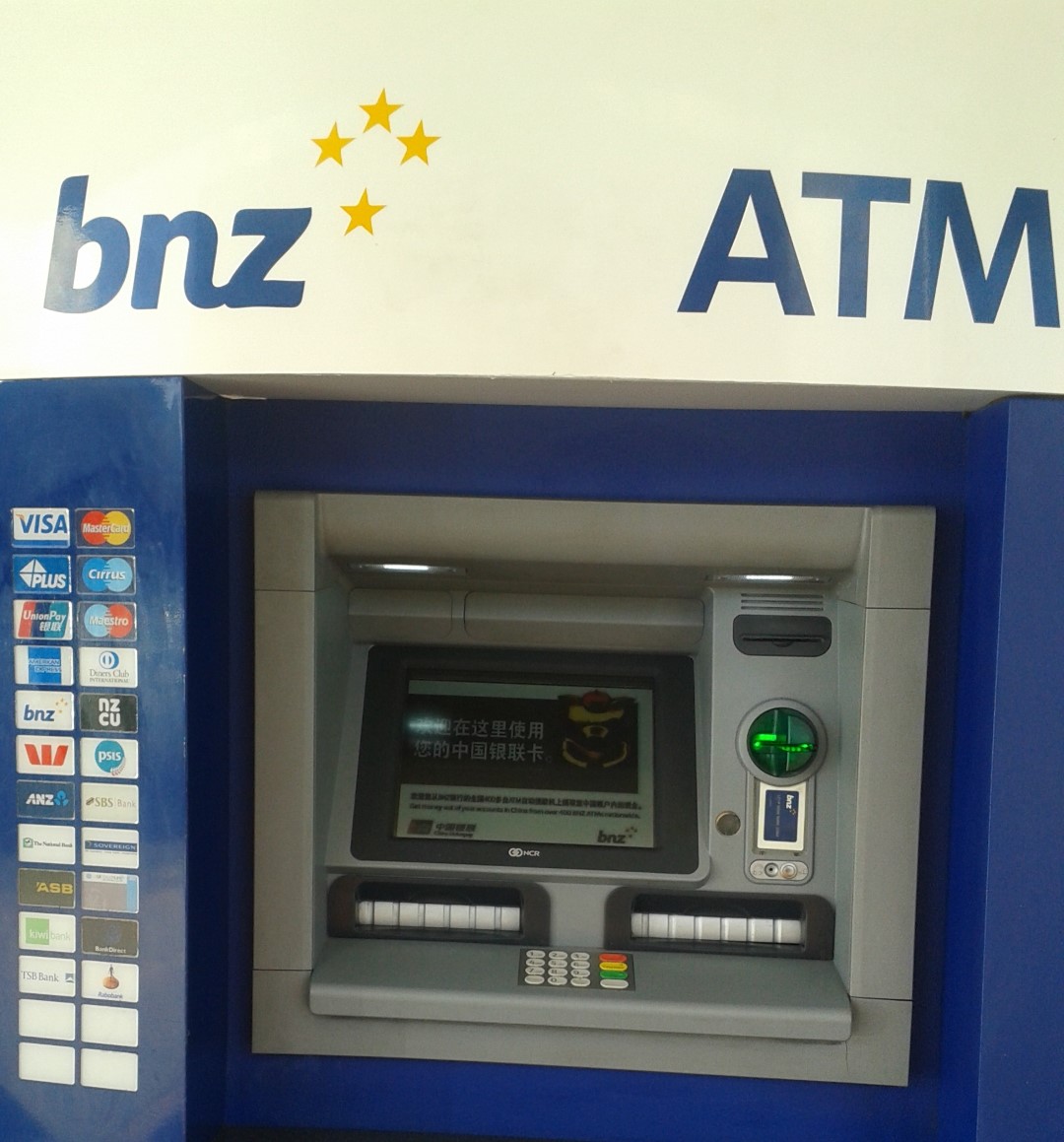
We banked with BNZ for the entire ten years we lived in New Zealand, from the week we arrived in Auckland to the day we finally closed the account after selling up in Northland. We never seriously considered switching, which either means we picked well or we’re just creatures of habit, and honestly it’s probably a bit of both. What we can tell you, from a decade of everyday transfers, mortgage admin, rural branch visits and one memorable card fraud call, is that the “which bank” question migrants ask us constantly doesn’t really have a single right answer. All five of New Zealand’s major banks are solid, licensed, well-run institutions. The differences are smaller than the marketing suggests, and they show up in the details.
This guide compares New Zealand’s banks for migrants specifically: which ones let you open an account before you land, what their migrant packages actually offer, where the fees have gone, and what’s changed with deposit protection. If you want the step-by-step of actually opening an account, sorting your IRD number and getting a phone plan, our guide to setting up in New Zealand covers that process in detail. This one is about choosing.
A quick note on money: as of mid-July 2026, GBP 1 buys around NZD 2.31 and USD 1 buys around NZD 1.71, per XE.com and exchangerates.org.uk. We’ve used those rates throughout, rounded, and they move daily, so check a live converter before relying on any figure here.
In this article
- The big five: can you open an account before you arrive?
- The challenger banks: SBS, TSB and the Co-operative Bank
- What banking actually costs in 2026
- App quality and reputation, hedged honestly
- Cash, cheques and New Zealand’s cashless habits
- Deposit protection: the Depositor Compensation Scheme
- Joint accounts and your IRD number
- Comparison table
- Why we stuck with BNZ for ten years
- Your questions answered
The big five: can you open an account before you arrive?
New Zealand’s “big five” are ANZ, ASB, BNZ, Westpac and Kiwibank, and for most migrants the real question isn’t which one has the nicest branch, it’s which one will let you get a working account number before you fly. Landing with an account already open means you can give a future employer somewhere to pay you and avoid the awkward first-week scramble.
ANZ runs a dedicated Migrant Banking package for people with a valid resident or work visa who are arriving within 90 days, though working holiday visa holders don’t qualify. You apply online from overseas, and the account typically stays deposit-only, meaning money can move in but you can’t withdraw or use other banking products, until you’ve activated it in person at a branch after landing.
ASB has the most straightforward remote process of the big four, according to its own “Moving to New Zealand” page. You can apply online before you leave, and ASB says a specialist will be in touch within two business days, with identity verification fast-tracked through its ASB ID app for applicants coming from a number of countries including the UK and Australia.
BNZ, the bank we used, lets you apply online while you’re still overseas too, and it activates once you visit any BNZ branch on arrival, no appointment needed. That “any branch, no appointment” detail mattered to us in practice: we didn’t have to plan our first week in Auckland around a specific booking.
Westpac also allows pre-arrival applications, but its process reads as more manual than ASB’s or BNZ’s, and depending on your circumstances you may need a follow-up branch visit to complete identity verification beyond the initial online step.
Kiwibank, being New Zealand Post owned rather than one of the four Australian-owned majors, is the outlier here. As far as we can establish, it does not currently offer a pre-arrival or remote account-opening product. You’ll need to be on the ground first, with a passport, visa, NZ address and NZ mobile number, at which point its online application takes around ten minutes and accounts are often live within a day.
Whichever of the five you choose, expect any account opened from overseas to stay deposit-only until you turn up in person with identification. New Zealand banks also can’t see your UK, US or other overseas credit history, so it’s worth bringing whatever paperwork you can to demonstrate it, even informally.
The challenger banks: SBS, TSB and the Co-operative Bank
Beyond the big five sit three smaller, New Zealand-owned banks worth knowing about, even if they’re a less obvious first stop for a migrant landing with no local history: SBS Bank, originally the Southland Building Society and still mutual in structure; TSB, owned by the TSB Community Trust and rooted in Taranaki; and the Co-operative Bank, a customer-owned mutual with roots in the old PSIS.
All three trade on being smaller and more personal than the big five, and there’s something to that: fewer layers of head office, decisions made closer to home, and a genuine sense of being customer- rather than shareholder-owned. What we couldn’t find, checking each bank’s own site directly, was any advertised pre-arrival or remote account-opening pathway built for migrants the way ANZ, ASB or BNZ offer. If one of these three appeals, for its rates, its ethics or a personal recommendation, ring them directly before you fly and ask specifically what a new arrival needs to open an account, because the answer isn’t published as clearly as it is for the majors.
Worth noting on reputation rather than just size: TSB was named Canstar’s 2026 Bank of the Year for Everyday Banking, and the Co-operative Bank has repeatedly won Canstar’s Most Satisfied Customers banking award. Neither of those has much to do with how easy the bank is to join from overseas, but they’re a genuine signal about service quality once you’re in.
What banking actually costs in 2026
The good news, whichever bank you land with, is that everyday banking in New Zealand has become mostly fee-free. Kiwibank’s Free Up account charges no monthly fee and waives electronic transaction fees outright. ASB’s Streamline account drops its monthly fee entirely if you opt for electronic statements over paper. ANZ waives its monthly fee if you keep an average balance of NZD $5,000 or more, or deposit at least NZD $2,500 a month, and Westpac offers an everyday account with no monthly fee and unlimited EFTPOS transactions.
The Co-operative Bank is the exception worth flagging: it charges NZD $5 a month unless you maintain a NZD $4,000 daily balance, so check the fine print if fees matter to you.
None of this means banking is free everywhere. International transfers, overdrafts, certain card replacements and paper statements still attract charges at most banks, and older “legacy” account tiers sometimes still carry a monthly fee that a newer product from the same bank has dropped. If you’re on an older account and paying a fee, it’s usually worth asking to be moved onto the current no-fee equivalent.
App quality and reputation, hedged honestly
Every one of the big five, plus the three challengers, now runs a mobile banking app, and this is genuinely the area where opinions diverge most, so treat what follows as reputation rather than settled fact. ASB has won Canstar’s Bank of the Year Digital Banking award four years running as of 2026, which is a real, repeated result rather than a one-off. Anecdotally and in online reviews, ASB and ANZ tend to get the most consistent praise for app polish and features, while smaller banks are sometimes described as functional rather than flashy. None of the five majors has a bad app by international standards; New Zealand banking apps generally do the basics (transfers, bill payments, card freezing, spending categorisation) well. If a slick app matters to you more than anything else, read a few current app store reviews for the specific banks you’re considering before you commit, since ratings shift from year to year.
Cash, cheques and New Zealand’s cashless habits
If you’re coming from a country where cheques or cash still do real work, recalibrate. All five major banks stopped processing personal cheques back in 2021, and cheques are essentially extinct in everyday New Zealand life now, a landlord or an old-fashioned tradesperson aside. EFTPOS, the debit card tap-and-PIN system New Zealand pioneered decades before contactless was common elsewhere, is genuinely everywhere, down to market stalls and the smallest cafés, and contactless card and phone payments have taken over from cash for most day-to-day spending. Carry some cash for rural stalls, the odd cash-only food truck or a garage sale, but don’t expect to need much of it, and don’t expect to be able to write a cheque at all.
Deposit protection: the Depositor Compensation Scheme
This is genuinely new, and worth knowing whichever bank you choose. New Zealand’s Depositor Compensation Scheme (DCS) came into force on 1 July 2025 under the Deposit Takers Act 2023, and it’s still bedding in as of this update. It protects up to NZD $100,000 per depositor, per licensed deposit taker, if that institution were to fail, funded by levies on the banks themselves rather than any cost to you, and administered by the Reserve Bank of New Zealand.
The detail matters if you’re moving significant savings: the cap applies per bank, not in total, so money split across two different banks is separately protected up to $100,000 at each. Joint accounts are treated as split evenly between account holders for the purposes of the cap. As of this update, the scheme covers deposits at New Zealand’s registered banks, including all the ones named in this guide, per the Reserve Bank’s own published register, though that register can change, so check the current list on rbnz.govt.nz before treating any single bank’s coverage as guaranteed. Before mid-2025, New Zealand was unusual among comparable countries in having no formal deposit guarantee at all, so this is a genuine, recent improvement in how protected your savings are here.
Joint accounts and your IRD number
Joint accounts work much as they do anywhere: both names on the account, both able to transact, and for the purposes of the Depositor Compensation Scheme, each holder’s cover is calculated as their share of the balance. Every big-five bank supports them, and most challenger banks do too.
You do not legally need an IRD number to open a bank account in New Zealand, but you will need one before your bank can pay interest without deducting tax at the highest default rate, so it’s worth having one early rather than as an afterthought. The full process for getting your IRD number, along with your tax code, phone plan and everything else in your first fortnight, is covered properly in our guide to setting up in New Zealand, and once you’re earning here, our guide to income tax in New Zealand explains how that IRD number actually gets used.
Comparison table
| Bank | Migrant account before arrival? | Notable strength |
|---|---|---|
| ANZ | Yes, dedicated Migrant Banking package (arriving within 90 days, valid visa) | Purpose-built migrant product and a large branch/ATM network |
| ASB | Yes, most straightforward of the big five, online from overseas | Canstar’s Digital Banking award winner, 4 years running to 2026 |
| BNZ | Yes, apply online overseas, activate at any branch, no appointment | No-appointment activation; our own first-hand pick after 10 years |
| Westpac | Yes, but a more manual process, possible branch follow-up | Backed by a major Australian banking group, useful if moving from Australia |
| Kiwibank | No, in-person only after arrival | New Zealand owned rather than Australian owned; fast in-branch setup once you’re here |
| SBS Bank | Not advertised; check directly | Mutual structure, competitive savings and mortgage rates |
| TSB | Not advertised; check directly | Canstar’s 2026 Bank of the Year for Everyday Banking |
| Co-operative Bank | Not advertised; check directly | Customer-owned, repeat winner of Canstar’s Most Satisfied Customers award |
Why we stuck with BNZ for ten years
We didn’t shop around much when we first arrived, we opened with BNZ because the pre-arrival process was simple and the account was live before we’d found a flat, and then we just never had a reason to leave. Ten years on, what kept us there was less about any single standout feature and more about not being let down. The app did what we needed without drama, transfers landed when they said they would, and when a card got skimmed at a petrol station, the fraud team sorted it quickly and without making us feel like a suspect.
The one place a bank’s footprint genuinely matters is rural life, and we lived that for four years in Northland. Our nearest BNZ branch wasn’t around the corner once we were out of town, and that’s true of any bank if you move somewhere rural, not a BNZ-specific problem. It just meant the app and phone banking mattered more to us than they might to someone settling in central Auckland or Wellington with three branches on their commute. We’d genuinely say the same about ANZ, ASB, Westpac or Kiwibank: all five are capable, safe, well-regulated banks, and the right one for you depends more on where you’ll actually live and what you value, an app, a branch, a specific migrant package, than on any of them being meaningfully “better”.
Your questions answered
Can I open a New Zealand bank account on a working holiday visa? Generally yes, most banks will open a standard account for a working holiday visa holder, but ANZ’s specific Migrant Banking package excludes working holiday visas, so check the small print on any bank’s dedicated migrant product before assuming it applies to you.
Do I need a New Zealand address to open a bank account? Eventually yes, for full activation, though several banks let you start the online application before you have one, using your overseas address, and update it once you’ve landed and signed a lease.
Will my UK or US credit history transfer to a New Zealand bank? No. New Zealand banks have no visibility into your overseas credit file, so your history effectively starts from zero here, which can affect things like credit card limits or loan approvals in your first year or two, regardless of how strong your credit was back home.
Can I keep my UK or US bank account open after I move? Yes, nothing stops you keeping an overseas account open, and many migrants do for a transition period. Just factor in foreign transaction fees on cards used here, and see our guide to transferring money and your pension to New Zealand if you’re moving a meaningful sum across rather than just keeping an account ticking over.
Are there any fully digital, branchless banks in New Zealand? Not in the way some other countries have neobanks. New Zealand’s banking market is still built around the big five plus the three smaller banks covered here, all of which have physical branches, even if day-to-day banking happens almost entirely through their apps.
What happens to money in my New Zealand account if the bank fails? Since 1 July 2025, the Depositor Compensation Scheme protects up to NZD $100,000 per depositor per bank, funded by the banks themselves via the Reserve Bank of New Zealand, not by depositors. Before that date New Zealand had no formal deposit guarantee at all, so this is a genuinely recent and significant change.
Is it easy to switch banks after I’ve settled in New Zealand? Yes, switching later is straightforward, most banks can help set up automatic payments and direct debits on the new account and there’s no lock-in beyond any fixed-term product like a mortgage or term deposit. Plenty of people open with whichever bank was easiest to join pre-arrival, then switch once they’ve had time to compare.
Choosing a bank is a small decision in the scheme of a much bigger move. For the full picture of what moving to New Zealand actually involves, from visas to shipping to that first fortnight of admin, our complete guide to moving to New Zealand is the place to start. We’re not financial advisers, just a couple who banked here for a decade, so treat this as a starting point and check current terms directly with any bank before you commit. Got a question this guide hasn’t answered? Get in touch through our contact page.
You might also like

Best Places to Live in New Zealand in 2026: Our Honest, City-by-City Guide
Auckland, Wellington, Christchurch and six more places compared on rent, jobs and climate for 2026, from a couple who actually lived in three of them.

Buying a Car in New Zealand: A 2026 Guide to Costs, WoF and Rego
Buying a car in New Zealand: 2026 prices for WoF, rego, insurance and RUC, plus where to buy, imports and EVs, from a couple who actually did it.

Buying a Lifestyle Block in New Zealand: What Nobody Tells You
What nobody tells you about buying a lifestyle block in New Zealand: water, septic, fencing, access and stock, from ten years running one ourselves.