
Best Places to Live in New Zealand in 2026: Our Honest, City-by-City Guide
“Where should we actually live?” is the question that comes up more than almost any other once people have decided New Zealand is the move. It’s the hardest one to answer in a single line, because it depends entirely on what you’re optimising for: a job, a school catchment, a beach, a mortgage you can actually afford, or simply somewhere that feels like home. We lived in three very different corners of the country ourselves, nearly two years in Auckland, two more in Wellington, and four years rurally in Northland, so we know first-hand how differently those places suit different people. For the cities we haven’t called home, we’ve gone straight to current rent data, employment figures and climate averages, and we’re upfront below about where our experience ends and the research takes over.
This guide covers nine places people ask us about most: Auckland, Wellington, Christchurch, Tauranga, Hamilton, Nelson, Dunedin, Queenstown, and Northland and Whangārei. For each, who tends to thrive there, roughly what you’ll pay in rent, the local job market, the climate and the honest downsides nobody puts on the tourism brochure.
In this article
- Auckland (Tāmaki Makaurau)
- Wellington (Te Whanganui-a-Tara)
- Christchurch (Ōtautahi)
- Tauranga
- Hamilton (Kirikiriroa)
- Nelson (Whakatū)
- Dunedin (Ōtepoti)
- Queenstown
- Northland and Whangārei
- Summary table
- If you want X, live in Y
- Your questions answered
A quick note on money: rent figures below are in New Zealand dollars first. As of mid-July 2026, GBP 1 buys around NZD 2.33 and USD 1 buys around NZD 1.71 (Wise, OFX, Trading Economics), so divide any weekly NZD figure by 2.33 for pounds or 1.71 for US dollars. Rates move daily, so check a live converter before relying on this for a real budget. Our cost of living guide tracks what we actually paid across three of these cities, rent through to the price of milk.
Auckland (Tāmaki Makaurau)
We arrived in Auckland first, renting a flat in Mount Eden, and spent almost two years there before heading south. It’s New Zealand’s biggest city by far, home to roughly 1.8 million people, around a third of the population, with the widest choice of jobs, the best flight connections and a genuinely multicultural, food-mad culture (Stats NZ, June 2025). Rent is the trade-off: a three-bedroom house runs $700 to $760 a week (about £300 to £326, or US$410 to $445), among the priciest in the country (MoneyBalance / Tenancy Services & Trade Me, May 2026). Competition for jobs is real too: unemployment sat at 6.6% in the March 2026 quarter, above the national 5.3% (Stats NZ). The climate is the mildest in the country, and traffic is the daily gripe. We loved the bars, the sushi and the friends we made there, but never felt entirely at home the way we did further south.
Wellington (Te Whanganui-a-Tara)
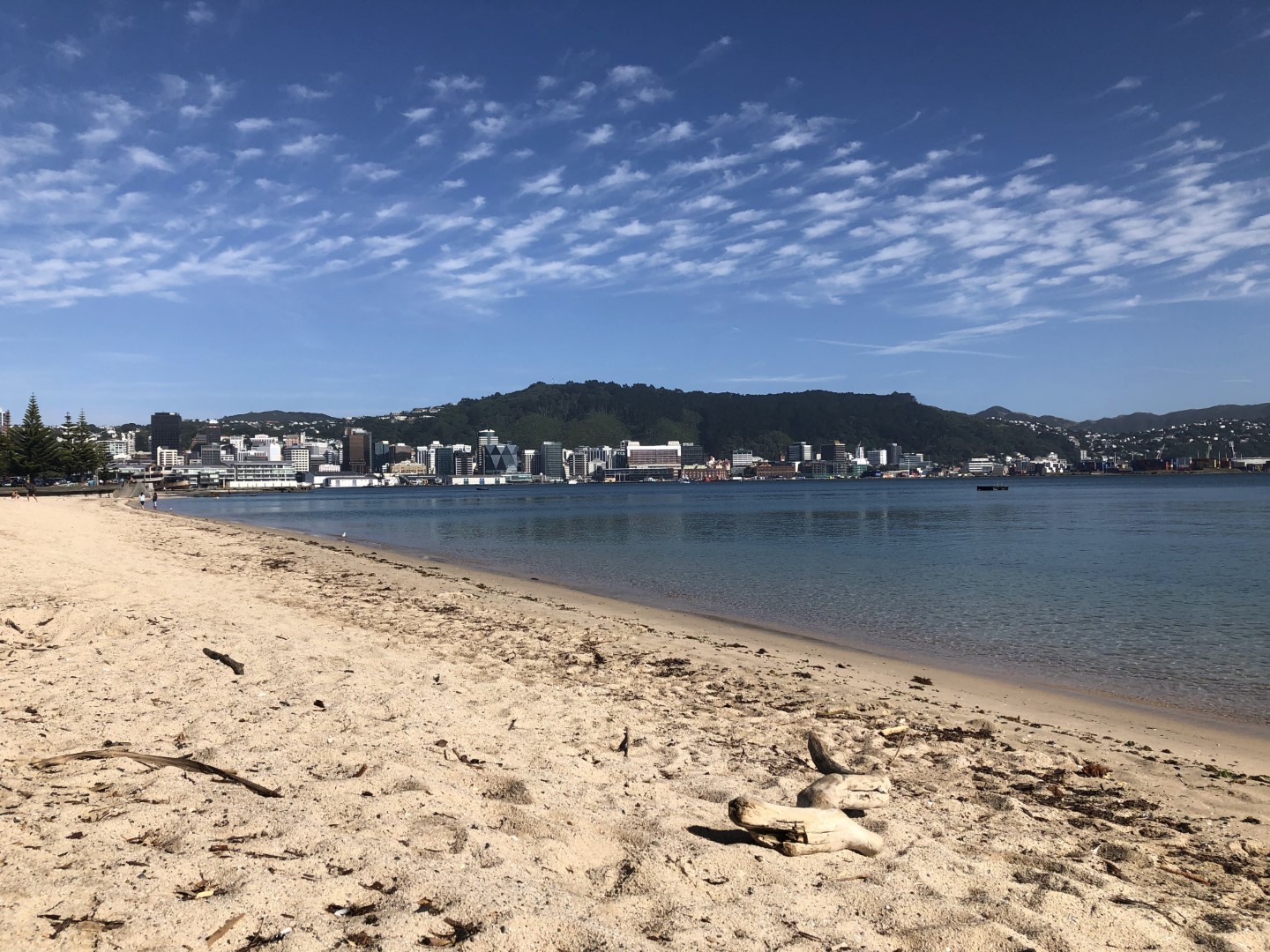
After Auckland we spent two years in the capital, and it was the first place in New Zealand where we properly felt like we fitted in. Wellington is compact, walkable and creative, a proper city with a small-town feel: the CBD is under two kilometres long, and it suits government, public-sector and creative careers (this is Weta Workshop country). Rent has softened here more than anywhere else lately: a three-bedroom runs about $620 to $680 a week, a step down from Auckland (MoneyBalance / Tenancy Services & Trade Me, May 2026). Unemployment was 6.4% in the March 2026 quarter (Stats NZ), reflecting a shrinking public service. The wind is the honest downside, it earns the nickname fairly, and the city sits on a fault line: after the 2016 Kaikoura earthquake rattled our dining table at midnight, we never quite stopped thinking about it. We compared the two cities properly in our Wellington vs Auckland guide, and Wellington won for us on character alone.
Christchurch (Ōtautahi)
We haven’t lived in Christchurch, but we’ve spent plenty of time there on our travels, and it’s a city we recommend a lot to families weighing up value for money. Rebuilt substantially since the devastating 2010 and 2011 earthquakes, it’s now a flat, wide, liveable city with the country’s best cycling infrastructure and some of the most affordable housing among the main centres. A three-bedroom house rents for around $500 to $560 a week, meaningfully cheaper than Auckland or Wellington (MoneyBalance / Tenancy Services & Trade Me, May 2026). Canterbury’s unemployment rate was just 4.2% in the March 2026 quarter, well below the national average (Stats NZ), thanks to a diverse economy spanning construction, engineering, agritech and aerospace. Winters are cold and clear with snow on the surrounding hills, summers hot and dry with the notorious nor’wester wind. Christchurch lacks Auckland’s buzz and Wellington’s walkability, and the flat Canterbury Plains can feel monotonous, but for family space per dollar it’s hard to beat.
Tauranga
Tauranga has been one of New Zealand’s fastest-growing cities for a decade, pulled along by retirees chasing sunshine, families leaving Auckland for space, and the country’s busiest export port on its doorstep. We know it mostly from driving through the Bay of Plenty rather than living there, but the appeal is obvious: golden beaches, Mount Maunganui at the tip of the peninsula, and more sunshine than almost anywhere else. NIWA’s long-term averages put Tauranga among New Zealand’s sunniest cities, alongside Nelson, both regularly over 2,100 hours a year. A three-bedroom house runs roughly $560 to $630 a week, still well under Auckland (MoneyBalance / Tenancy Services & Trade Me, May 2026). Jobs cluster around the Port of Tauranga, horticulture (Zespri, the world’s biggest kiwifruit marketer, is headquartered here), logistics and health. The downside: Tauranga has grown faster than its roads can keep up, and traffic now rivals much bigger cities at peak times.
Hamilton (Kirikiriroa)
Hamilton sits an hour and a half south of Auckland on the Waikato River, and it has quietly become New Zealand’s fastest-growing city council area, reaching around 192,100 people, up 1.4% in the year to June 2025 (Stats NZ). We’ve passed through often on the drive north to Northland, though we never lived there. For families who want Auckland-adjacent jobs without Auckland’s price tag, it’s worth a serious look. A three-bedroom house rents for around $490 to $550 a week; average rent across all property types was $583 a week in April 2026, up 4.1% on the year before (MoneyBalance / Tenancy Services & Trade Me; Trade Me Rental Price Index via Canstar, 2026). The economy leans on agribusiness and agritech, with the University of Waikato adding white-collar roles. Summers are warm and humid, winters foggier and frostier than the coast, since Hamilton sits inland. It isn’t a glamorous city, but it’s a genuinely practical one.
Nelson (Whakatū)
Nelson sits at the top of the South Island and claims some of the best weather in the country: NIWA’s averages put Nelson and the wider Tasman region among New Zealand’s sunniest, regularly over 2,100 hours of sun a year. We’ve visited many times, drawn by Abel Tasman National Park on the doorstep, but it was never where we based ourselves. It suits people who want lifestyle over career ladder: artists, growers, remote workers and retirees make up a good share of the population of around 54,300 (Stats NZ, June 2025). A three-bedroom house rents for roughly $510 to $580 a week, rising as more people discover the place (MoneyBalance / Tenancy Services & Trade Me, May 2026). Jobs outside the public sector tend to be smaller-scale: fishing, forestry, horticulture, tourism and a genuinely thriving arts scene, alongside people who brought their job with them. The catch is a limited corporate job market and a housing stock that hasn’t kept pace, so competition for rentals can be fierce for a city its size.
Dunedin (Ōtepoti)
Dunedin is New Zealand’s most affordable main centre, with more personality per square kilometre than its size suggests: Edwardian and Victorian architecture, student energy from Otago University, and a wildlife-rich coastline with penguins and albatross nearby. We know it from visits rather than residence, so take our steer here as research-backed rather than lived. A three-bedroom house rents for around $450 to $510 a week, the cheapest of the main centres (MoneyBalance / Tenancy Services & Trade Me, May 2026), and Otago’s unemployment rate was a low 3.2% in the March 2026 quarter (Stats NZ). Beyond the university, the economy runs on healthcare, insurance and a growing tech and gaming sector. The climate is the trade-off: Dunedin sits further south and feels it, cooler year-round, and the hills that give it character also mean some seriously steep streets (Baldwin Street among them). For students, first-home buyers and anyone chasing genuine affordability, it’s worth serious consideration.
Queenstown
Queenstown is stunning, and everyone who visits New Zealand already knows it. Living there is a different proposition, and by 2026 the housing shortage has become a genuine crisis rather than a talking point. Median rent for a three-bedroom home has been reported climbing toward $800 to $1,000 a week (about £343 to £429, or US$468 to $585), with one-bedroom places regularly over $600 (Newsroom, RNZ and the Otago Daily Times, 2026). Queenstown-Lakes remains one of the fastest-growing districts in the country, up 1.7% in the year to June 2025 (Stats NZ), which only adds to the squeeze. We’ve skied and hiked around Queenstown often but never tried to build a life there, and honestly we’re not sure we could have made the numbers work. It suits people with a secure remote income or a well-paid tourism management role far more than a casual seasonal plan; reports of ski-season workers sleeping in cars aren’t exaggerated. The climate is properly alpine: four distinct seasons, snow most winters, hot dry summers.
Northland and Whangārei
Northland is where we spent four of our ten years in New Zealand, living rurally, off the town water supply, growing vegetables and keeping chickens. It’s the country’s warmest region, genuinely subtropical, with beaches that rival anywhere in the Pacific and a slower pace that took us a while to adjust to after Auckland and Wellington. Whangārei is the region’s only real city, home to most of the shops, larger employers and schools; beyond it, Northland is mostly small towns and rural land. Median rent in Whangārei was $600 a week across all property types as of July 2026 (about £258, or US$351), cheaper than any main centre (myRent.co.nz, sourced from Trade Me Property), and rural properties can be cheaper again, though further from services. Jobs lean toward agriculture, forestry, horticulture and tourism, with fewer corporate salaries than the cities; plenty of self-employed and remote workers made it work by bringing an income with them. The honest downside: fewer specialist jobs, patchier broadband further out, and a longer drive to a major hospital or an international flight. For sunshine, space and a rural pace of life, it was our favourite corner of the country. More on that adjustment in what it’s actually like to live in New Zealand.
At a glance: the summary table
| Place | Best for | Rough weekly rent (3-bed house) | Vibe |
|---|---|---|---|
| Auckland | Career climbers, international flights, variety | $700-760 | Big, busy, multicultural |
| Wellington | Government/creative careers, walkability | $620-680 | Compact, windy, characterful |
| Christchurch | Families, value, space | $500-560 | Flat, rebuilt, practical |
| Tauranga | Retirees, sunshine, growing families | $560-630 | Sunny, beachy, booming |
| Hamilton | Budget families near Auckland, agribusiness careers | $490-550 | Practical, inland, unglamorous |
| Nelson | Remote workers, artists, retirees | $510-580 | Sunny, arty, laid-back |
| Dunedin | Students, first-home buyers, the budget-conscious | $450-510 | Historic, studenty, cool climate |
| Queenstown | High earners, secure remote workers, seasonal workers with a plan | $800-1,000+ | Stunning, expensive, stretched |
| Whangārei / Northland | Budget-conscious families, retirees, remote workers | $600 in Whangārei, less rurally | Warm, rural, slow-paced |
All figures in NZD, weekly rent for a three-bedroom house unless noted, compiled from Tenancy Services (MBIE), Trade Me Property and myRent.co.nz data, May to July 2026.
If you want X, live in Y
- Biggest job market and best flight connections? Auckland.
- Walkability, culture and a public-sector or creative career? Wellington.
- Family space and value without leaving a main centre? Christchurch.
- Sunshine, beaches and a fast-growing economy? Tauranga.
- Auckland-adjacent jobs without Auckland’s rent? Hamilton.
- Lifestyle, arts and remote-work freedom somewhere sunny? Nelson.
- Cheapest main centre with genuine character? Dunedin.
- Spectacular scenery, if you can make the finances work? Queenstown.
- Warmth, space and a slower rural pace of life? Northland, based around Whangārei.
Your questions answered
What is the best place to live in New Zealand for families? Christchurch and Hamilton top most family shortlists, for space, affordable three-bedroom rent (roughly $500-560 and $490-550 a week) and reasonable commutes (MoneyBalance / Tenancy Services & Trade Me, May 2026).
What is the cheapest city in New Zealand to live in? Among main centres, Dunedin is consistently the most affordable, with three-bedroom rent averaging $450 to $510 a week (MoneyBalance / Tenancy Services & Trade Me, May 2026). Rural areas, including much of Northland outside Whangārei, can undercut even that.
Where should remote workers live in New Zealand? Nelson and Northland both attract people who bring their income with them, thanks to lower rent and a lifestyle-first pace. Tauranga is a growing option too, close enough to Auckland for occasional meetings.
Is Queenstown a good place to live, or only to visit? It depends heavily on your income. Three-bedroom homes are reported around $800 to $1,000 a week (Newsroom, RNZ and the Otago Daily Times, 2026), while much local hospitality work pays modestly. It suits secure remote earners or well-paid management roles far more comfortably than casual seasonal work.
What is the best place to live in New Zealand for retirees? Tauranga, Nelson and Northland all draw retirees, for the sunshine, lower cost of living than Auckland or Wellington, and slower pace. Dunedin also appeals for its compact main-centre feel without big-city prices.
Is Auckland or Wellington better to live in? It depends what you value. Auckland has the bigger job market and milder weather; Wellington is smaller, more walkable and, in our experience, easier to feel part of. We compared the two directly in our Wellington vs Auckland guide.
Where do most new migrants settle in New Zealand? Auckland remains the default landing spot, home to roughly a third of the country’s population and the main gateway for jobs and flights (Stats NZ). Christchurch, Wellington and Hamilton follow.
Every one of these places has its evangelists, and most are right about their own patch. Auckland taught us the value of scale and choice, Wellington that smaller and connected can matter more than either, and Northland that the fastest way to fall for New Zealand is to slow right down. Spend time somewhere before you commit if you can, rents and job markets shift fast, and no article replaces a proper look around.
For the practical side of getting here, see our guide to moving to New Zealand, and for the bigger picture, our honest pros and cons of living in New Zealand is a good next stop. Got a question about a specific city or region? Get in touch through our contact page. This article is general information, not financial or migration advice, so check your own numbers before making any big decision.
You might also like

The Best Banks in New Zealand for Migrants
Which New Zealand bank is best for migrants in 2026: ANZ, ASB, BNZ, Westpac, Kiwibank and the challengers compared, fees, apps and deposit protection.

Buying a Car in New Zealand: A 2026 Guide to Costs, WoF and Rego
Buying a car in New Zealand: 2026 prices for WoF, rego, insurance and RUC, plus where to buy, imports and EVs, from a couple who actually did it.

Buying a Lifestyle Block in New Zealand: What Nobody Tells You
What nobody tells you about buying a lifestyle block in New Zealand: water, septic, fencing, access and stock, from ten years running one ourselves.