
Healthcare in New Zealand for Migrants: What It Costs and How It Works
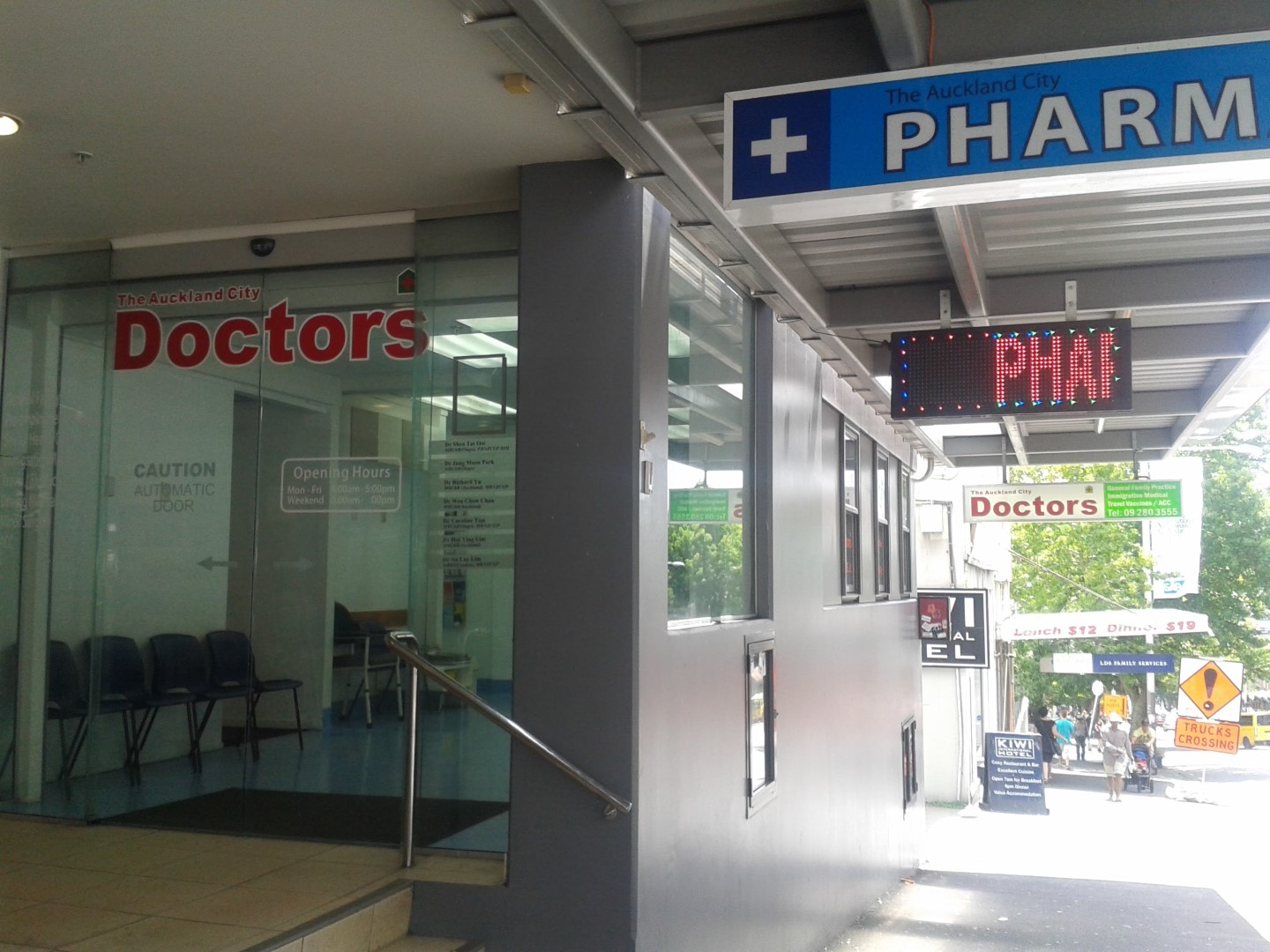
One of the first forms we filled in after we landed in New Zealand wasn’t for a bank account, it was to enrol with a GP. Coming from the UK, where you’re registered with whichever surgery covers your postcode for nothing, that took adjusting to. New Zealand’s healthcare system isn’t the NHS, and it isn’t the American insurance market either. It’s a public system funded by general taxation, an unusual no-fault accident scheme, and a private insurance market most people use to top things up rather than replace.
This guide to healthcare in New Zealand for migrants covers who is eligible, what a GP visit and a prescription actually cost, how ACC works if you’re injured, and how it compares with the NHS and US insurance.
A quick note on the exchange rate: as of mid-July 2026, GBP 1 buys around NZD 2.31 and USD 1 buys around NZD 1.71, per XE.com. We’ve used those rates throughout, rounded for readability, and rates move daily so check a live converter before relying on any figure here.
In this article
- Who is eligible for publicly funded healthcare
- Registering with a GP, and what a visit costs
- Prescription costs and the Pharmac co-payment
- ACC: New Zealand’s no-fault accident cover
- Public healthcare vs private health insurance
- How it compares to the NHS
- How it compares to US health insurance
- A cost comparison table
- Your questions answered
New Zealand healthcare for migrants: who is eligible
Eligibility depends entirely on your visa, not on how long you’ve been here or how much tax you’ve paid, and Immigration New Zealand and Health NZ Te Whatu Ora’s rules trip people up constantly.
Residence class visa holders get the full range of publicly funded health and disability services from day one, the same as a citizen. Work visa holders qualify once their visa is valid for two years or more, counted from their first day in the country, and that clock can carry over if an earlier visa plus a renewal add up to two years, but a one-off twelve-month visa doesn’t get you in. Australian citizens and permanent residents qualify on similar terms if they’ve lived, or intend to live, here for at least two years. Refugees and protected persons are eligible regardless of how long they’ve been here.
Everyone else on a temporary visa, tourists, most students, and work visa holders under the two-year mark, generally can’t access publicly funded healthcare. A reciprocal agreement with the UK (and a separate one with Australia) exists, but it only covers urgent treatment for a condition that started or worsened after arrival, not routine GP visits. Check your visa against Health NZ’s eligibility guidance before you fly, and budget for private health insurance if you’re not yet covered.
Registering with a GP, and what a visit costs
You don’t get assigned a GP by postcode here, you choose a practice and enrol, and that enrolment is what unlocks subsidised fees. We enrolled with a practice in Titirangi within our first couple of weeks in Auckland, a form, our passports and visas, proof of address, and we were seeing a doctor within days. Enrolling itself is free, it just makes the visits cheaper.
Fees aren’t set nationally. Each practice prices its own consultations within government funding rules, and enrolled patients are subsidised more heavily than casual ones, so the gap can be startling. MoneyHub NZ and Calculate.co.nz put a typical enrolled adult consultation at NZD $50 to $85 (roughly £22 to £37, or $29 to $50 USD), though RNZ reported one Auckland patient paying $29.50 for an appointment that cost $90 at a practice across the road. Casual, non-enrolled patients pay closer to the higher end, or more.
Two things help: children under 14 get zero-fee visits, including urgent after-hours care, at any practice that’s opted in, which is most of them, and a Community Services Card, issued to low-income residents and eligible visa holders, brings the fee down further, as does a High Use Health Card for anyone with a chronic condition.
Prescription costs and the Pharmac co-payment
Pharmac, officially Te Pātaka Whaioranga, decides which medicines get publicly subsidised, and it covers a genuinely wide range. Once a medicine is subsidised and you’re eligible for public healthcare, the standard co-payment at the pharmacy counter is a flat NZD $5 per item (about £2.16, or $2.92 USD), whatever the medicine actually costs.
The rules shifted in 2026. Since 1 February, patients with stable, well-managed long-term conditions can get up to twelve months of medicine prescribed at once instead of the usual three. The government initially planned to charge the $5 co-payment at every three-monthly collection of a twelve-month prescription, then reversed that after public pushback, per RNZ’s reporting in January 2026. Now you pay $5 once, at first dispensing, and the rest of that year’s collections are free.
There’s also an annual cap: once you or your family have paid for 20 subsidised items between 1 February and 31 January, everything else is free for the rest of that period. Under-14s’ prescriptions are free outright. None of this applies if you’re not eligible, in which case you’ll pay full, unsubsidised prices, so factor that into any insurance decision before you arrive.
ACC: New Zealand’s no-fault accident cover
ACC, the Accident Compensation Corporation, is one of the genuinely distinctive parts of the system, and there’s nothing quite like it in the UK or the US. If you’re injured in an accident anywhere in New Zealand, ACC covers you, full stop, resident, work visa holder or tourist, and it doesn’t matter who was at fault. Isaac came off a mountain bike on a Wellington trail during our time there, and beyond a strapped-up wrist for a few weeks, there was no argument about insurance or fault, just a doctor, a physio referral, and ACC picking up a large share of the cost.
In exchange for that guarantee, New Zealand law generally stops you suing anyone for personal injury. ACC contributes toward treatment costs, and if an accident stops you working, it pays 80% of your usual earnings from the second week off (your employer covers week one for a workplace injury), up to an earnings cap. It doesn’t cover illness, ageing, or mental health conditions unrelated to a physical injury, so it’s accident cover, not a substitute for health insurance.
It’s funded through levies, not general taxation. Anyone earning wages here has an earner’s levy deducted automatically through PAYE, currently $1.75 per $100 of liable earnings for 2026/27, per Inland Revenue. On a $70,000 salary that’s roughly $1,225 a year (about £530, or $716 USD), taken automatically, no opt-in or opt-out required.
Public healthcare vs private health insurance
New Zealand’s public system, run by Health NZ Te Whatu Ora and funded through general taxation, covers hospital treatment, maternity care and a wide range of primary and specialist services for anyone eligible, without premiums or excesses. The trade-off is time: non-urgent elective procedures and specialist referrals can mean a genuinely long wait, varying by region.
That’s why many residents and migrants take out private health insurance, less to replace the public system and more to skip the queue. Southern Cross is the biggest provider, followed by nib, and premiums vary by age and cover chosen. Calculate.co.nz and Policywise put a single adult’s premium at NZD $80 to $130-plus a month (about £35 to £56, or $47 to $76 USD), climbing steeply with age.
Worth knowing if you’re used to the NHS: adult dental and optical care sit almost entirely outside the public system. Public dental cover stops at 18, aside from limited hospital emergency treatment, so most adults pay privately or take out dental insurance. Maternity care, by contrast, is fully covered for anyone eligible, typically through a midwife-led Lead Maternity Carer, at no charge.
How it compares to the NHS
If you’re coming from the UK, the biggest adjustment isn’t the quality of care, it’s paying anything at all for it. NHS GP consultations, face to face, by phone or by video, are free at the point of use for registered patients, as is NHS hospital treatment, funded through general taxation and National Insurance rather than fees at the point of care.
Prescriptions are the exception, and here the two countries land in a similar place by very different routes. England’s NHS prescription charge is £9.90 per item for 2026/27 (about NZD $22.85), frozen for a second year, with a prepayment certificate covering unlimited prescriptions at £32.05 for three months or £114.50 for a year. About 89% of English prescriptions are dispensed free once exemptions for children, over-60s, pregnant women and long-term conditions are accounted for, and Scotland, Wales and Northern Ireland charge nothing. Against New Zealand’s flat $5 co-payment, prescriptions come out cheaper in New Zealand for most people, while GP visits are cheaper, usually free, in the UK.
Reciprocity between the two countries is real but limited: urgent treatment only, not routine or planned care, for visitors either direction. Once your visa or residence status qualifies you for New Zealand’s own public system, none of that matters. For the full breakdown of rent, groceries, tax and everyday costs alongside healthcare, see our cost of living in New Zealand vs the UK comparison.
How it compares to US health insurance
We haven’t lived through the US system ourselves, so this section leans on official data rather than personal experience, but the structural difference is stark. There’s no equivalent of Health NZ for working-age Americans: coverage mostly comes through an employer, an individually bought plan, or, for the over-65s or low income, Medicare or Medicaid. KFF’s 2025 Employer Health Benefits Survey put the average annual premium for employer-sponsored coverage at $9,325 USD single (about NZD $15,977) and $26,993 USD family (about NZD $46,246), with employers covering most of that and employees contributing around 16% and 26% respectively themselves.
Go without insurance and the numbers get harder: various 2026 pricing guides put an uninsured routine GP visit at $130 to $265 USD (about NZD $223 to $454), specialist consultations considerably more. Against that, New Zealand’s $5 co-payment and $50 to $85 GP fee look like small change, and ACC’s no-fault cover, funded through a payroll levy most workers barely notice, has no real American equivalent. The counterpoint is wait times: New Zealand’s public system can mean a longer wait for non-urgent elective treatment than an insured American typically faces. For the wider cost picture, our cost of living in New Zealand vs the US comparison covers rent, groceries and salaries in the same detail.
Comparison table: New Zealand vs the UK vs the USA
All figures in NZD first, with approximate GBP and USD equivalents at GBP 1 = NZD 2.31 and USD 1 = NZD 1.71 (mid-July 2026).
| Feature | New Zealand | UK / NHS | USA |
|---|---|---|---|
| Who pays | General taxation, via Health NZ Te Whatu Ora | General taxation and National Insurance, via the NHS | Mostly private insurance (employer or individual), plus Medicare (65+) and Medicaid (low income) |
| Eligibility for migrants | Resident visa: immediate. Work visa: once valid 2+ years from first entry | UK residents; reciprocal deal covers only urgent care for NZ visitors | Depends on insurer and visa status; no public system for most working-age adults |
| GP visit (adult) | $50-$85 enrolled (~£22-£37 / $29-$50 USD); casual rate higher | Free at point of use for registered patients | $130-$265 USD uninsured (~$223-$454 NZD); copay varies if insured |
| Under-14s GP visits | Free at participating practices | Free (all ages) | Depends on plan |
| Prescription charge | $5 flat per item (~£2.16 / $2.92 USD); free after 20 items/year; under-14s free | £9.90 per item in England (~$22.85 NZD); free in Scotland/Wales/NI | Varies by drug and plan; often $10-$60-plus USD copay, more if uninsured |
| Accident cover | ACC: no-fault, covers residents and visitors, funded by levies | Part of standard NHS care, no separate no-fault scheme or income replacement | Dependent on your insurance, plus separate auto or workers’ comp cover |
| Private insurance | Optional top-up; roughly $80-$130-plus/month single adult (~£35-£56 / $47-$76 USD) | Optional top-up; roughly £50-£150/month depending on age | Often the primary route to cover; average $9,325 USD/year single, $26,993 USD/year family |
| Elective/non-urgent wait times | Can be long in the public system; private cover used to skip the queue | Widely reported long waits; private cover use growing | Typically faster if insured; cost, not time, is the main barrier |
Your questions answered
Do I need private health insurance to move to New Zealand? Not legally, but it’s sensible, especially before you qualify for public healthcare. If your work visa is under two years, or you’re on any other temporary visa, you generally won’t have access to Health NZ’s services, so private cover or comprehensive travel insurance fills that gap.
How long before I’m eligible for New Zealand’s public healthcare? Immediately with a residence class visa. With a work visa, once it’s valid for two years or more from your first day in the country, per Immigration New Zealand. Time spent here immediately beforehand can sometimes count toward that.
What does ACC actually cover? Injuries caused by an accident, at work, at home, on the road or playing sport, regardless of fault, for residents and visitors alike. It doesn’t cover illness, ageing, or mental health conditions unconnected to a physical injury, and it can pay 80% of lost earnings after your first week off work.
How much does a doctor cost if I’m not enrolled with a practice? Casual rates run higher than enrolled ones, often $90 or more against $50 to $85 enrolled, or considerably less at some practices. Enrolling as soon as you’re eligible is worth doing for the lower fees alone.
Can I use my NHS registration or UK prescriptions in New Zealand? No. NHS registration doesn’t transfer and UK prescriptions aren’t valid at a New Zealand pharmacy. You’ll need to register with a New Zealand doctor and get medication prescribed here, and it’s worth checking whether Pharmac subsidises the same drug, since not everything is funded.
Is dental care covered under the public system? Only up to age 18, with limited public hospital cover for emergencies beyond that. Most adults pay privately for the dentist or take out separate dental insurance, which surprises a lot of people moving from the UK.
What if I’m not eligible for publicly funded healthcare and I get sick or hurt? You’ll be billed at full, unsubsidised rates, which can be significant for hospital treatment or ongoing prescriptions. That’s exactly the gap private health insurance or travel insurance with medical cover is meant to close, so sort it before you land, not after.
Healthcare is just one piece of the bigger decision. If you’re still weighing it up, our guide to what it’s like to live in New Zealand is a good next stop, and our guide to moving to New Zealand walks through the visa and logistics side. Got a question this article hasn’t answered? Get in touch through our contact page. This is general information from our own experience and research, not medical or insurance advice, so check your own circumstances against the official sources linked throughout before you make any decisions.
You might also like

Best Places to Live in New Zealand in 2026: Our Honest, City-by-City Guide
Auckland, Wellington, Christchurch and six more places compared on rent, jobs and climate for 2026, from a couple who actually lived in three of them.

The Best Banks in New Zealand for Migrants
Which New Zealand bank is best for migrants in 2026: ANZ, ASB, BNZ, Westpac, Kiwibank and the challengers compared, fees, apps and deposit protection.

Buying a Car in New Zealand: A 2026 Guide to Costs, WoF and Rego
Buying a car in New Zealand: 2026 prices for WoF, rego, insurance and RUC, plus where to buy, imports and EVs, from a couple who actually did it.