
Buying a Lifestyle Block in New Zealand: What Nobody Tells You
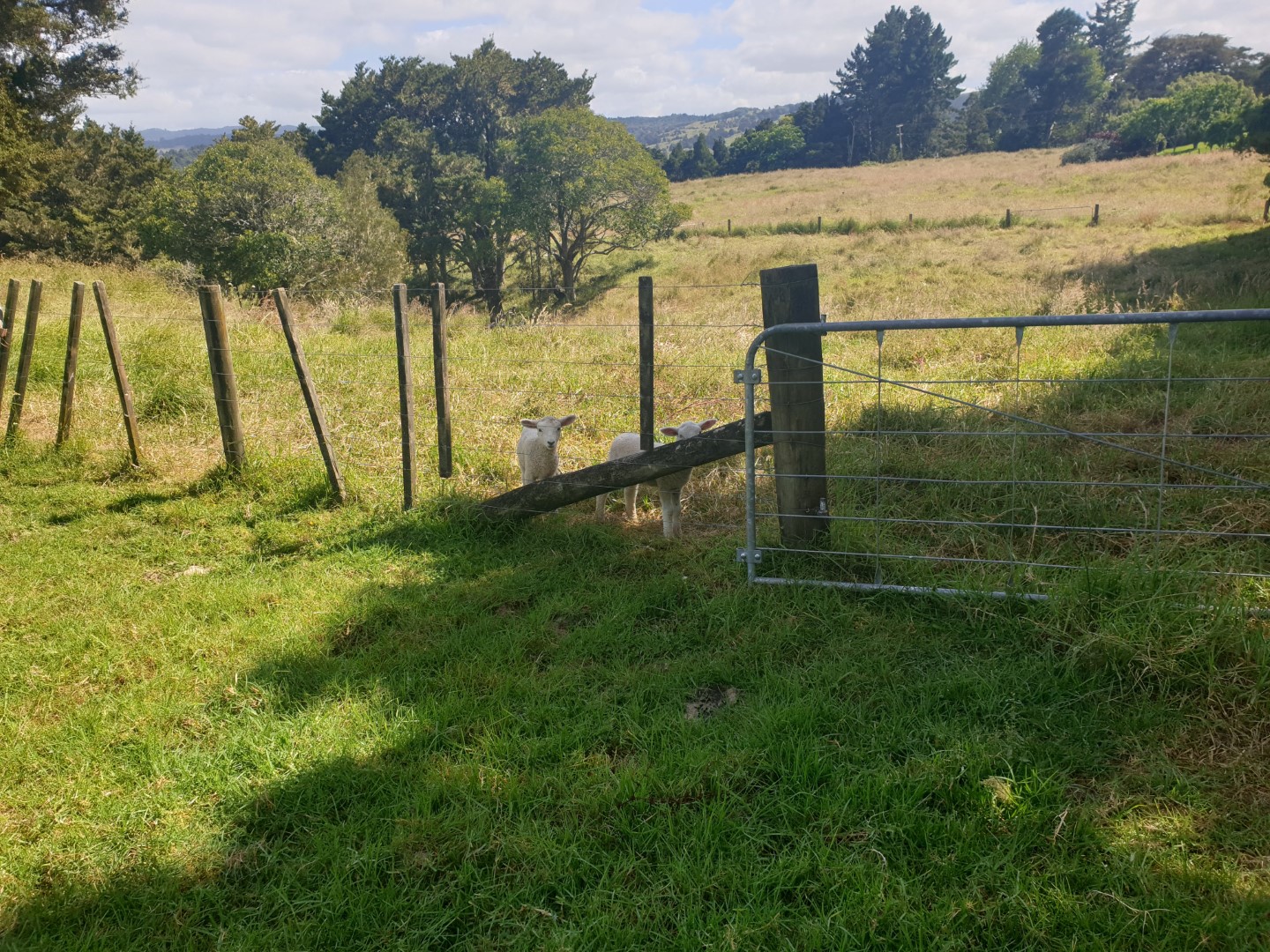
Buying a lifestyle block in New Zealand looks, from the outside, like the dream everyone sells you: a bit of land, some animals, a vegetable garden that actually works, room for the kids or the dogs or both. We bought one, outside Kerikeri in Northland, and spent years running it properly: cows, more than thirty sheep at the peak, chickens, an extensive orchard and gardens, a pond and a small river at the bottom of the section, and a serious amount of native planting and rewilding along the way. It was genuinely one of the best things we did in ten years in New Zealand. It also came with a list of things nobody mentioned before we signed, and that list is what this guide is really about.
None of this is legal or financial advice. Every lifestyle block and every region is different, and the specifics here are general, checked against current sources as of July 2026. Talk to a property lawyer, a mortgage broker who knows rural lending, and your local council before you commit to anything.
In this article
- What actually counts as a lifestyle block
- The money side: prices, deposits and rates
- Water: the thing nobody explains properly
- Fencing: the Fencing Act, and the reality of it
- Access, flood risk and the LIM report
- Stock basics: NAIT and the rest
- The old-house trap, briefly
- What we’d check first, next time
- Your questions answered
What actually counts as a lifestyle block
There’s no official legal definition of a lifestyle block in New Zealand, which surprises a lot of buyers. It isn’t a zoning category on its own; district plans use terms like “rural residential” or “rural lifestyle” that vary from council to council. The working definition most agents and lenders use is a rural or peri-urban property somewhere between about 1 and 10 hectares, with the average sitting under 4 hectares, big enough to run some stock or a decent orchard but not a commercial farming operation.
A rule of thumb we heard early on, and it’s not far wrong: if you can mow it with a hand mower, it’s a section. If you need a ride-on, it’s a lifestyle block. If you need a tractor, you’ve bought a farm. Our own block sat comfortably in ride-on territory with room to spare, which is exactly the scale that suits cows, a decent flock of sheep and an orchard without tipping into full-time farming.
The money side: prices, deposits and rates
Lifestyle property prices vary enormously by region, size and whether there’s a house on the land, so treat any figure here as a starting point rather than a budget. REINZ separates “farmlet” sales (a lifestyle block with a house on it) from bare land, and the two behave differently. Nationally, the median farmlet price sat around NZ$1.1 million in early 2025 (roughly £480,000 or US$630,000 at rates noted below), though that national figure hides huge regional swings, and bare land without a dwelling is priced more like undeveloped potential than a finished home. Demand has stayed strong through 2025 and into 2026: farmlet sales in Northland rose 4.2% to 543 for the year ending December 2025, with Auckland, Waikato and Canterbury seeing even bigger jumps, all regions within easy reach of a main centre.
Mortgages are where lifestyle blocks genuinely differ from an ordinary house purchase. If the block has an existing house on it and is 4 hectares or under, zoned rural residential, most banks will lend on standard terms: 20% deposit, the same as a suburban home. Push past that, onto bare land, larger acreage or anything that reads as a working farming operation rather than a lifestyle property, and deposit requirements jump sharply. Bare rural land commonly needs 30% to 50% deposit, more again if the section has no power at the boundary, and banks may also want to see a genuine intention to build within a set timeframe before lending above the lower end of that range. It pays to talk to a mortgage broker who deals with rural lending specifically, because policies differ more between banks here than they do for a standard suburban mortgage.
Rates are the other budgeting surprise. Lifestyle blocks usually pay a uniform annual general charge plus a general rate based on capital value, the same structure as any property, but many councils also apply targeted rural rates for roading, water schemes or rural fire cover that don’t appear on a suburban rates bill. Some councils have also been reclassifying “rural residential” properties onto full urban rating in recent years, which can push bills up sharply with little warning, so ask to see the current year’s rates notice, not just an estimate, before you commit.
Water: the thing nobody explains properly
Almost no lifestyle block runs on mains water. Ours didn’t, and the water tank became something we thought about daily in a way that surprised us. You get a tank, or several, fed by roof collection or a bore, and you get used to checking the gauge the way you’d check a fuel light: a glance most days, real attention in a dry summer, and a genuine moment of dread if you forgot to check it before a run of visitors arrived. Get a proper handle on tank capacity, pump condition and roof catchment area before you buy, not after, because a small tank on a big roof behaves very differently to a big tank on a small one.
Bores are common too, particularly where the land doesn’t collect enough roof water on its own. Taking water for reasonable stock and domestic use is usually a permitted activity without a formal resource consent, but the exact daily volume limits and construction rules for the bore itself are set by the regional council, not the district council, and they vary by region. If a bore is already on the property, ask for its consent status, depth and any water quality testing history, and if there isn’t one, find out what a new one would realistically cost and whether the regional plan allows it on that land.
Wastewater is the other half of the picture. Most rural properties run on a septic tank or an aerated treatment system rather than a town sewage connection. Ask what type of system is installed, whether it has a Code Compliance Certificate, and when it was last serviced. These systems generally need servicing every one to three years, and an old or undersized system on a property with more bedrooms than it was designed for is a real and fixable problem, but one you want to know about before settlement, not after.
Fencing: the Fencing Act, and the reality of it
Boundary fences in New Zealand are governed by the Fencing Act 1978, and the default position is straightforward: neighbours share the cost of an adequate boundary fence equally, unless there’s an agreement saying otherwise. If you want to build or replace a fence, you issue your neighbour a fencing notice and give them 21 days to respond; if they don’t reply, you can go ahead and they can’t object to the cost later. What counts as “adequate” depends on context, and a rural stock fence and a suburban timber fence are judged very differently.
That’s the law. The reality of fencing a lifestyle block is a different education entirely. Wire sags, posts rot, gates get left open by well-meaning visitors, and stock find the one weak spot in several hundred metres of fence line with what feels like deliberate intent. We ran sheep at over thirty head at our peak, and if there’s one thing we’d want every first-time lifestyle block buyer to hear clearly, it’s that sheep are escape artists. Walk every metre of boundary fencing before you buy, not just the bit visible from the driveway, and budget time and money for ongoing repairs as a permanent line item, not a one-off.
Access, flood risk and the LIM report
Legal access sounds like a formality until it isn’t. Check whether the property fronts a formed, sealed road, an unsealed road (common and generally fine, just harder on cars and worse in a wet winter), an unformed legal road (a “paper road” that exists on the plan but was never built, which New Zealand has around 55,000km of), or a right of way easement across someone else’s land. A right of way is registered on the title but isn’t publicly maintained the way a normal road is, so find out who’s responsible for upkeep and whether there’s a formal agreement about sharing the cost, because an informal understanding between neighbours doesn’t survive a change of ownership on either side.
Order a LIM report for any rural property you’re seriously considering. It covers consents on file, known hazards, septic and water notes the council holds, and any land-use restrictions, and typically costs $300 to $550 with up to ten working days’ turnaround. One genuine improvement worth knowing about: since October 2025, LIM reports across the country must include standardised flood risk information in a consistent format, rather than the patchy, council-by-council hazard notes buyers previously had to interpret themselves. It’s still worth checking the regional council’s own flood maps directly too, since a LIM reflects the district plan’s hazard overlay, which is a planning boundary, not a guarantee that everything just outside it is safe.
Stock basics: NAIT and the rest
If you’re planning to run cattle, even a couple of house cows, you need to know about NAIT, the National Animal Identification and Tracing scheme. Anyone in day-to-day charge of cattle must register as a Person in Charge of Animals within 48 hours of taking responsibility for them, and every animal needs a NAIT-approved tag and registration in the online system, generally within 180 days of birth or before it first moves off the property, whichever comes first. It’s a legal requirement, not a suggestion, and it exists to control diseases like Mycoplasma bovis and bovine TB.
Sheep, by contrast, are not covered by NAIT at all, nor are goats, alpacas or pigs. We ran both cattle and a decent-sized flock of sheep, and the difference in admin between the two was genuinely stark: proper registration and movement records for the cows, essentially none of that for the sheep beyond normal biosecurity common sense. Don’t assume NAIT rules apply across the board just because you’ve registered for cattle; check what applies to whatever else you’re planning to run.
The old-house trap, briefly
If the lifestyle block comes with an older house, and plenty do, get a proper builder’s report before you commit, not a cursory look around at an open home. We’ve told the full story of ours elsewhere: a builder’s report on our own old Northland house turned what we thought would be a two-month tidy-up into a genuine two-year renovation. Old rural houses hide their problems well. Our full guide to buying a house in New Zealand covers the LIM, builder’s report and settlement process in more depth, and it’s worth reading in full alongside this one if the block you’re looking at has a house already on it.
What we’d check first, next time
If we were starting again, water and access would come before anything else, because they’re the hardest and most expensive things to fix after the fact. Fencing and the state of any existing house come next, because both are fixable but neither is cheap. Here’s the checklist we wish we’d had.
| Check | Why it matters | Typical cost or timing |
|---|---|---|
| LIM report (rural) | Reveals consents, hazard overlays and any water or septic notes on file | $300 to $550, up to 10 working days |
| Builder’s report | Independent read on the physical condition of any existing house | $400 to $1,000+, depending on size |
| Water source and consent status | Tank capacity, bore depth and consent, or town supply if you’re lucky enough to have it | Ask for pump service history; bore consent status via the regional council |
| Septic or wastewater system | Age, Code Compliance Certificate, servicing history | Servicing every 1 to 3 years, roughly $300 to $500 a visit |
| Boundary fences | Physical condition and who’s responsible for what share | Default 50/50 under the Fencing Act 1978 |
| Legal access | Formed road, unsealed road, unformed legal road or right of way | Check the certificate of title and the LIM |
| Flood and hazard overlays | Standardised in LIM reports nationally since October 2025 | Included in the LIM cost above |
| Zoning and minimum lot size | Confirms what you can legally do with the land, including any future subdivision | Free to check on the district plan online |
| Rates | Often includes rural targeted rates on top of the general rate | Ask for the current year’s actual rates notice |
| NAIT registration | Required within 48 hours of taking charge of cattle (not sheep or goats) | Free to register as a Person in Charge of Animals |
We’d also add one thing that doesn’t fit neatly into a table: talk to the neighbours before you buy, if you get the chance. Fencing history, water pressure in a dry summer, and how the access road copes in winter are things a LIM will never quite capture, but the people who’ve lived next door for years usually will.
Your questions answered
How much land makes something a lifestyle block rather than a farm? There’s no legal cut-off. Most lifestyle blocks sit somewhere between 1 and 10 hectares, with the average under 4 hectares. Beyond that, and especially once the land is generating significant farm income, it starts being assessed by lenders and councils more like a commercial farming operation.
Do I need a resource consent to take water on a lifestyle block? Usually not for reasonable stock and household use from a bore or roof collection, which is typically a permitted activity under the relevant regional plan. Rules on daily volume and bore construction vary by region though, so check with the specific regional council, not the district council, before you assume anything is automatically allowed.
Who actually pays for a boundary fence in New Zealand? Under the Fencing Act 1978, neighbours split the cost of an adequate fence equally by default. If you want work done and your neighbour doesn’t respond to a formal fencing notice within 21 days, you can go ahead and they lose the right to dispute the cost later.
Do sheep need to be registered with NAIT like cattle? No. NAIT is mandatory for cattle and deer only. Sheep, goats, alpacas and pigs sit outside the scheme entirely, though normal biosecurity practice, like not moving sick animals, still applies.
What’s the real difference between a LIM report and a builder’s report? A LIM comes from the council and covers consents, rates, zoning and known hazards on file, including standardised flood risk since October 2025. A builder’s report is an independent physical inspection of the house itself. Order both for any rural property with an existing dwelling; they cover completely different risks.
Can I get a mortgage on bare rural land with no house on it? Yes, but expect a much bigger deposit than for a house purchase, commonly 30% to 50%, and some banks will want to see genuine intent to build within a set period before lending above the lower end of that range. Bare land with power already at the boundary is usually viewed more favourably than land without it.
What should I check about road access before buying rural property? Confirm whether the property fronts a formed public road, an unsealed public road, an unformed “paper” road, or a private right of way over someone else’s land. A right of way should be registered on the title as an easement; if it isn’t formally documented, get that sorted before settlement, not after.
Buying a lifestyle block is one of the best decisions we made in New Zealand, and one of the least straightforward. If you’re still weighing up the wider property market, our guide to buying a house in New Zealand covers the general purchase process, and our honest look at living in Northland goes deeper on what rural life around Kerikeri and the Bay of Islands actually involves day to day. If growing your own food is part of the appeal, our guide to growing your own food in New Zealand picks up where this one leaves off, and if the house on your block needs work, our renovating a house in New Zealand guide covers what a genuine multi-year renovation actually looks like.
We go deeper on rural due diligence, and on the wider property market for new migrants, in our full paid relocation guide, currently being rebuilt into a new edition. If you’re earlier in the process, our step by step guide to moving to New Zealand is the place to start.
None of this is legal or financial advice, and rural property rules vary by council and by region, so confirm anything that matters to your own purchase with a property lawyer, a rural-lending mortgage broker, and your local council before you commit. Got a question about buying rural in New Zealand? Get in touch through our contact page; we ran a lifestyle block for years and we’re happy to share what we can.
You might also like

Best Places to Live in New Zealand in 2026: Our Honest, City-by-City Guide
Auckland, Wellington, Christchurch and six more places compared on rent, jobs and climate for 2026, from a couple who actually lived in three of them.

The Best Banks in New Zealand for Migrants
Which New Zealand bank is best for migrants in 2026: ANZ, ASB, BNZ, Westpac, Kiwibank and the challengers compared, fees, apps and deposit protection.

Buying a Car in New Zealand: A 2026 Guide to Costs, WoF and Rego
Buying a car in New Zealand: 2026 prices for WoF, rego, insurance and RUC, plus where to buy, imports and EVs, from a couple who actually did it.