
Schools in New Zealand for Migrant Families
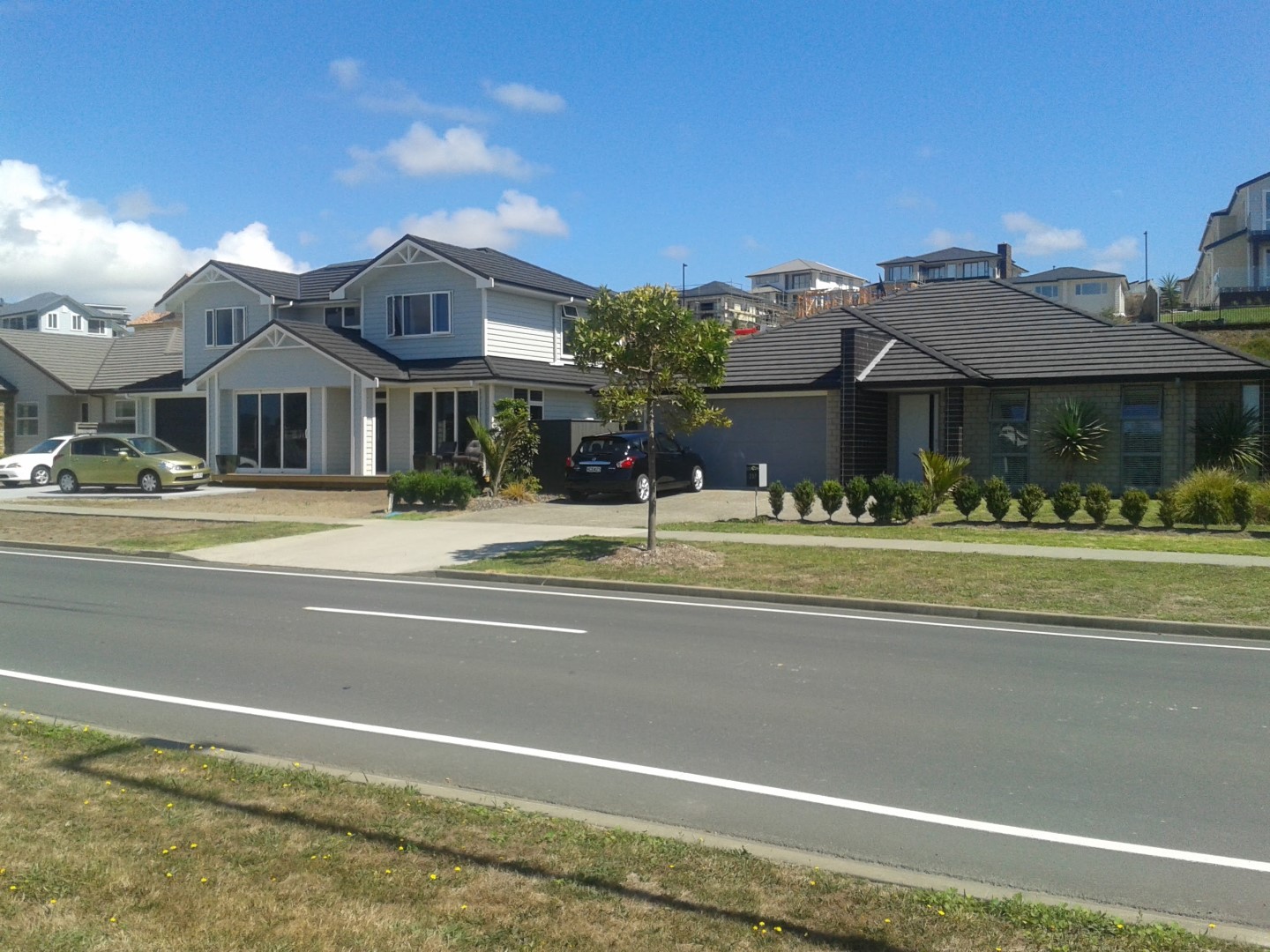
School is one of the first things every family asks about when weighing up a move to New Zealand, right after visas and house prices. Even as a couple who moved out without children of our own, we spent ten years watching friends, colleagues and Isaac’s own family navigate school zones, sports fees and the mysteries of NCEA, and it’s clearly one of the biggest unknowns for anyone relocating with kids. Schools in New Zealand for migrant families work quite differently to the UK or the US, from how you’re admitted through to how the final qualification is structured.
This guide covers how the school system is structured, the difference between state, state-integrated and private schools, how zoning and enrolment work, what changed when deciles were replaced by the Equity Index, who can enrol as a domestic student versus who pays international fees, what school actually costs, early childhood education, and how NCEA works, including the qualification changes now confirmed.
A quick note on the exchange rate: as of mid-July 2026, GBP 1 buys around NZD 2.31 and USD 1 buys around NZD 1.71, per XE.com. We’ve used those rates throughout, rounded for readability. Rates move daily, so check a live converter before relying on any figure here.
In this article
- How New Zealand’s school years work, and how they map to the UK and US
- The three main types of school: state, state-integrated and private
- School zones and enrolment schemes
- The Equity Index: what replaced deciles
- Enrolling from overseas: domestic student vs international student
- What school actually costs
- Early childhood education and the 20 Hours ECE scheme
- NCEA, and the qualification changes now confirmed
- Your questions answered
How New Zealand’s school years work
New Zealand schooling runs across 13 year levels, Year 1 to Year 13, and most children start at age 5, on or near their birthday, rather than everyone starting together in September like the UK or the US. Schooling is compulsory from age 6 to 16, though almost every child starts well before 6.
The system falls into three stages. Primary covers Year 1 to Year 8, split between “contributing” primary schools, which run Year 1 to Year 6 and hand children on to a separate intermediate school for Years 7 and 8, and “full primary” schools, which take children through to Year 8 under one roof; contributing primary is the more common set-up. Secondary school covers Year 9 to Year 13, usually called a college or high school, where NCEA is taken in the senior years.
One practical wrinkle: the school year runs late January to mid-December, with a long summer break over Christmas, rather than the UK and US autumn start. Moving mid-year is common and schools are used to it, but your child’s “year group” can shift slightly depending on when you land. The school will place them based on age and prior schooling.
Choosing schools in New Zealand for migrant families: state, integrated or private
There are three main types of school, plus two smaller categories.
State schools are owned and funded by the government, teach the national curriculum, and are non-religious. They’re free for domestic students, though most ask for a voluntary donation and you’ll still pay for uniforms, stationery and trips. They’re the large majority: at 1 July 2025 there were 2,536 schools in New Zealand across all types, and state schools alone enrolled 720,234 students, about 84.6%, per Education Counts.
State-integrated schools were originally private schools that joined the state system. The government funds their teaching just like a state school, but the land and buildings usually remain privately owned, often by a church or trust, and the school keeps its own “special character”, commonly religious. To cover property upkeep, they charge a compulsory fee called attendance dues on top of any donation. They enrolled 96,824 students, around 11% of the total.
Private schools set their own curriculum and rely mostly on fees. They can also choose who they enrol, unlike state and integrated schools, which generally can’t turn away a student in their zone. Private schools enrolled 33,941 students, around 4% of the total.
Two smaller categories: charter schools (kura hourua) are government-funded but more independent, and can’t charge tuition to domestic students. Kura kaupapa Māori, and Māori-medium units within English-medium schools, teach primarily or entirely in te reo Māori, worth investigating even without any prior connection to it.
School zones and enrolment schemes
Most state and state-integrated schools operate a “home zone”, a mapped area, and if you live inside it your child is guaranteed a place. It’s the New Zealand equivalent of UK catchment areas or US school district lines: where you rent or buy genuinely determines which school your child can attend without a ballot.
Live outside a zone and you can still apply, but a place isn’t guaranteed. Schools accept in-zone applicants first, then work through out-of-zone applications in an order set out in the Education and Training Act 2020, using a ballot if needed. Once enrolled, a child stays even if the zone later changes, useful if you’re renting short-term while house-hunting. Private schools generally don’t zone at all.
Since schools shape where families end up living, read zoning maps before committing to a suburb. Education Counts runs a “find a school in your zone” tool by address, and our guide to the best places to live in New Zealand is a good starting point.
The Equity Index: what replaced deciles
If you’ve read anything about New Zealand schools that isn’t brand new, you’ve probably come across “decile”, a 1 to 10 ranking that used to sort schools by the socioeconomic profile of their students, and that parents often used, rightly or wrongly, as a proxy for quality. Deciles were phased out from January 2023 and replaced with the Equity Index (EQI), used to calculate equity funding since then, per Education Counts.
The EQI scale runs the opposite way to what you’d expect: schools get a number from 344 up to 569, and a lower number means students face fewer barriers, a higher number means more. Indicators include family interaction with the benefit and justice systems, parental education and income, and how often a child has changed homes or schools. The Ministry is explicit that the EQI is a funding tool, not a quality ranking. Don’t use it the way you’d use an Ofsted rating or a US district ranking: it shows funding need, not teaching quality.
One flow-on: schools with an EQI of 432 or higher can opt into the school donations scheme, trading the right to ask for donations (except overnight camps) for extra funding, around $165.95 (excl GST) per student for 2026. Ask any school you’re considering whether they’re part of the scheme.
Enrolling from overseas: eligibility by visa
This is where migrant families most often trip up: eligibility depends on your visa, not your intentions or how long you plan to stay.
Domestic students
Under the Education and Training Act 2020, a child can enrol as a domestic student, meaning free tuition at a state school, if they’re a New Zealand citizen, hold a residence class visa, or fall into a category in the Ministry’s domestic student notice. In practice this covers children of most work visa holders via a Dependent Child Student Visa, once the parent’s visa is genuine and ongoing. Not automatic for everyone: children of parents on a working holiday, Silver Fern or Skilled Migrant job-search, seasonal work, or fishing crew visa are specifically excluded, per Immigration New Zealand. If your child doesn’t fit, they’ll need a Fee Paying Student Visa instead.
International (fee-paying) students
The Fee Paying Student Visa costs from NZD $850 (about £368 or $497 USD). For compulsory education, Years 1 to 13, Immigration New Zealand requires proof of NZD $17,000 (about £7,360 or $9,940 USD) a year in living costs, or $1,417 a month for shorter stays, on top of tuition paid separately to the school. Tuition varies enormously, roughly NZD $12,000-45,000 a year (about £5,200-£19,500 or $7,000-$26,300 USD) across a typical state day school through to private or boarding. Treat this as ballpark only and check the specific school’s own website before budgeting.
Most migrant families on a standard work visa with dependent children end up in the domestic category once the visa clock is met, so check your visa against Immigration New Zealand’s eligibility list early, ideally before signing a job offer.
What school actually costs
Even at a “free” state school, budget for several ongoing costs.
Donations are voluntary, and a school can’t exclude your child from a curriculum activity for not paying, but plenty of families pay anyway. An RNZ analysis of 200 schools’ 2023 donation requests found an average of $358 per student, ranging from $15 to $4,320. Schools in the donations scheme (available at an EQI of 432 or higher) can’t ask for a donation at all, aside from optional payment for camps.
Uniforms are a real cost at secondary level. Stuff.co.nz reporting put a full uniform, blazer and PE kit included, at NZD $600-1,200-plus in the first year (roughly £260-£520 or $350-$700 USD), with single items like a jacket sometimes $250 alone. Second-hand uniform shops cut that substantially.
BYOD (bring your own device) schemes are standard at most secondary schools and increasingly common in senior primary. Consumer NZ and Stuff.co.nz reporting put a basic device at roughly NZD $250-750 (about £108-£325 or $146-$439 USD). If a device is genuinely required for the curriculum, schools can’t lawfully force parents to buy it.
Activities, trips and camps outside school hours are billed separately, since free education only covers curriculum activities in school hours. If costs are a genuine stretch, Work and Income offers an Out of School Care subsidy and a School and Year Start-up Payment for eligible families.
Early childhood education and the 20 Hours ECE scheme
Early childhood education (ECE) isn’t compulsory, but most children attend some form of it, whether a daycare, kindergarten, playcentre or home-based service. Places can be hard to find in the bigger cities, so get on waiting lists early once you know where you’ll be living.
Once your child turns 3, they’re eligible for 20 Hours ECE, funding up to 20 hours a week (capped at 6 hours a day) at any participating service, until they start school at 5. A service can’t charge for those funded hours, though many still charge for “extras” like food, nappies or hours beyond the 20, so ask what’s included before enrolling.
NCEA, and the qualification changes now confirmed
The National Certificate of Educational Achievement, NCEA, is New Zealand’s main secondary qualification, taken across Year 11 to Year 13 as Levels 1, 2 and 3. Each level requires 80 credits: 60 at that level or above, plus a 20-credit literacy and numeracy co-requisite you only need to clear once, counting towards every level thereafter. It’s been mandatory since 2024, and from 2026 can only be met through dedicated digital assessments in reading, writing and numeracy. Credits come from subject standards marked Not Achieved, Achieved, Merit or Excellence, via internal school-based work and external exams.
Worth flagging if you’re planning years ahead: in May 2026 the government confirmed the structure of a full NCEA replacement. Level 1 is being scrapped for a Foundational Award focused on literacy and numeracy for Year 11, from 2028. Levels 2 and 3 are being replaced by two new qualifications, the New Zealand Certificate of Education and the New Zealand Advanced Certificate of Education, with a new A+ to E grading scale and a C grade to pass. The first cohort through is the group currently in Year 9, phasing in from 2028 to 2030, with no student switching systems partway, per the Ministry. Detail could still shift before legislation is finalised, so check the Ministry’s NCEA change programme page rather than assume today’s system is what your child will sit.
One more 2026 change: an updated curriculum for English and Maths (Years 0-10) became compulsory in state and integrated schools from Term 1 2026, requiring a minimum 10 hours a week of reading, writing and oral language teaching for Years 0-8.
New Zealand school years compared with the UK and US
School years don’t line up perfectly across the three countries, partly due to the January-to-December versus September-to-July calendars, so treat this as a close approximation, confirmed by age and prior schooling rather than by the table alone.
| NZ Year | Typical age | Nearest UK Year | Nearest US Grade |
|---|---|---|---|
| Year 1 | 5-6 | Year 1 | Kindergarten |
| Year 2 | 6-7 | Year 2 | Grade 1 |
| Year 3 | 7-8 | Year 3 | Grade 2 |
| Year 4 | 8-9 | Year 4 | Grade 3 |
| Year 5 | 9-10 | Year 5 | Grade 4 |
| Year 6 | 10-11 | Year 6 | Grade 5 |
| Year 7 | 11-12 | Year 7 | Grade 6 |
| Year 8 | 12-13 | Year 8 | Grade 7 |
| Year 9 | 13-14 | Year 9 | Grade 8 |
| Year 10 | 14-15 | Year 10 | Grade 9 (Freshman) |
| Year 11 | 15-16 | Year 11 (GCSE) | Grade 10 (Sophomore), NCEA L1 |
| Year 12 | 16-17 | Year 12 (Sixth form) | Grade 11 (Junior), NCEA L2 |
| Year 13 | 17-18 | Year 13 (A-level) | Grade 12 (Senior), NCEA L3 |
Your questions answered
Can my child go to a free state school if we’re on a work visa? Usually, as a domestic student, once they hold a Dependent Child Student Visa linked to your qualifying work visa. Not universal: children of parents on a working holiday, Silver Fern job-search, seasonal work or fishing crew visa don’t qualify and need a Fee Paying Student Visa instead.
How do I find out which school we’re zoned for? Education Counts runs a “find a school in your zone” search by address, worth checking before you sign a lease or buy.
What replaced school deciles, and does it matter? The Equity Index (EQI), from January 2023. It’s a funding tool, not a quality ranking, so a high EQI number isn’t a “worse” school, just one receiving more equity funding.
Is education really free in New Zealand? Relatively. State tuition is free for domestic students, but you’ll budget for uniforms, stationery, activities and often a voluntary donation. Integrated schools add compulsory attendance dues, and private schools set their own fees.
How much should we budget beyond tuition? It varies, but between a donation, a full secondary uniform (NZD $600-1,200-plus) and a BYOD device (NZD $250-750), the first year at a new secondary school can run into four figures.
What is NCEA, and is it changing? New Zealand’s main secondary qualification, taken in Years 11 to 13. Yes: confirmed in May 2026, NCEA is being phased out from 2028, replaced by a Foundational Award and two new certificates with an A+ to E grading scale.
Do we need to pay for early childhood education? Not for the funded hours. From age 3, 20 Hours ECE covers up to 20 hours a week free at a participating service, though many charge separately for food, nappies or extra hours.
Can we choose a Māori-medium or bilingual school without a Māori background? Yes. Kura kaupapa Māori and Māori-medium units within English-medium schools are open to any family, and are a genuinely distinctive part of what New Zealand offers.
Schools are one piece of a much bigger settling-in picture. If you’re weighing up where to live around good school zones, our guide to the best places to live in New Zealand is a good place to start, and our broader piece on moving to New Zealand with children covers dependent visas through to helping kids settle in. Our guide to New Zealand visas explained walks through visa options, and our healthcare for migrants guide covers the other big day-one question for families. For the honest, lived-in picture of daily life, what it’s like to live in New Zealand is worth a read too.
Our full guide to moving to New Zealand includes a dedicated schools and education chapter covering zones, enrolment and budgeting for the whole family in one connected step. Got a question this article hasn’t answered? Get in touch through our contact page. This is general information based on our own research into current New Zealand government guidance, not immigration or education advice, so check your own circumstances against the official sources linked throughout before you decide.
You might also like
Best Places to Live in New Zealand in 2026: Our Honest, City-by-City Guide
Auckland, Wellington, Christchurch and six more places compared on rent, jobs and climate for 2026, from a couple who actually lived in three of them.
The Best Banks in New Zealand for Migrants
Which New Zealand bank is best for migrants in 2026: ANZ, ASB, BNZ, Westpac, Kiwibank and the challengers compared, fees, apps and deposit protection.
Buying a Car in New Zealand: A 2026 Guide to Costs, WoF and Rego
Buying a car in New Zealand: 2026 prices for WoF, rego, insurance and RUC, plus where to buy, imports and EVs, from a couple who actually did it.