
Getting Married in New Zealand (and What It Means for Your Visa)
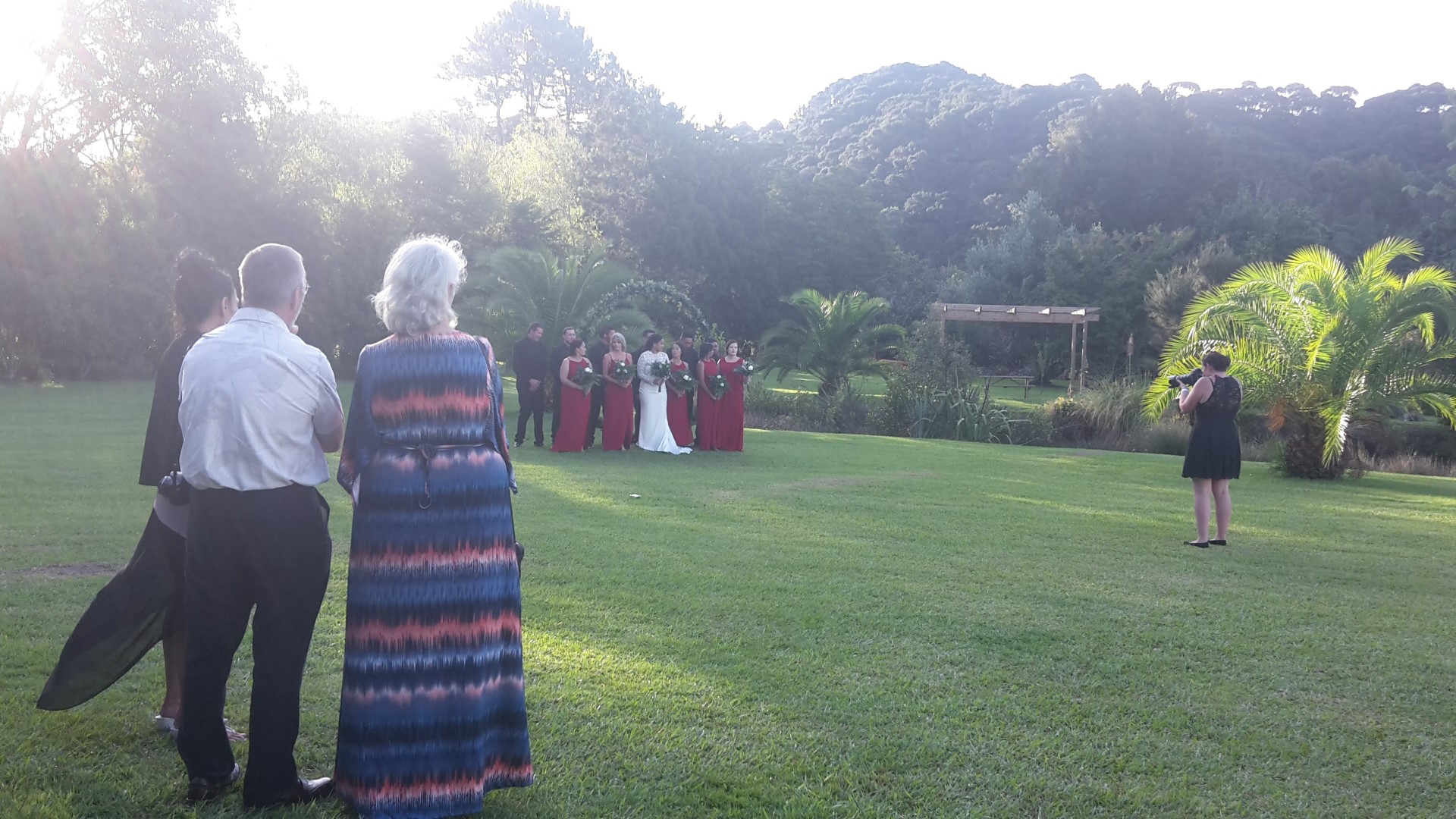
We got married in Auckland, and the thing that stuck with us afterwards wasn’t the ceremony itself, it was how little bureaucracy stood between deciding to do it and actually being legally married. Coming from the UK, where the paperwork for a wedding can feel like its own small project with months of notice periods, we didn’t expect New Zealand’s process to be quite so quick or quite so unbothered about where we were from. Nobody asked about our visa status to let us marry. That surprised us as Brits more than almost anything else about the whole thing.
This guide covers how getting married in New Zealand actually works in 2026, the licence, the celebrant, the cost, and it’s honest about the part that trips a lot of couples up afterwards: marrying a New Zealander does not, on its own, get you residence. The visa side runs on entirely separate rules, and we’ve laid those out too.
A quick note on money: as of mid-July 2026, GBP 1 buys around NZD 2.31 and USD 1 buys around NZD 1.71, per XE.com and exchangerates.org.uk. We’ve used those rates throughout, rounded, and they move daily, so check a live converter before relying on any figure here.
In this article
- The marriage licence: how it works and what it costs
- Choosing a celebrant, or having a registry ceremony
- No residency or citizenship needed to marry here
- Same-sex marriage, civil unions and witnesses
- Changing your name afterwards
- Our own experience getting married in Auckland
- The step-by-step process
- Marrying a Kiwi and your visa: what actually happens
- The Culturally Arranged Marriage Visitor Visa
- Destination weddings: legal recognition back home
- Your questions answered
The marriage licence: how it works and what it costs
Every legal marriage in New Zealand starts with a marriage licence, issued by Births, Deaths and Marriages, part of the Department of Internal Affairs. It’s a straightforward online application at marriages.services.govt.nz, and only one of you needs to submit it, though you’ll need details for both partners. As of the fee rise on 18 June 2026, a marriage licence costs NZD $158 (around £68 or US$92), up from $150 previously, per govt.nz’s own current page.
Two things to plan around: you need to apply at least 3 working days before your ceremony, so it isn’t something you can sort the morning of, and the licence expires 3 months after it’s issued, so don’t apply too far ahead either. If you’re using a celebrant, the licence can be sent directly to them by email or courier once it’s ready, which is the smoother option most couples use.
Choosing a celebrant, or having a registry ceremony
New Zealand law requires either a registered marriage celebrant or a minister of religion to legally conduct the ceremony. Registered celebrants are trained and authorised by the Department of Internal Affairs, can be religious or entirely secular, and are generally the more flexible option for couples who want a ceremony that doesn’t follow a fixed format. You choose a celebrant from a public list when you apply for your licence, and celebrants set their own fees independently of the government’s licence cost, so shop around, prices vary enormously by celebrant and location.
If you’d rather skip organising your own celebrant entirely, a registry ceremony is available through Births, Deaths and Marriages itself, at a set fee of NZD $175 (around £76 or US$102), paid in advance. Combined with the $158 licence, that puts the baseline legal cost of getting married in New Zealand at around $333, still modest by international standards, even though it’s risen from about $240 before the June 2026 fee increase.
No residency or citizenship needed to marry here
This is the detail that makes New Zealand a genuine destination-wedding option, and it’s worth stating plainly: you do not need to be a New Zealand citizen, a resident, or even hold anything beyond a standard visitor visa to legally marry here. Per the government’s own guidance, “visitors to New Zealand can marry or have a civil union here.” There’s no minimum stay requirement tied to the wedding itself and no immigration status check built into the licence application. It’s one of the reasons New Zealand shows up so often on international destination-wedding lists, alongside the scenery.
Same-sex marriage, civil unions and witnesses
Same-sex marriage has been legal in New Zealand since the Marriage (Definition of Marriage) Amendment Act came into force on 19 August 2013, and the process, licence, celebrant, cost, is identical regardless of the couple’s gender. Civil unions remain a separate, still-legal option too, available to both same-sex and opposite-sex couples since 2005, for anyone who prefers that legal form to marriage; the government’s own “Getting married” section still lists civil unions as a live, current pathway in 2026.
Whichever you choose, you’ll need two witnesses at the ceremony, both aged 18 or over, who sign the marriage licence alongside the two of you and your celebrant. They don’t need to be residents or citizens either, so it’s entirely possible to fly out with two friends, marry, and have the whole legal side wrapped up within your trip.
Changing your name afterwards
New Zealand doesn’t automatically change anyone’s name on marriage, and there’s no requirement to change it at all. You can keep your existing name, take your partner’s, or combine both, with or without a hyphen. If you simply want to start using a new surname, you generally don’t need to fill in any form, your marriage certificate is usually accepted as proof if an organisation asks. A formal legal name change, rather than just adopting a new one, is a separate statutory declaration process. One quirk worth knowing: you don’t need to update your driver licence for a marriage-related name change at all, even if you’ve legally changed your name elsewhere.
Our own experience getting married in Auckland
We’re not going to pretend we remember every form we filled in, it’s been a while, but what’s genuinely stuck with us is how uncomplicated the legal side felt at the time, especially set against the version of a UK wedding we’d half-planned for in our heads before we left. There was no waiting period that stretched into months, no need to prove how long we’d been in the country, and no sense that our nationality was any part of the equation at all. For a couple who’d spent years slowly working out the logistics of moving countries, that was a genuinely nice piece of admin to find easy for once.
The step-by-step process
| Step | What happens | Timing |
|---|---|---|
| 1. Choose a celebrant or the registry option | Pick a registered celebrant from the public list, or opt for a Births, Deaths and Marriages registry ceremony | Any time before applying for your licence |
| 2. Apply for your marriage licence | Apply online at marriages.services.govt.nz; only one partner needs to submit it | At least 3 working days before the ceremony, no earlier than 3 months before |
| 3. Pay the licence fee | NZD $158 (from 18 June 2026); registry ceremonies add a set $175 fee | At application (licence) or in advance (registry ceremony) |
| 4. Licence is issued | Sent to you or directly to your celebrant | Around 3 working days after a complete application |
| 5. Hold the ceremony | Celebrant or registrar conducts the ceremony; you, your partner and two witnesses aged 18+ all sign | Within 3 months of the licence being issued |
| 6. Order your marriage certificate | Apply separately through Births, Deaths and Marriages if you need official proof (for a name change, visa application or use overseas) | Any time after the ceremony |
Marrying a Kiwi and your visa: what actually happens
Here’s the part that catches people out, and it’s worth being blunt about: marrying a New Zealand citizen or resident does not, by itself, grant you residence, a work visa, or any automatic immigration status at all. You can marry in New Zealand on a visitor visa and fly home still on that same visitor visa. The wedding and the visa are two completely separate processes under New Zealand law.
The relevant pathway is the Partner of a New Zealander Resident Visa, and Immigration New Zealand’s central requirement is proof of a genuine, ongoing partnership, not just a marriage certificate. In practice that generally means evidence you’ve lived together for 12 months before you submit the application: joint tenancy agreements, shared utility bills, joint bank accounts, and other documents showing the same address over that period, dated every few months to cover the full duration. That 12 months doesn’t have to be unbroken, but any gaps need a genuine, explainable reason. The visa fee starts from NZD $5,360 (roughly £2,320 or US$3,135) for both onshore and offshore applications, though it varies by nationality where New Zealand has a bilateral fee-waiver arrangement in place, and Immigration New Zealand’s own published estimate has 80% of applications processed within around 7 months. Our full guide to New Zealand visas covers where the Partner visa sits alongside work and residence visas more broadly.
Getting married in New Zealand can be part of building that evidence, but it’s not a shortcut around the 12-month living-together requirement, and it’s genuinely worth talking to a licensed immigration adviser before assuming a wedding changes your visa timeline.
The Culturally Arranged Marriage Visitor Visa
There’s a specific, narrower visa worth knowing about if it applies to you: the Culturally Arranged Marriage Visitor Visa, for couples whose marriage has been arranged by someone other than themselves, following an identified cultural tradition, rather than a marriage the couple arranged independently. Both partners need to be 18 or older (16 or 17 year olds need parental or guardian consent), and you must have met each other in person before applying.
It grants up to 3 months in New Zealand, allows formal study but not work, and the wedding itself has to happen within that 3-month window if you’re travelling here to marry, or the visa application has to follow within 3 months of an overseas ceremony. The application fee runs roughly NZD $100 to $441 depending on your circumstances, plus $100 for each additional traveller included. It’s worth knowing this category has a notably high decline rate, recently reported at around two-thirds or more of applications, so it’s not a rubber-stamp process, and getting the supporting evidence right matters.
Destination weddings: legal recognition back home
If you’re reading this from the UK or the US and thinking about New Zealand purely as a wedding destination rather than a move, the good news is straightforward: a marriage legally performed here, licence, registered celebrant or registrar, two witnesses, is a legally valid marriage recognised internationally, including back home. You’ll want your official marriage certificate, ordered separately through Births, Deaths and Marriages once the ceremony’s done, as your proof for updating anything back in your home country, a passport, a tax return, your own country’s marriage register if it keeps one. Check with your own country’s registrar or consulate about what, if anything, they need you to formally register on return, since requirements differ by country, but the marriage itself doesn’t need re-doing once it’s legally performed here.
Your questions answered
Can I marry in New Zealand on a tourist visa? Yes. There’s no residency or citizenship requirement to marry in New Zealand, and a standard visitor visa or NZeTA is enough to legally marry here, provided you meet the ordinary licence requirements like age and both being legally free to marry.
How long does the whole process take from application to wedding day? The licence itself takes a minimum of 3 working days once you apply, but most couples build in more time to book a celebrant or registry slot and organise the day itself. There’s no minimum stay in New Zealand required beforehand, so a determined couple could realistically marry within about a week of arriving.
Does getting married in New Zealand automatically let my partner move here with me? No. Marriage alone grants no immigration status. Your partner would need to separately qualify for a visa, most likely the Partner of a New Zealander Resident Visa, which requires evidence of a genuine partnership including generally 12 months of living together, not just a marriage certificate.
What’s the difference between a civil union and marriage in New Zealand? Both are legally recognised relationship statuses, available to any couple regardless of gender since 2005 for civil unions and 2013 for same-sex marriage, but they’re legally distinct forms, and which one confers what recognition can vary if you take it back to another country, so check your home country’s position if that matters to you.
Do we need to bring our own witnesses, or can the venue provide them? You need two witnesses aged 18 or over, but they don’t need to be pre-arranged strangers, and many venues or celebrants can help arrange witnesses if you’re marrying somewhere without family or friends able to attend. They simply need to be present and willing to sign the licence.
Is a religious ceremony required, or can we have a completely non-religious wedding? Entirely your choice. A registered marriage celebrant can conduct a fully secular ceremony with no religious content at all, or you can choose a minister of religion if you want a faith-based service; both are equally legally valid provided the paperwork is completed correctly.
If we already married overseas, do we need to do anything in New Zealand to have it recognised? Generally no, a legal marriage performed overseas is recognised in New Zealand, including for immigration purposes like a Partner of a New Zealander visa application, though Immigration New Zealand may ask for a certified translation of your marriage certificate if it wasn’t issued in English.
Getting married is the easy, joyful part. The harder logistics, if you’re planning to actually live in New Zealand together afterwards, sit on the visa and moving side. Our full guide to New Zealand visas and our complete guide to moving to New Zealand are the places to go next, and if you’re weighing up whether Auckland itself is the right base, our guides to what it’s like to live in New Zealand and living in Auckland cover that in more depth. We’re not immigration advisers, so for anything specific to your own partnership visa situation, talk to Immigration New Zealand directly or a licensed immigration adviser rather than relying on a blog. Got a question this guide hasn’t answered? Get in touch through our contact page.
You might also like

Buying a House in New Zealand: A Migrant's Guide (2026)
Who can legally buy property in New Zealand, mortgages for new migrants, the buying process and 2026 prices, verified against LINZ, RBNZ and IRD.

How Much Does It Cost to Move to New Zealand? (2026)
Real 2026 figures for New Zealand visa fees, flights, shipping, pets, rental bond and a first car, in NZD with GBP and USD, from a couple who did it.
Moving to New Zealand from Australia
No visa needed. A practical 2026 guide to moving to New Zealand from Australia: healthcare, KiwiSaver, tax, shipping, pets and driving, researched properly.