
Living in Wellington, New Zealand: Our Honest Guide
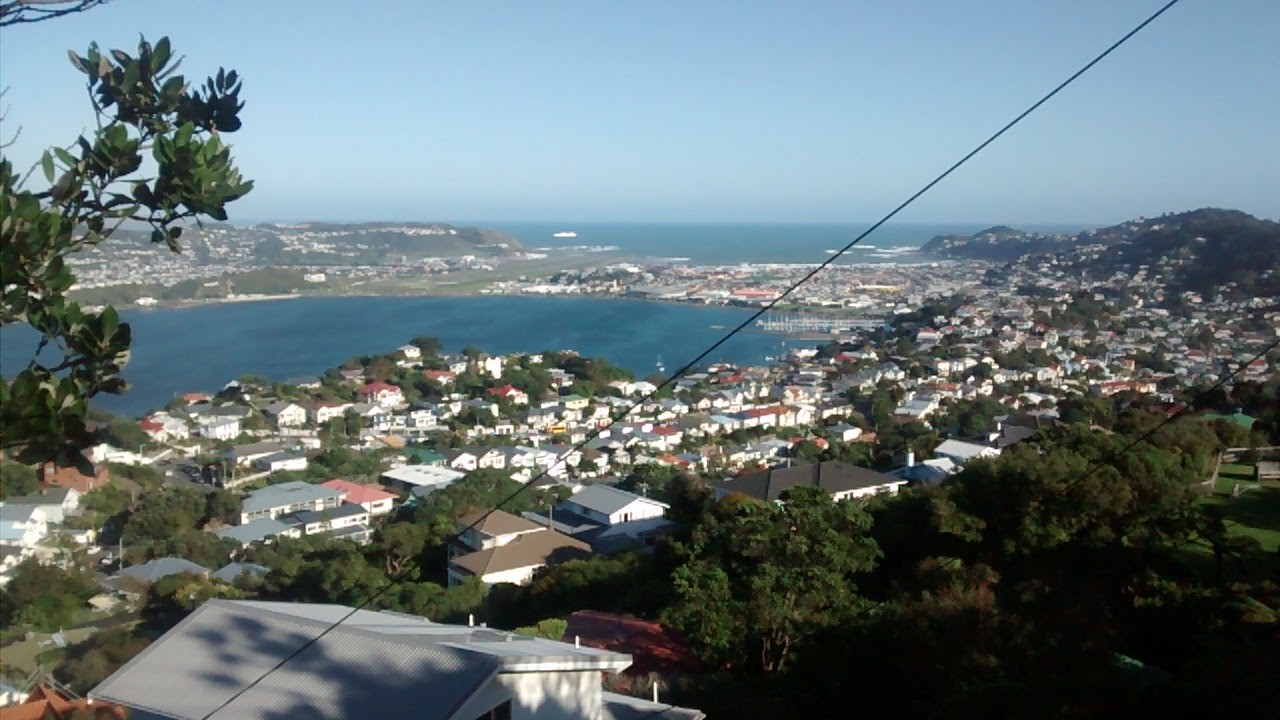
We arrived in Wellington after almost two years in Auckland, half expecting a smaller, quieter version of the same city. It wasn’t. Te Whanganui-a-Tara, New Zealand’s capital, is compact, hilly, wind-battered and full of character, and it turned out to be the first place in New Zealand where we properly felt like we fitted in. We spent two years there, renting a flat with a sea view a bus ride from the CBD, walking to work more often than not, and slowly working out why locals call it Pōneke with real affection despite the weather.
This guide is everything we wish someone had told us before we moved: what it costs to live there now, what the job market looks like after several rounds of public sector cuts, how you get around a city with barely room for a motorway, and the honest truth about the wind. We’ve checked the figures against current data and dated everything, because Wellington’s rental and job markets have moved a lot even since we lived there.
In this article
- Wellington neighbourhoods: where to live
- Cost of living and rent in Wellington
- The Wellington job market
- Getting around: Wellington’s public transport
- The weather, honestly
- Earthquakes and building resilience
- Lifestyle, culture and food
- Who Wellington suits (and who it doesn’t)
- Your questions answered
A quick note on money: figures below are in New Zealand dollars first. As of mid-July 2026, GBP 1 buys around NZD 2.30 and USD 1 buys around NZD 1.71 (exchangerates.org.uk, xe.com), so divide any NZD figure accordingly. Rates move daily, so check a live converter before building a real budget around them.
Wellington neighbourhoods: where to live
Wellington is small enough that “which suburb” matters more than in almost any other New Zealand city. The whole urban area, including Porirua, Lower Hutt and Upper Hutt, has a population of around 433,900, with Wellington City itself home to about 210,800 people (Stats NZ, June 2025). The CBD is barely two kilometres long, so most inner suburbs are a walk, a bus ride or one steep hill from town, and where you land shapes your daily life more than in a sprawling city.
Mount Victoria and Oriental Bay sit closest to the centre, wooden villas and a five-minute walk to work, at a price. Thorndon, near Parliament, is similar: historic, central and expensive. Kelburn, linked to town by the cable car, suits university staff and students, with the Botanic Garden on its doorstep. Over the hill, Newtown is Wellington’s most multicultural suburb and best-value eating strip, while Island Bay offers a windswept south coast, strong Italian heritage and a proper beach feel. Miramar, out towards the airport, is where Wētā Workshop and the wider screen industry cluster. Karori, the largest suburb, is the family-friendly, quieter option with more space, and crossing the harbour to Petone or the Hutt Valley drops rent further for a longer commute.
| Suburb | Vibe | Best for | Rough weekly rent (2-bed) |
|---|---|---|---|
| Mount Victoria / Oriental Bay | Villas, harbour views, walk to town | Those who want to be in the thick of it | $650-750+ |
| Thorndon | Historic, near Parliament | Public servants, professionals | $600-700 |
| Kelburn | Leafy, cable car, university | Academics, students, families | $580-680 |
| Newtown | Multicultural, best-value food | Renters on a budget, younger crowd | $520-600 |
| Island Bay | South coast, windy, beachy | Those who want space and sea air | $520-600 |
| Miramar | Screen industry hub, near airport | Wētā and film workers | $500-580 |
| Karori | Family suburb, more space | Families, first-timers wanting quiet | $500-580 |
| Petone / Lower Hutt | Across the harbour, cheaper | Budget-conscious commuters | $480-570 |
Rent ranges are indicative, compiled from Tenancy Services (MBIE) bond data and Trade Me Property listings, May 2026. Actual prices vary by property condition and exact location.
Older housing stock is Wellington’s honest weak point. Plenty of the villas that give suburbs like Mount Victoria their character predate any insulation standards, so damp and draughty rooms are common. Ask about heating and insulation before you sign anything, not after your first winter.
Cost of living and rent in Wellington
Wellington’s rental market has swung hard in the last couple of years, and mostly in tenants’ favour. The median weekly rent across the wider region fell to $600 in April 2026, down roughly $50 on a year earlier, the steepest drop of any main centre (Trade Me Property Rental Price Index, April 2026). A three-bedroom house typically runs $620 to $680 a week, and a two-bedroom place $490 to $580 (MoneyBalance / Tenancy Services & Trade Me, May 2026), against a national median of $625 a week (Trade Me, April 2026). The softening tracks the public sector job losses covered below: fewer well-paid renters chasing the same stock has eased the squeeze.
House prices tell a similar story. Wellington City’s median sale price sat around $857,500 to $865,000 in May 2026, down from roughly $900,000 the year before, while the wider region’s median hovers between $770,000 and $805,800 (REINZ data, reported via Ray White Wellington and propertynoise.co.nz, May to June 2026). Properties are taking longer to sell than a year ago too. It is not a booming market, and buyers currently have more leverage than they have had in years.
Day-to-day costs feel roughly on par with Auckland, maybe slightly cheaper on rent and slightly dearer on the little indulgences: a flat white typically runs $5.50 to $6.50 and a casual meal out around $25. For the fuller breakdown of what things cost across a New Zealand household, our cost of living guide tracks what we actually paid, and our guide to renting a home in New Zealand covers bonds, fees and tenant rights if Wellington will be your first New Zealand rental.
The Wellington job market
This is the section we have to be honest about, because Wellington’s economy has been through a rough few years. The city has always run on the public service, government agencies, ministries and Parliament itself, and around 28,000 public servants work here, its single largest employment sector (Infometrics, via Newswire.co.nz, May 2026). That concentration used to be Wellington’s strength. Lately it has been its weak spot.
The government has been cutting the public service hard, with plans pointing to around 8,700 fewer roles nationally by mid-2029, trimming the sector back toward roughly 1% of the population from a headcount of 63,657 full-time equivalent staff at the end of 2025 (RNZ, Stuff, reported 2026). Wellington has absorbed a disproportionate share of that pain: the city shed close to 6,000 jobs in a single year, and 177 dependent businesses closed in the same period (Infometrics, May 2026). Regional unemployment sat at 6.4% in the March 2026 quarter against a national 5.3% (Stats NZ). If you’re moving for a public sector role, treat any offer as real rather than assumed.
It isn’t all bleak. Wellington’s tech and creative sector has kept growing through the downturn, home to names like Sharesies, Xero, Hnry, Pik Pok and Wētā FX, and some local recruiters reported hiring picking up through 2026 even as the public service contracted (RNZ, 2026). Wellington also remains the centre of New Zealand’s screen and visual effects industry, built on Wētā’s reputation from The Lord of the Rings through to modern blockbuster VFX work, based largely around Miramar. If your work is remote, in tech, film or a creative field, the downturn matters far less, and the softer rents are arguably a gift.
For a wider view of how Wellington compares with the rest of the country on jobs, rent and lifestyle, our guide to the best places to live in New Zealand puts it alongside Auckland, Christchurch and six other cities, and our Wellington vs Auckland comparison goes deeper on the two cities we know best.
Getting around: Wellington’s public transport
Wellington genuinely earns its “most walkable city in New Zealand” tagline. With a CBD under two kilometres long, we walked to work, to the supermarket and to most nights out, and plenty of Wellingtonians do the same. When you do need transport, Metlink runs the buses, trains and harbour ferry on Snapper cards and contactless payment, with fares up 3.1% from May 2026 and the off-peak discount trimmed from 30% to 20% (Greater Wellington Regional Council, RNZ, May 2026). A typical peak three-zone adult fare into the CBD runs around $4.67, and the rail network, the Kapiti, Hutt Valley, Melling, Johnsonville and Wairarapa lines, is useful if you live further out and commute in.
The Wellington Cable Car, running from Lambton Quay up to the Botanic Garden and Kelburn, is a proper, useful bit of transport for Kelburn residents, not just a tourist novelty, at $13 for an adult return, $7 one way (wellingtoncablecar.co.nz, checked July 2026; note it takes cards but not Snapper). Driving is the one thing we wouldn’t lean on: CBD parking is limited and expensive, and the hilly, narrow streets outside the centre feel more like a hillside English town than a capital city. Cycling has its fans, but the hills and wind mean Wellington cyclists tend to fall into one of three camps: seriously fit, on an e-bike, or arriving at work rather sweatier than planned.
The weather, honestly
Let’s deal with this properly, because nobody who has lived in Wellington will let you skip it. The city is widely cited as one of the windiest in the world, with Wellington Airport recording average wind speeds around 29 km/h and gusts over 63 km/h on something like 178 days a year (commonly cited wind data traced back to NIWA and MetService records). We arrived assuming that reputation was exaggerated. It is not. Some days the wind genuinely dictates which streets you walk down.
What surprised us was the sunshine. Wellington averages around 2,000 to 2,060 hours of sunshine a year on the long-term climate normals, more than London gets in a good year, and NIWA classes the region as sunny as well as windy. Summers there were more stable than we expected, certainly steadier than a British one, even if they never quite reach Auckland’s warmth. Winters are cool and grey rather than bitterly cold, and a good Wellington day, still air, blue sky, the harbour flat calm, is genuinely one of the best things about living there. The whole city seems to know it and spills outside the moment it happens.
Earthquakes and building resilience
Wellington sits directly on the Wellington Fault, one of the most active fault lines in the country, and it is not a topic locals dodge. We were living there in November 2016 when the magnitude 7.8 Kaikoura earthquake struck. Wellington was nowhere near the epicentre, but we felt it hard in the CBD, and the sixty seconds we spent under the dining table at midnight changed how seriously we took earthquake preparedness for the rest of our time in New Zealand.
The city has built genuine infrastructure around that risk. Under the Building Act, a building is classed earthquake-prone if it would reach less than 34% of the current New Building Standard in a moderate quake, and owners in high-seismic zones like Wellington get 7.5 years for an engineering assessment and 15 years to complete strengthening (Wellington City Council). There is a public earthquake-prone building register you can check before renting or buying. None of that removes the risk, but it is visible, ongoing preparation. Get an emergency kit sorted early and read the Council’s guidance rather than filing it away, sooner than we did.
Lifestyle, culture and food
Wellington’s cafe culture is not an exaggeration. Before we moved there neither of us much cared for coffee; within a year we had opinions about roasters. Flight Coffee, Havana Coffee, Peoples Coffee, Prefab and Customs by Coffee Supreme all set a genuinely high standard. Cuba Street is the beating heart of it: bars, restaurants, buskers, galleries and secondhand shops packed into a pedestrianised strip that has been a protected historic area since 1995, while Newtown’s Riddiford Street does the best-value multicultural eating in the city.
Culturally, Wellington punches well above its size. Te Papa, the national museum, is free for New Zealand residents (international visitors pay $35) and deserves the full day people warn you to set aside. The waterfront walk from the railway station down to Oriental Parade is one of the best in the country, and Zealandia, the fenced predator-free eco-sanctuary in the town belt, is a proper wildlife experience minutes from the CBD. The city hosts the World of Wearable Arts show, the New Zealand Fringe Festival and a serious annual film festival, on top of being the seat of government. It’s a small city with a genuinely big-city amount going on.
Who Wellington suits (and who it doesn’t)
Wellington suited us because we wanted walkability, character and a sense of belonging over sheer scale, and we found all three. It tends to suit creative and public-sector professionals, tech workers, students, and anyone who would rather stroll to a decent flat white than sit in traffic. It does not suit people chasing guaranteed sunshine, a big backyard, or rock-solid government job security right now, given the scale of the public sector contraction. If character, culture and compactness matter more than mild winters and space, Wellington is hard to beat. If you need warmth or a booming jobs market, our guide to the best places to live in New Zealand compares it against the alternatives.
Your questions answered
Is Wellington expensive to live in? It’s one of New Zealand’s pricier cities, though rents have fallen sharply, down to a regional median of $600 a week in April 2026 from around $650 a year earlier (Trade Me Property Rental Price Index). House prices have softened too, and the gap with Auckland has narrowed.
Is it hard to find a job in Wellington right now? Harder than a few years ago, particularly in the public service, which has shed around 6,000 jobs across the wider Wellington economy in a single year (Infometrics, 2026). Regional unemployment sat at 6.4% in the March 2026 quarter. Tech, creative and screen-industry roles have held up better.
Do you need a car to live in Wellington? No, and most inner-suburb residents manage without one. The CBD is under two kilometres long, walking covers most daily needs, and Metlink’s buses and trains handle the rest. A car helps more if you live out in the Hutt Valley or Kapiti Coast.
How windy is Wellington really? Genuinely windy. It is commonly cited as the windiest city in the world, with average wind speeds around 29 km/h at the airport and gusts over 63 km/h on well over a hundred days a year, the single biggest weather adjustment newcomers make.
Is Wellington safe from earthquakes? No city on the Wellington Fault can promise that, and a serious quake is a real long-term risk. The city has strong building standards and an active earthquake-prone building strengthening programme, so understand the risk and have a plan rather than ignore it.
What is the best area to live in Wellington? It depends on budget and priorities. Mount Victoria and Thorndon suit those who want to walk to work and can pay for it, Kelburn suits families and academics, Newtown and Island Bay offer better value with real character, and Karori suits families wanting more space.
Is Wellington or Auckland better to live in? It depends what you’re optimising for. We lived in both and preferred Wellington for its walkability, culture and sense of community, while Auckland wins on jobs, scale and weather. Our Wellington vs Auckland comparison goes through it factor by factor.
Two years in Wellington left us with a genuine soft spot for the place, wind, earthquakes, damp villas and all. It is not a city that suits everyone, and right now it is going through a harder economic patch than we ever saw while we lived there, but for the right person it remains one of the most characterful places to live in New Zealand. For the bigger picture of daily life across the country, our guide to what it’s actually like to live in New Zealand is a good next stop, and if you’re still working through the practical steps of getting here, our full guide to moving to New Zealand covers visas, budgeting and choosing where in the country to land. Got a question about Wellington specifically? Get in touch through our contact page and we’ll do our best to help from what we learned living there ourselves.
You might also like
Best Places to Live in New Zealand in 2026: Our Honest, City-by-City Guide
Auckland, Wellington, Christchurch and six more places compared on rent, jobs and climate for 2026, from a couple who actually lived in three of them.

The Best Banks in New Zealand for Migrants
Which New Zealand bank is best for migrants in 2026: ANZ, ASB, BNZ, Westpac, Kiwibank and the challengers compared, fees, apps and deposit protection.
Buying a Car in New Zealand: A 2026 Guide to Costs, WoF and Rego
Buying a car in New Zealand: 2026 prices for WoF, rego, insurance and RUC, plus where to buy, imports and EVs, from a couple who actually did it.