
Saving Money on Petrol, Diesel and Car Costs in New Zealand
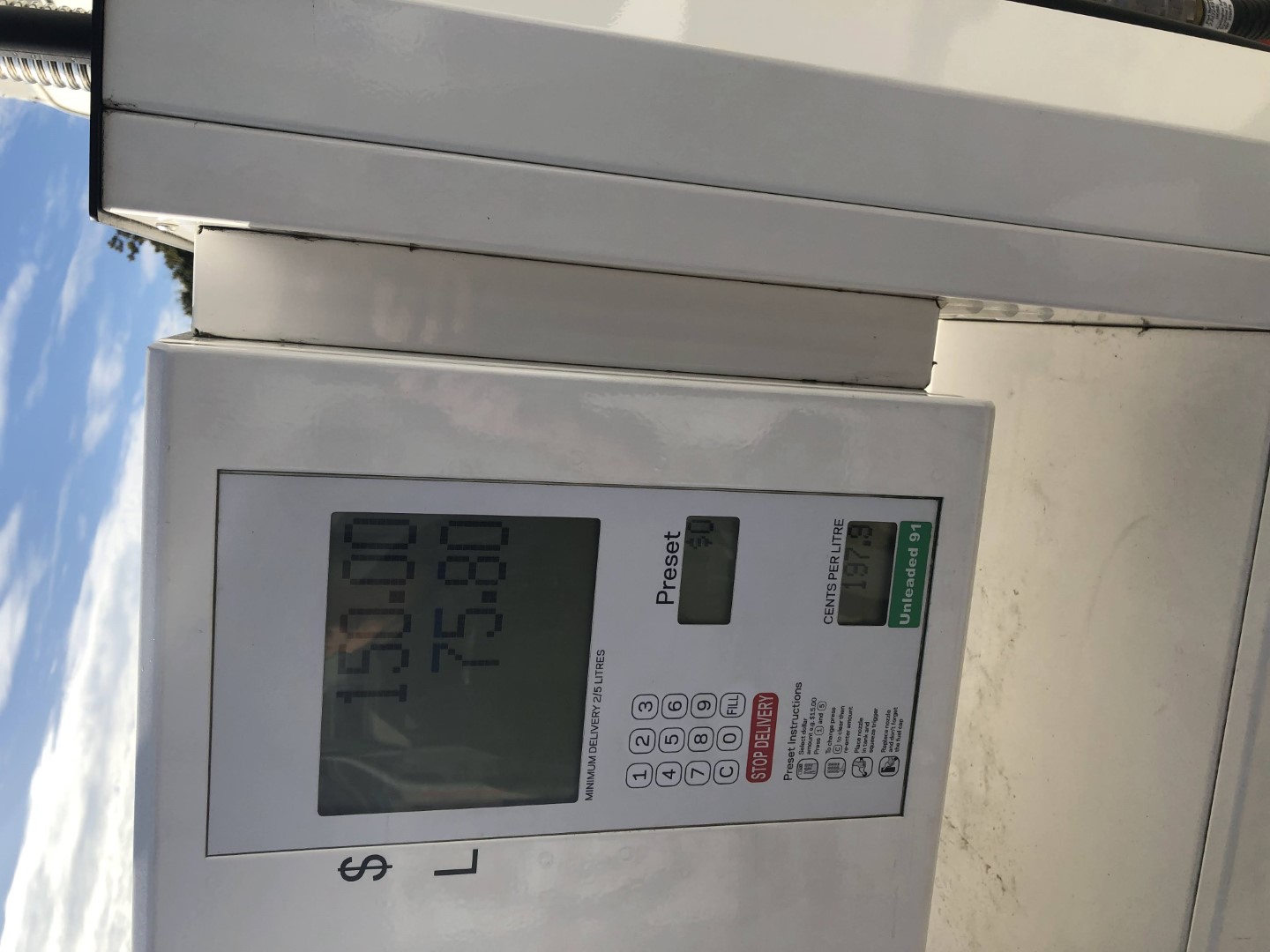
Fuel is one of those New Zealand costs that catches people off guard, not because petrol is expensive by British standards exactly, but because the distances are longer than they look on a map and the discount schemes keep changing under your feet. We ran a car, then two, for a decade in New Zealand, the last several years of it doing proper rural Northland driving where the nearest big supermarket was a genuine drive rather than a five-minute pop-out, and fuel was one of the biggest and most volatile lines in our monthly budget.
This guide covers what actually saves you money at the pump in 2026, honestly, including which of the old discount schemes are dead and which just changed hands, the price crisis that hit New Zealand hard this year, and the rental-car tricks that still work if you are hiring rather than owning. For the mechanics of owning a car, WoF, registration and insurance, see our buying a car in New Zealand guide; we keep that detail there and stick to saving money here.
In this article we discuss:
- New Zealand’s 2026 fuel prices and why they spiked
- What actually makes up the price at the pump
- Fuel discount schemes: what is still alive in 2026
- Gaspy and the apps that genuinely save you money
- Regional price differences and rural driving
- Diesel, RUC and running an EV or hybrid
- Saving money on a rental car
- Driving to use less fuel
A note on money before we start: figures below are in New Zealand dollars first. As of mid-July 2026, GBP 1 buys around NZD 2.33 and USD 1 buys around NZD 1.71 (Wise, Bank of England, OFX), so scale accordingly for a rough conversion, and check a live rate before relying on it for real budgeting. For the wider picture of what a car actually costs to run and buy here, our cost of living in New Zealand guide has our own real fuel spend, year by year, alongside rent, power and food.
New Zealand’s 2026 fuel prices and why they spiked
As of 17 July 2026, the national average pump price sat around $2.93 a litre for 91 octane and $2.45 for diesel, both easing from a much sharper peak earlier in the year. It is worth being straight about what happened, because it genuinely was not a normal year at the pump.
In early 2026, conflict involving Iran closed the Strait of Hormuz, the shipping lane that around 20% of the world’s oil supply normally passes through, removing an estimated 15 million barrels a day from global supply almost overnight. New Zealand does not buy crude directly from the Gulf, but it does not need to: we import nearly all our refined petrol and diesel from Asian refining hubs (roughly 39% from South Korea, 34% from Singapore, 14% from Malaysia), and those refiners price off the same shocked global benchmarks. Diesel copped it worse than petrol, briefly more than quadrupling on the Singapore spot market to over US$350 a barrel, partly because diesel makes up around 46% of New Zealand’s total fuel demand and partly because China’s usual surplus diesel exports dried up during the crisis. For a stretch this year, diesel genuinely cost more than petrol at the pump here, which is not the normal order of things. The International Energy Agency responded with its largest ever coordinated stock release, 400 million barrels, and prices have been easing since a US-Iran memorandum of understanding was accepted on 18 June 2026, though as always with fuel, prices went up fast and are coming down more slowly.
We are not going to pretend we know where prices sit by the time you read this. Check a live tracker rather than trusting any specific figure in this article for more than a few weeks.
What actually makes up the price at the pump
New Zealand fuel tax is straightforward once you see it laid out, and it is worth knowing because it explains why the price rarely drops as fast as global oil prices do. Fuel excise duty is a flat 77 cents a litre on petrol, the Emissions Trading Scheme adds roughly another 18 cents a litre at current carbon prices, and GST at 15% applies on top of the whole lot, fuel included. Add it up and something close to half of what you pay at a New Zealand pump in an ordinary period is tax, before you get to the actual cost of the refined product and the retailer’s margin. None of that is unique to New Zealand, most countries tax fuel heavily, but it is worth knowing before you assume a price rise is entirely the retailer’s doing. Diesel does not carry fuel excise duty in the same way; diesel vehicles pay through road user charges instead, which we cover further down.
Fuel discount schemes: what is still alive in 2026
This is the part that trips people up most, because several once-reliable schemes have either closed entirely or quietly changed partners in the last couple of years, and outdated blog posts (including our own old one) will send you looking for discounts that no longer exist.
Gone: Flybuys. If you remember collecting Flybuys points on fuel or groceries, it is dead. Earning stopped on 31 October 2024, spending closed at the end of that year, and any points left on a card expired on 1 January 2025. The company behind it went into liquidation not long after. Do not go looking for a Flybuys card to dig out of a drawer; there is nothing left to spend.
Also gone: AA Smartfuel. This one catches out even people who think they have kept up, because the confusion runs the other way round from Flybuys. Countdown (now Woolworths) did pull out of the AA Smartfuel partnership in early 2024 to launch its own bp-backed Everyday Rewards scheme, but that was not a partial change, it was the whole programme ending: AA and its joint-venture partner wound AA Smartfuel down completely from 31 January 2024, and cardholders could no longer earn or redeem after that date. AA’s own website now redirects the old Smartfuel page straight to an FAQ explaining the closure, and Smartfuel does not appear anywhere in AA’s current navigation. A few finance blogs still describe it as a live 2026 programme; do not trust them. If you are hunting for fuel discounts through New World or Woolworths spending, look at Everyday Rewards and the Foodstuffs Fuelup vouchers instead, both covered below.
Also alive: Woolworths Everyday Rewards. Scan the card at bp and you get an instant 6 cents a litre off every fill, jumping to at least 10 cents a litre off once a week during a bonus window, plus a loyalty point for every litre bought.
Also alive: Foodstuffs Fuelup vouchers. New World and Pak’nSave shoppers still get cents-per-litre fuel vouchers tied to spend thresholds, redeemable at Z Energy and participating Caltex stations (not at Pak’nSave’s own on-site fuel stations, slightly confusingly), valid for 30 days and good for up to 100 litres. See our cheapest supermarkets and grocery savings guide for how the wider Foodstuffs and Woolworths loyalty schemes compare on groceries themselves.
Independent and worth chasing: Gull. Gull has kept its reputation as the cut-price disruptor, with regular Discount Days knocking around 20 cents a litre off for a set window and a further 6 cents off through the Gull app on top, no loyalty card or minimum spend required. Gull completed its merger with fellow independent NPD in July 2026, forming a roughly 240-site business trading as NPDGull under a new parent company, Astra Energy Group, but both brands are staying on their existing forecourts separately, so the Discount Days and app deals themselves are not disappearing.
Gaspy and the apps that genuinely save you money
Gaspy is the one we would install first. It is New Zealand’s original crowd-sourced fuel price app, free, built entirely on drivers reporting what they actually paid at a given station that day. You can filter by grade, sort by price or distance, and set alerts for when prices drop in your area. It sounds like a small thing, but a driver who actually uses it regularly is estimated to save around $780 a year simply by not defaulting to the nearest or most familiar station out of habit. We used it constantly doing the school-run-free but errand-heavy driving that rural life in Northland demanded, and it genuinely changed which forecourt we pulled into most weeks.
Beyond Gaspy, most of the discount schemes above have their own apps worth having alongside it: the AA app now includes a Trip Tracker that estimates the actual cost of a specific journey based on your vehicle and current fuel or EV charging prices, which is a nice way to see a road trip’s real cost before you commit to it rather than after.
Regional price differences and rural driving
Fuel is not one national price, and the gap between regions is bigger than most newcomers expect. In one recent snapshot the West Coast averaged 308.9 cents a litre against Nelson’s 278.8 cents, a 30-cent gap on otherwise comparable South Island regions. The general pattern holds nationally: stations in Fiordland, Queenstown, the West Coast and rural Northland, where we lived, typically carry a real premium over the main centres, simply because getting fuel to a remote station costs more than delivering it to a busy Auckland forecourt with three competitors on the same corner. The gap between the cheapest and dearest regions is commonly 30 to 40 cents a litre, worth somewhere around $300 to $400 a year to a typical driver, which is not trivial.
Living rurally, our own fuel line reflected exactly this. In an Auckland flat with a five-minute cycle commute for Isaac and barely any driving otherwise, our monthly fuel spend sat in the low hundreds of dollars. Once we were on the Northland block, with a proper drive to Kerikeri for anything beyond basic supplies and everything further afield a genuine trip, that monthly figure had roughly doubled to close to $500 by the time we left, across two vehicles between us. If you are budgeting for a move to a rural or semi-rural area, do not assume your current-city fuel spend will hold; it very often will not, and it is worth padding the number more than feels comfortable at first.
Diesel, RUC and running an EV or hybrid
Diesel vehicles do not pay fuel excise at the pump the way petrol does; instead, diesel and electric vehicle owners pay road user charges (RUC), a distance-based charge bought in blocks of kilometres. We cover the full RUC mechanics, rates and how to buy them properly in our buying a car in New Zealand guide, so here is the money-saving headline only: RUC now applies to light electric vehicles too, at $76 per 1,000km, after the exemption that EVs enjoyed for years came to an end. Plug-in hybrids pay a lower rate, $38 per 1,000km. Petrol hybrids that are not plug-in pay no RUC at all, since they already contribute through fuel excise on the petrol they do burn.
Even with RUC now factored in, running an EV in New Zealand is still typically cheaper than running an equivalent petrol car, commonly by somewhere between $900 and $2,000 a year depending on how many kilometres you cover and current electricity and petrol prices, though the margin has genuinely narrowed since the exemption ended and it is worth doing the sum for your own driving pattern rather than assuming a blanket saving. A driver covering around 15,000km a year will pay roughly $1,140 in EV road user charges alone, which is real money, just usually still less than the equivalent fuel bill would have been.
Saving money on a rental car
If you are visiting rather than living here, the car itself is rented rather than owned, and a different set of tricks applies. We hired cars in New Zealand more times than we can count over the years, for family visits, for stretches between owning our own vehicles, and for the odd trip where our own car was tied up elsewhere, and these are the habits that actually moved the needle.
Say yes to reducing the excess to nil. New Zealand does not legally require drivers to carry insurance, which genuinely surprises a lot of visitors, and it means the rental company’s excess reduction cover is worth paying for. Take it down to nil if you can, not just “reduced”.
Say no to the fuel top-up service every time. Rental companies routinely offer to refill the tank for you on return so you do not have to bother; they also charge close to a third more per litre for the privilege. Build ten minutes into your return trip to fill up yourself instead.
Skip the hire GPS. A data plan and Google Maps or Maps.me downloaded offline covers this completely now, and a hire GPS unit typically costs around $10 a day for something your phone already does better.
Bring an actual credit card, not a debit card. Rental companies take an imprint or hold against a credit card for the excess amount and release it at return. Do this on a debit card and they may actually take the funds up front, leaving you at the mercy of the exchange rate when it is eventually returned.
Watch for charges that land weeks later. Speeding fines, parking tickets and toll road charges (New Zealand has very few toll roads, mainly one north of Auckland and one near Tauranga) can all appear on your card up to several weeks after you have gone home, with an administration fee stacked on top by the rental company. Pay a toll directly and promptly if you use one; it is a couple of dollars if paid within five days, and climbs steeply after that.
Avoid airport and ferry-terminal pickup if you do not need the car immediately. If your first stop is a city you plan to explore on foot for a few days, picking the car up later avoids paying airport location surcharges and city parking costs for a vehicle you are not using yet.
Consider a one-way relocation deal. Operators including GoRentals, Transfercar, imoova, Spaceships and Escape Rentals regularly offer heavily discounted, sometimes near-nominal, one-way relocations when they need a vehicle moved between depots. Deals change weekly depending on where each company’s fleet has banked up, so they need checking close to your actual travel dates rather than months out, but they can turn a rental leg of a trip into one of the cheapest parts of it. For the fuller road-trip planning picture, including whether hiring a car or a campervan suits your route better, see our New Zealand road trip planning guide, and our honest Hertz vs Apex rental comparison if you are choosing between the two.
Do not oversize the car. A Corolla-sized car comfortably handles New Zealand’s roads outside genuine winter conditions, and the daily rate difference between an economy car and an SUV adds up fast over a two or three week trip. Base the decision on luggage and passenger count rather than the open-top-convertible daydream; the insurance alone on anything flashy tends to end that particular fantasy quickly.
Driving to use less fuel
The last lever is simply how you drive, and it is the one most people ignore because it feels like it should not matter much. It does. Smooth, anticipatory driving, easing off early rather than braking hard and accelerating again, keeps fuel use down noticeably over a year of ordinary driving, and it is free. Keeping tyres at the correct pressure matters more than most drivers realise too; underinflated tyres create real rolling resistance and measurably increase fuel use, and it costs nothing but five minutes at a self-service air pump to check. On longer trips, cruise control on flat, open sections of state highway tends to use less fuel than a foot that drifts up and down with the terrain, though it is worth turning it off well before anything winding, which describes a lot of New Zealand’s more scenic roads.
Your questions answered
Does 91 or 95 octane petrol make a real difference to fuel economy in a normal car? For most cars designed to run on 91, no, filling with 95 does not meaningfully improve economy or performance, and it costs more per litre for no real benefit. Only use 95 or higher if your vehicle’s manual specifically recommends or requires it.
Is it worth driving out of your way to find cheaper fuel? Generally only if you are already passing near a genuinely discounted station, since the fuel burned covering extra distance can eat into or erase the saving. Gaspy is useful precisely because it shows you what is cheap along a route you are already driving, rather than encouraging a special trip.
Do New Zealand petrol stations negotiate or price-match? No, prices are set and displayed, and there is no haggling culture at the pump the way there sometimes is on a car purchase. The exception is the scheduled discount days some independents like Gull run, which function as a planned, advertised price cut rather than a negotiation.
Can visitors on a short trip still use Gull’s app discounts? Yes, the Gull app is open to anyone in New Zealand, resident or visitor, with no NZ bank account required to sign up, though you will need a NZ mobile number for the sign-up itself. For a short trip it is arguably more effort than it is worth unless you are renting for several weeks and doing genuine distance. AA Smartfuel is not an option either way, it closed for good in January 2024.
Why does diesel sometimes cost more than petrol in New Zealand, when it usually does not? It is unusual and was a direct effect of the 2026 fuel crisis: diesel makes up a much larger share of New Zealand’s total fuel demand than petrol, and global diesel supply was hit harder than petrol supply when the crisis disrupted Asian refining and Chinese export volumes. In an ordinary year, diesel is typically cheaper than 91 petrol per litre, though direct comparison is complicated by the fact that diesel vehicles pay road user charges separately rather than fuel excise at the pump.
Is it cheaper to hire a car or use ride-share and public transport for a short New Zealand visit? Outside Auckland and Wellington’s inner areas, public transport coverage is limited and a hire car is usually the more practical choice for genuine sightseeing, particularly anywhere requiring a road trip between regions. For a city-only stay, especially in Wellington or central Auckland, skipping the rental car entirely and using ride-share or public transport for the visit can work out considerably cheaper.
Do NZ fuel prices differ much between petrol station brands at the same location? Sometimes by several cents a litre even on the same street, particularly between an independent like Gull or Waitomo and one of the major brands, so it is worth checking Gaspy even in town rather than assuming brand doesn’t matter locally.
That is the honest 2026 picture of saving money on petrol, diesel and car costs in New Zealand: a genuinely volatile year at the pump, two dead loyalty schemes people still ask us about, a couple of genuinely-still-alive ones, and the apps and habits that made the real difference for us over a decade of driving here, rural Northland included. For the ownership side of the equation, WoF, registration, insurance and buying the right car in the first place, our buying a car in New Zealand guide picks up where this one leaves off. We go deeper on regional running-cost breakdowns and a full EV charging map in our paid guide. Spotted a scheme we have missed, or found a saving of your own worth sharing? Get in touch with us here; fuel prices move fast enough that we would rather know sooner than later.
You might also like

Best Places to Live in New Zealand in 2026: Our Honest, City-by-City Guide
Auckland, Wellington, Christchurch and six more places compared on rent, jobs and climate for 2026, from a couple who actually lived in three of them.
The Best Banks in New Zealand for Migrants
Which New Zealand bank is best for migrants in 2026: ANZ, ASB, BNZ, Westpac, Kiwibank and the challengers compared, fees, apps and deposit protection.
Buying a Car in New Zealand: A 2026 Guide to Costs, WoF and Rego
Buying a car in New Zealand: 2026 prices for WoF, rego, insurance and RUC, plus where to buy, imports and EVs, from a couple who actually did it.