
Planning a New Zealand road trip: routes, driving times and honest advice
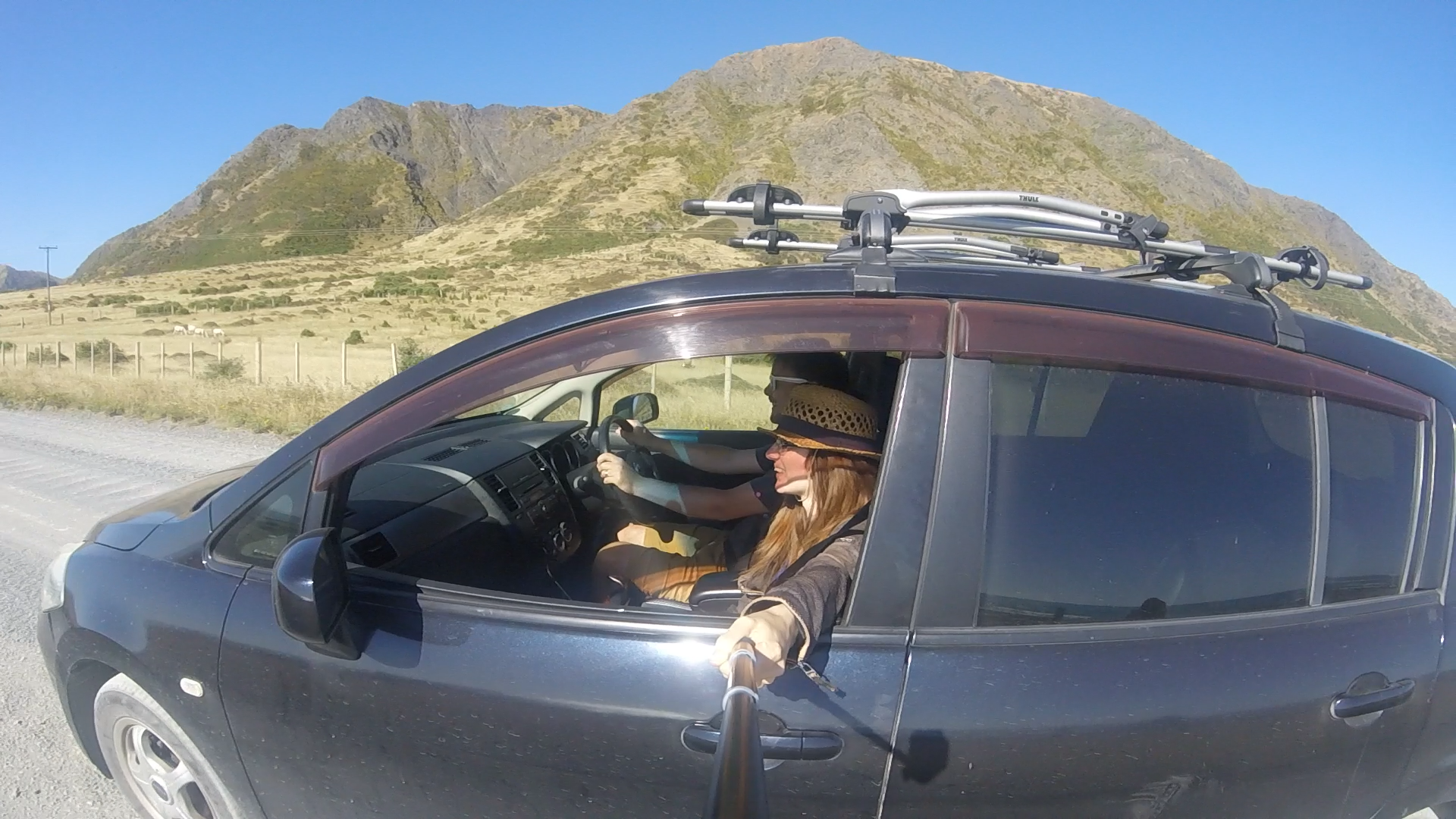
Every New Zealand road trip question eventually comes back to the same thing: the map lies. New Zealand looks small next to Australia or the US, and the distances on paper look easy. They aren’t. We drove, camped and lived out of a motorhome around both islands for years, including one off-grid stretch, and the single biggest thing we’d tell anyone planning a New Zealand road trip is to plan by time, not by kilometres.
This page is the planning mechanics: driving times, ferries, fuel, seasons, and whether to hire a car or a motorhome. We’ve deliberately kept it separate from our actual itineraries, because you’ll get more value from a proper day-by-day route than from us cramming one into this page too.
In this article we discuss:
- Why New Zealand kilometres take longer than you think
- Realistic driving times between the main hubs
- Crossing Cook Strait: Interislander vs Bluebridge
- Fuel planning
- Seasonal driving realities
- Left-hand driving: a note for US and Canadian readers
- Motorhome or rental car: our honest experience
- How long to allow for your trip
Why New Zealand kilometres take longer than you think
New Zealand’s open road speed limit is 100km/h, and that’s the ceiling, not the average. Most of the country runs on two-lane state highways that climb, drop and switch back constantly through hill country, so you’re rarely holding that top speed for long. Add in one-lane bridges (there are hundreds of them, mostly on the South Island’s West Coast and in rural Northland, controlled by simple give-way signage you need to read correctly), the odd mob of sheep being moved along the road, and a view that genuinely does make you want to keep stopping for photos, and a “200km, should be two hours” trip regularly becomes three and a half.
Google Maps and Apple Maps both tend to underestimate New Zealand driving times, because they don’t fully account for the winding gradient of most rural highways. Build in a buffer of at least 20 to 30% on top of whatever your map app tells you, more in winter or if you’re towing or driving anything larger than a standard car.
Realistic driving times between the main hubs
Here are honest point-to-point times for some of the routes people ask us about most, all assuming clear weather and normal traffic. Treat these as a floor, not a target.
| Route | Distance (approx) | Realistic driving time |
|---|---|---|
| Auckland to Wellington | 640km | About 9 hours, non-stop. Realistically a two-day drive with stops in Rotorua, Taupō or the Wairarapa |
| Picton to Christchurch | 340km | About 5 hours |
| Christchurch to Queenstown | 485km | About 6 to 7 hours |
| Queenstown to Milford Sound | 288km | About 5 hours in summer with one stop, 6 to 7 hours in winter |
| Auckland to Bay of Islands (Paihia) | 240km | About 3.5 hours |
| Nelson to Abel Tasman (Marahau) | 65km | About 1 hour |
We nearly always broke journeys like Auckland to Wellington into two days rather than pushing through in one, partly because the country deserves the stops and partly because eight or nine hours of winding roads is genuinely tiring in a way a straight motorway never is.
Crossing Cook Strait: Interislander vs Bluebridge
If your route crosses between the islands, you’ll take a ferry, not a bridge or tunnel. Two companies run the crossing between Wellington and Picton: Interislander and Bluebridge. Both take around three and a half hours and carry vehicles.
Book your vehicle space well ahead if you’re travelling in summer (December to March). Peak Friday and Sunday sailings can sell out six weeks in advance, and while foot-passenger seats tend to stay available later, vehicle space does not. In the shoulder and winter months (April to October), one to two weeks’ notice is usually fine, but don’t leave it to the day before if you have a fixed onward plan.
Worth knowing for 2026 to 2029: Interislander’s older rail-enabled ferry, the Aratere, was withdrawn from service in August 2025, and there is no rail-enabled ferry crossing Cook Strait until new ships arrive around 2029. This doesn’t affect car and campervan travellers directly, but it’s part of why sailing schedules have been in flux. Bluebridge has strengthened its own fleet in the meantime: it announced the purchase of a newer ferry, the Livia, in March 2025, and the ship arrived in Wellington that July, going into full Cook Strait service shortly afterwards. Check both operators’ current timetables when you book rather than relying on an old schedule, since crossing times and sailing frequency do shift year to year.
Fuel planning
Petrol stations are plentiful around the main centres but genuinely sparse in some of the country’s most scenic corners. There is no fuel at all on the Milford Road between Te Anau and Milford Sound, a 119km stretch, and the self-service pump at Milford itself frequently runs dry, so it isn’t a backup. Similar gaps exist on stretches of the West Coast, the Southern Scenic Route through the Catlins, and parts of inland Northland. Our rule from years of driving these roads: if your tank drops below half in a rural area, fill up at the next station you see rather than waiting for a cheaper one.
Seasonal driving realities
New Zealand runs opposite seasons to the Northern Hemisphere: December to February is summer, June to August is winter. Winter driving in the South Island’s mountain passes is a different job to summer driving. Chain zones are signposted on approaches to routes like the Homer Tunnel through the colder months, and if you’re renting a car or campervan for a South Island winter trip, ask specifically whether chains are included or available, and check NZTA’s live road status pages (SH94 for Milford, and the relevant page for any alpine pass you’re crossing) before you set off. Roads can close for a few hours for avalanche control, usually in the morning, so build a buffer into any winter itinerary that includes a mountain pass.
If you’re planning to freedom camp, note that the rules changed materially in 2026. From 7 June 2026, only vehicles carrying the new “Green Warrant” self-containment certification can freedom camp where self-containment is required, replacing the old Blue Warrant. The key change: portable or chemical toilets no longer qualify. Your toilet has to be fixed and plumbed into the vehicle. If you’re hiring a self-contained campervan, confirm with the rental company that it holds current Green Warrant certification, and read our full guide to freedom camping in New Zealand before you rely on it for accommodation.
Left-hand driving: a note for US and Canadian readers
New Zealand drives on the left, with right-hand drive vehicles, the same system as the UK and Australia. If you’re coming from the US or Canada, this is the single biggest adjustment, and it catches people out in specific, predictable ways: turning into the wrong lane after a quiet junction, reaching for the door instead of the gearstick, and misjudging your position on narrow rural roads because your instinct for “centre of the lane” is mirrored. Give yourself an easy first day, ideally away from a big city, to get your reflexes sorted before you tackle anything technical like the Crown Range or the Coromandel’s coastal bends. You can drive on a full overseas licence as a visitor, provided it’s in English or accompanied by an approved translation or International Driving Permit, but check NZTA’s current rules on how long that’s valid for before you travel, since the exact time limit is worth confirming rather than assuming.
Motorhome or rental car: our honest experience
We’ve done both, extensively, including living in a motorhome full-time for a stretch and freedom camping all over the country. Here’s our honest read.
A motorhome or campervan gives you genuine freedom: no fixed accommodation bookings, the ability to change plans on a whim, and mornings waking up somewhere spectacular that a hotel could never put you. It’s also, in our experience, slower and more tiring to drive on New Zealand’s narrow, winding roads than a car, harder to park in town centres, and noticeably heavier on fuel. Campervan and motorhome depots are concentrated in three cities, Auckland, Christchurch and Queenstown, so your start and end points are somewhat fixed by that. Budget more than you expect: motorhome hire is significantly pricier than a rental car, especially in peak summer.
A rental car is cheaper, easier to manoeuvre, and the better choice if your trip is under two weeks or you’re travelling in a group of three or more, where a car’s running cost splits more efficiently than a campervan’s. The trade-off is that you need to book accommodation ahead, especially in peak season, rather than deciding on the day.
Our honest advice: if you’re new to New Zealand roads and have less than two weeks, take a car and stay in accommodation. If you have three weeks or more, genuinely love the outdoors, and don’t mind a slower pace, a campervan will change the character of your whole trip for the better. We’d never go back to hotel-only travel here if we had the time for a proper motorhome loop again. If you do go the car route, our Hertz vs Apex rental review compares the two companies we’ve used most.
How long to allow for your trip
We get asked constantly how many days a New Zealand trip needs, and the honest answer is that it depends entirely on how much of the country you want to see properly versus rushed. As a rough steer from Dawn’s years building custom NZ itineraries professionally: 10 days is enough to do one island justice without feeling rushed, two weeks lets you see the highlights of both, and three weeks or more starts to feel unhurried rather than a checklist. Rather than duplicate a day-by-day plan here, we’ve built those properly on our itinerary hub, covering everything from a 10-day South Island loop to a full month around both islands. Start there once you know roughly how much time you have, and use this page to sanity-check the driving times inside whichever route you pick.
If budget is the main thing shaping your trip length, our guide on how to travel New Zealand on a budget covers realistic daily costs for both the car-and-motel approach and the campervan-and-freedom-camping approach, so you can work out what a longer trip actually costs before you commit to it.
Got a specific route you’re trying to plan and can’t work out if it’s realistic? Get in touch through our contact page and we’re happy to give you an honest read.
Your questions answered
Is it cheaper to drive New Zealand in a rental car or buy a car and sell it at the end? For trips of two months or longer, buying and reselling a car (a common approach among longer-term travellers) can work out cheaper than ongoing rental fees, but it comes with the hassle of paperwork, a warrant of fitness, and the risk of not reselling quickly. For anything under two months, hiring is almost always simpler and comparably priced once you factor in your time.
Can I do a New Zealand road trip without booking any accommodation ahead? In a certified self-contained campervan using freedom camping spots, largely yes, outside the busiest few weeks of summer. In a rental car relying on motels, hotels or Airbnb, we wouldn’t recommend it in December and January, when popular towns like Queenstown, Wānaka and the Bay of Islands sell out early.
Do I need a 4WD to drive around New Zealand? No, for the vast majority of routes a standard 2WD car or campervan is fine, including all state highways. A 4WD only becomes useful if you’re planning specific unsealed back-country roads or winter trips deep into ski access roads, and even then it’s the exception rather than the rule.
How much should I budget for petrol on a New Zealand road trip? It varies with fuel prices and your route, but as a planning rule, budget for higher per-litre prices than you’re likely used to from the US, and similar to or slightly above UK prices. Diesel campervans are generally cheaper to run per kilometre than petrol cars. Check current prices with an app like Gaspy once you’re on the ground, since prices vary noticeably between regions and even between petrol stations in the same town.
Is it legal to sleep in a rental car overnight in New Zealand? Only if the vehicle is certified self-contained (holding a current Green Warrant since June 2026) and you’re parked somewhere that permits freedom camping, or you’re in a paid campsite. Sleeping in a standard, non-self-contained rental car overnight in a public place is not legal freedom camping and can attract a fine in many districts.
What’s the biggest mistake first-time visitors make when planning a New Zealand road trip? Overpacking the itinerary. People try to see both islands properly in ten days, end up driving for most of each day, and barely experience anywhere they stop. Pick fewer places and give yourself time to actually be there, rather than just passing through.
Do New Zealand’s ferries carry motorhomes and campervans? Yes, both Interislander and Bluebridge carry campervans and motorhomes alongside cars, though larger motorhomes should check the vehicle height and length limits when booking, as oversized vehicles are priced and allocated differently to standard cars.
You might also like
Aoraki / Mount Cook Travel Guide
Our real Aoraki / Mount Cook guide: Hooker Valley Track status, Tasman Glacier, Dark Sky stargazing and where to stay. Updated August 2026.
A Weekend on the Coromandel Peninsula
Our updated 2026 guide to a weekend on the Coromandel Peninsula: Cathedral Cove's current access, Hot Water Beach timing, road status and where to stay.
The New Zealand bucket list: experiences that are actually worth it
Our honest New Zealand bucket list: 11 experiences from ten years living there, with genuine opinions on what's worth it and what to skip. Updated 2026.