
Power, Gas and Broadband in New Zealand: Choosing and Switching
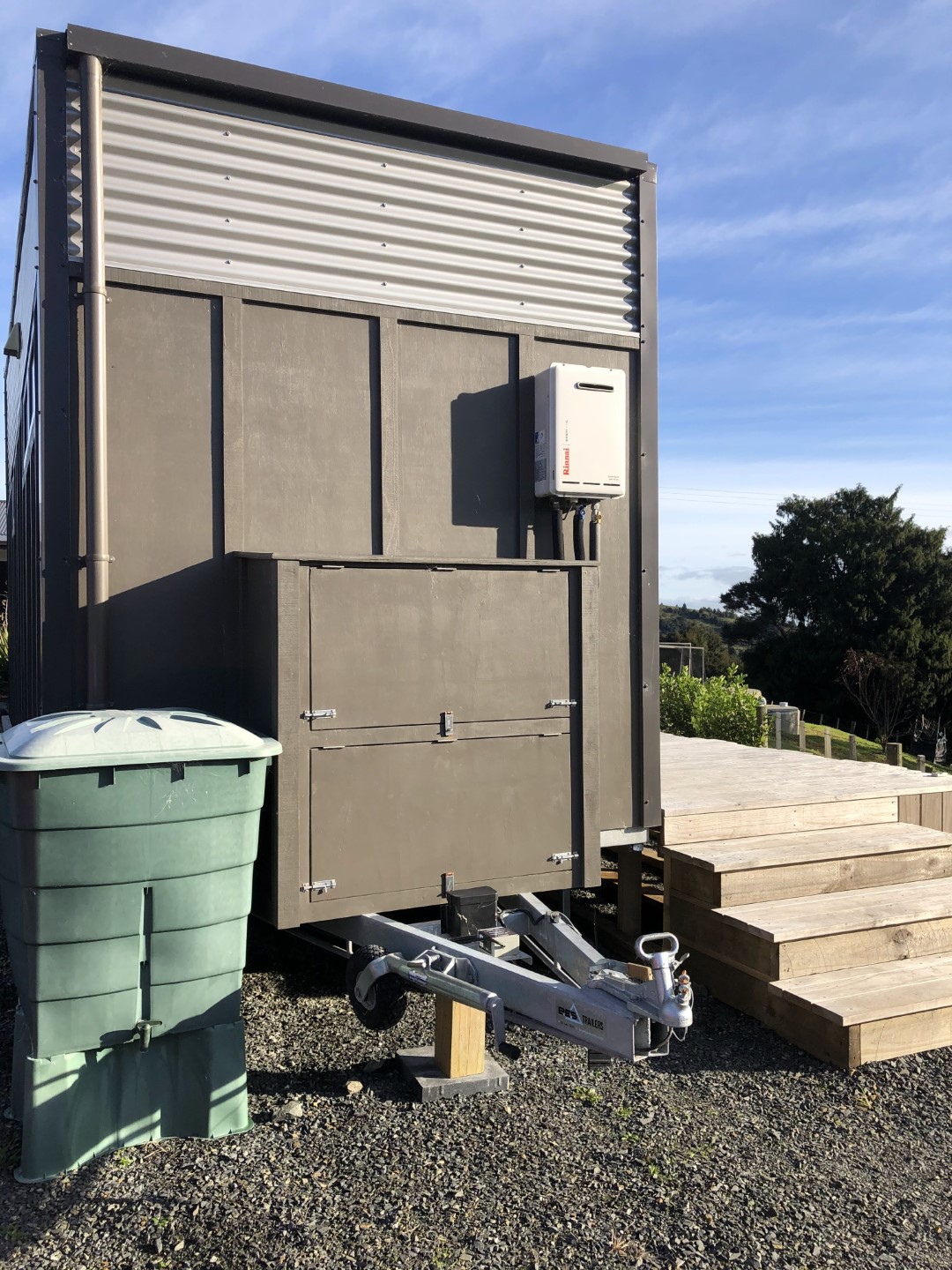
Nobody warns you that setting up power, gas and broadband in New Zealand means picking from a genuinely competitive, slightly bewildering list of providers, and that almost nobody stays on their first plan for long once they realise how easy switching actually is. We’ve done this more times than we’d like to admit: new tenancies in Auckland and Wellington, a rural Northland property with a water tank instead of mains supply, and eventually 4G wireless broadband because fibre simply didn’t reach us. Every one of those moves meant working out power, and sometimes gas and broadband, from scratch.
This is the choosing and switching guide, not the first-fortnight checklist and not the full household budget. For getting your IRD number, bank account and first SIM sorted, see our setting up in New Zealand guide, and for what power actually costs across a real year, see our cost of living in New Zealand breakdown. Here, we’re focused on the market itself: who the retailers are, how to compare them honestly, what’s changing with tariffs in 2026, and what gas and broadband actually look like once you’re off the beaten track.
In this article
- Choosing a power company: the big four and the challengers
- Powerswitch: the honest way to compare and switch
- Time-of-use plans and the low-user tariff phase-out
- Gas in New Zealand: piped in the north, bottled everywhere
- Broadband: fibre, Hyperfibre and no landline required
- Rural broadband, honestly: our own move to 4G wireless
- Water tanks and pump power: what off-mains living really costs
- Your questions answered
A note on money before the detail: everything below is in New Zealand dollars first. As of mid-July 2026, GBP 1 buys around NZD 2.33 and USD 1 buys around NZD 1.71 (Wise, OFX, Trading Economics). Rates move daily, so check a live converter before using any of this for a real budget.
Choosing a power company: the big four and the challengers
New Zealand’s electricity retail market is genuinely competitive, more so than a lot of newcomers expect. Four “gentailers”, companies that both generate and retail electricity, dominate: Genesis, Contact, Mercury and Meridian, holding well over 85% of residential connections between them. Beyond them sit smaller challenger brands worth comparing properly rather than defaulting to a big name out of habit.
Electric Kiwi is still trading and still genuinely independent, run as Energy Collective Ltd, majority owned by a UK investment firm but operating as its own retailer with its own pricing and its well-known “Hour of Power” free hour on some plans. Powershop is also still around, worth knowing it’s actually a Meridian Energy subsidiary rather than a separate company, with a distinct online-shop pricing model built around discounted power “packs”. Frank Energy, previously Genesis’s cheeky budget brand, is the one to cross off your list: it closed to new customers in June 2025, and existing Frank accounts were moved onto Genesis’s standard plans from around September 2025. If an older comparison site still mentions Frank, it’s gone.
Worth knowing before you pick on price alone: the four gentailers differ meaningfully on renewable generation. Meridian and Mercury both sit at essentially 100%, Contact around 80 to 85%, and Genesis lowest of the four at roughly 60 to 65%, still burning gas and, at times, coal to keep the grid stable. Not required reading to get connected, but an easy filter if it matters to you.
Powerswitch: the honest way to compare and switch
Our honest recommendation, every time, is Powerswitch, the free, independent comparison tool run by Consumer NZ. Enter your address and usage (your ICP number, on any recent bill, makes this precise), and it returns every retailer’s actual plan for your specific property, not a generic national average. Consumer NZ estimates the average Powerswitch user saves around $450 a year simply by switching. It isn’t paid placement or a lead-generation funnel dressed up as advice, which is more than you can say for some comparison sites.
The Electricity Authority also runs its own free tool, Billy, a newer government-backed alternative that works from an uploaded bill or a short questionnaire. Either is fine. What matters is that you actually use one rather than assuming your current retailer has quietly kept you on their best deal, because they very much do not do that by default.
Switching itself is free and fast. Nothing gets physically rewired, your power never goes off, and the new retailer handles almost all the admin. On average it takes three to four days end to end. The only cost that can catch you out is an early-termination fee if you’re partway through a fixed-term contract. Retailers are also now required to check annually that existing customers are on their best available plan and help them move at no cost if they’re not, though we’d never rely on a retailer to do that proactively rather than checking yourself once a year.
Time-of-use plans and the low-user tariff phase-out
Two changes are reshaping New Zealand power pricing through 2026, and both are worth understanding before you pick a plan.
Time-of-use plans charge different rates depending on when you use power, rather than one flat rate all day. Typical peak windows are weekdays 7am to 11am and 5pm to 9pm; power is cheapest overnight, roughly 9pm or 11pm through to 7am, and on weekends. Peak rates on time-of-use plans commonly run 45 to 55c/kWh against 11 to 15c/kWh off-peak, a genuinely large spread. The Electricity Authority now requires the four large retailers to offer a time-of-use or off-peak plan, rolling out from 1 July 2026 with full compliance required by 30 October 2026. Shift laundry, dishwashing or EV charging to overnight and this is worth real money; run flat out during the evening peak regardless and a flat-rate plan will likely still suit you better, so compare for your own habits rather than assuming time-of-use automatically wins.
The low-user tariff is being phased out on a set schedule running since 2022. Low User plans suit households using under about 8,000kWh a year (9,000kWh in the lower South Island), trading a low daily fixed charge for a higher per-unit rate, aimed at smaller households and holiday homes. The maximum allowed daily fixed charge has risen every year, now $1.80 a day in 2026, and the whole Low User/Standard User distinction disappears entirely on 1 April 2027. If you’re on a Low User plan, expect the fixed charge to keep climbing until the two plan types finally merge.
Against all this, the national average retail electricity price sits around 39 to 42c/kWh depending on source and month, with regional variation of roughly 35 to 49c/kWh. If you’re weighing up solar and a battery against chasing the cheapest retail plan, our solar power in New Zealand guide covers installed costs, buy-back rates and payback periods.
Gas in New Zealand: piped in the north, bottled everywhere
Reticulated (piped) natural gas exists only in the North Island, run across First Gas’s transmission network and distribution networks operated by First Gas, Powerco, Vector and GasNet. If you’re moving to the South Island, or to plenty of rural North Island addresses well away from town, piped gas simply isn’t an option, so don’t budget for a gas hob or gas hot water system until you’ve checked the property is actually connected.
Bottled LPG fills the gap everywhere else, genuinely nationwide. The standard setup is two 45kg bottles on a swap-and-refill cycle, so you’re never without gas while one empties and the other’s being refilled. Refills currently run roughly $110 to $139 depending on supplier and distance from depot, plus an annual bottle rental of around $50 to $56 per bottle (some let you pay monthly instead). From 1 May 2026 several suppliers added temporary surcharges tied to diesel and LPG import costs, worth asking about when you set up an account rather than assuming the quoted price is final.
We ran bottled gas for cooking and a small water heater at our rural Northland property, and the adjustment from an on-demand piped supply was mostly about planning ahead rather than inconvenience. Most suppliers offer an auto-refill service that swaps your bottle before it runs out, which we’d genuinely recommend over manual ordering. We let it lapse once during a busy patch and found out mid-shower that the hot water had quietly given up, a lesson you only need to learn once.
Broadband: fibre, Hyperfibre and no landline required
Fibre broadband now passes around 87% of New Zealand addresses through the Chorus network, with plans from all the main retailers (One NZ, Spark, 2degrees and a long list of smaller ISPs) riding on the same physical fibre and competing purely on price and service. A further expansion toward 95% coverage has stalled as of early 2026 without confirmed government funding, so if fibre availability matters between two properties, check Chorus’s coverage map for the actual address rather than assuming a nearby suburb’s coverage applies.
At the fast end, Hyperfibre offers genuinely multi-gigabit speeds, up to 8,000Mbps on some plans, now available in close to 200 towns and cities. Pricing starts from around $115 a month for an entry tier and climbs toward $280 a month at the top end. Realistically, this is overkill for most households; a standard fibre plan at a fraction of the price covers streaming, video calls and working from home without trouble, and Hyperfibre only earns its keep for genuinely heavy users, a home server or several people gaming competitively at once.
You do not need a landline to get broadband in New Zealand, and increasingly you can’t get one on its own anyway. Chorus is retiring the old copper network entirely, first across fibre areas by the end of 2026, then nationwide by 2028, with a full shutdown targeted for 2030. If you want to keep a landline number for elderly relatives who still call it, most providers can carry your number over an internet-based (VoIP) service instead.
Rural broadband, honestly: our own move to 4G wireless
This is where we can speak from real experience rather than a comparison table. Our rural Northland property was well outside fibre range, and mobile coverage on the road out front was patchy at best, so we spent a while working out what would actually be reliable.
4G (and increasingly 5G) fixed wireless ended up being our answer, and it’s still a solid, unglamorous choice for a lot of rural New Zealand. A dedicated router picks up the cellular signal, ideally from an external antenna if the signal indoors is weak, and turns it into a normal home Wi-Fi connection. Plans typically run $130 to $150 a month for unlimited data, and reliability depends entirely on how strong the underlying cellular signal is at your specific address, not just the nearest town. Peak-hour 4G speeds average around 44Mbps down and 17Mbps up nationally, plenty for streaming and video calls, though it dips at busy times if your local cell tower is serving a lot of other properties.
Starlink has become genuinely common in rural New Zealand since we set up our own connection, worth taking seriously if 4G coverage is weak or non-existent. Pricing has moved more than once, and rose again from mid-June 2026: the standard Residential plan now around $170 a month, a lighter Residential Lite plan around $85, and a low-cost Standby mode for baches around $20, on top of the dish hardware cost. Treat those figures as a snapshot and check the live price for your exact address before committing. For most permanently occupied rural homes with reasonable 4G coverage, we’d still try fixed wireless first, since it’s usually cheaper with no hardware to buy outright; Starlink earns its keep where the cellular signal genuinely isn’t there.
If you’re weighing up a move to Northland specifically, our living in Northland guide covers how broadband access has changed across the wider region since we were there.
Water tanks and pump power: what off-mains living really costs
One more thing nobody mentions until you’re living it: a lot of rural New Zealand properties, ours included, run on tank water rather than a council mains supply. That means no water rates bill, which sounds like a win, and in a straightforward sense it is. What it doesn’t mean is free water. A pressure pump draws power every time a tap runs, a shower starts or the washing machine fills, and on a property with a bore pump too, that’s a second motor drawing power on top of the pressure pump. It’s rarely a huge number on its own, but it’s a real one, worth building into your power budget rather than assuming “no water bill” means water costs nothing at all.
The practical adjustments matter more than the electricity cost. You watch the tank level during a dry summer the way you’d never think to watch a mains supply, you fix a dripping tap immediately because it’s draining a finite resource rather than an abstract one, and you learn to schedule laundry and long showers around how full the tank actually is after a dry spell rather than a fixed weekly routine. None of it is difficult once you’re used to it, but it is a genuine mental shift for anyone arriving straight from a mains-connected city flat.
New Zealand power retailers at a glance
| Retailer | Ownership | Renewable generation | Worth knowing |
|---|---|---|---|
| Genesis | NZX/NZSX-listed, partly Crown-owned | Roughly 60 to 65%, lowest of the big four | Absorbed Frank Energy’s former customers from September 2025 |
| Contact | NZX-listed | Roughly 80 to 85% | Added the most net customers of any retailer in the year to June 2026 |
| Mercury | Majority Crown-owned, NZX-listed | Close to 100% | Owns and runs Powershop as a separate brand |
| Meridian | Majority Crown-owned, NZX-listed | Effectively 100% | New Zealand’s largest renewable generator |
| Electric Kiwi | Independent (Energy Collective Ltd), majority UK-owned | Varies by wholesale purchase | Known for its free “Hour of Power” on some plans |
| Powershop | Meridian Energy subsidiary | Same profile as Meridian | Online “packs” pricing model rather than a flat monthly plan |
Ownership and generation figures current as of July 2026 (Canstar, MoneyHub, company sites, Newswire.co.nz). Market share and customer numbers shift regularly; always compare live pricing for your own address on Powerswitch rather than choosing on brand alone.
Your questions answered
Can I get power connected before I’ve moved into a new property in New Zealand? Yes. Every retailer lets you set up a connection to start on your move-in date, usually a few days’ notice is enough, though it’s worth allowing a week if you can, particularly if the property has been vacant and needs a meter check first.
Do I need to pay a bond to get power, gas or broadband connected? Sometimes, particularly for power if you have no New Zealand credit history. Some retailers ask for a bond or a credit check upfront; others will connect you without one and simply bill as you go. It varies enough by retailer that it’s worth asking directly rather than assuming either way.
Is it worth bundling power, broadband and mobile with one company to save money? Sometimes, but not always. A few retailers offer a genuine discount for bundling, but it’s common for a bundle discount to be smaller than what you’d save by picking the cheapest standalone plan for each service separately. Run both comparisons before assuming a bundle wins.
What happens to my power account if I move house within New Zealand? Most retailers will simply transfer your account to the new address if you’re staying with them, usually with a few days’ notice needed. It’s also a good moment to re-run a Powerswitch comparison, since the cheapest plan for your old address and usage pattern won’t necessarily be the cheapest for the new one.
Can I get fibre broadband in a rural New Zealand town, or only in the main cities? Often yes. Fibre has reached a lot of small towns, not just the main centres, so don’t assume rural automatically means wireless or satellite. Check the specific address on Chorus’s coverage map before you sign a lease or make an offer, since coverage can change street by street on the edge of town.
Do I need a smart meter for a time-of-use power plan? Effectively yes, since the retailer needs to measure your usage by time period rather than just a monthly total. Most New Zealand homes already have a smart meter fitted by their retailer at no charge; if yours doesn’t, ask when you switch to a time-of-use plan, since the upgrade is normally arranged as part of the switch.
Is bottled LPG safe to store at a rural New Zealand property? Yes, when it’s installed and maintained properly. Bottles sit outside on a stable base with proper clearances from doors, windows and drains, and suppliers handle the installation and safety checks as part of setting up your account. If you’re buying a rural property with existing bottles and fittings already in place, it’s still worth having them checked rather than assuming the previous owner’s setup meets current standards.
Choosing and switching power, gas and broadband providers in New Zealand is one of those jobs that feels fiddly the first time and takes twenty minutes every time after that once you know where to look. Run your address through Powerswitch, check what gas options actually exist at your specific property, and be honest with yourself about whether fibre, fixed wireless or satellite is the realistic broadband choice before you sign a lease. We go deeper on rural off-grid setups and full household budgets in our full paid guide. For the wider picture on settling in, our step by step guide to moving to New Zealand is a good next stop, and if you’ve got a specific question about your own switch, get in touch with us here; we’ve set this up from scratch more times than we expected to.
You might also like
Best Places to Live in New Zealand in 2026: Our Honest, City-by-City Guide
Auckland, Wellington, Christchurch and six more places compared on rent, jobs and climate for 2026, from a couple who actually lived in three of them.
The Best Banks in New Zealand for Migrants
Which New Zealand bank is best for migrants in 2026: ANZ, ASB, BNZ, Westpac, Kiwibank and the challengers compared, fees, apps and deposit protection.

Buying a Car in New Zealand: A 2026 Guide to Costs, WoF and Rego
Buying a car in New Zealand: 2026 prices for WoF, rego, insurance and RUC, plus where to buy, imports and EVs, from a couple who actually did it.