
Solar Power in New Zealand: Is It Worth It?
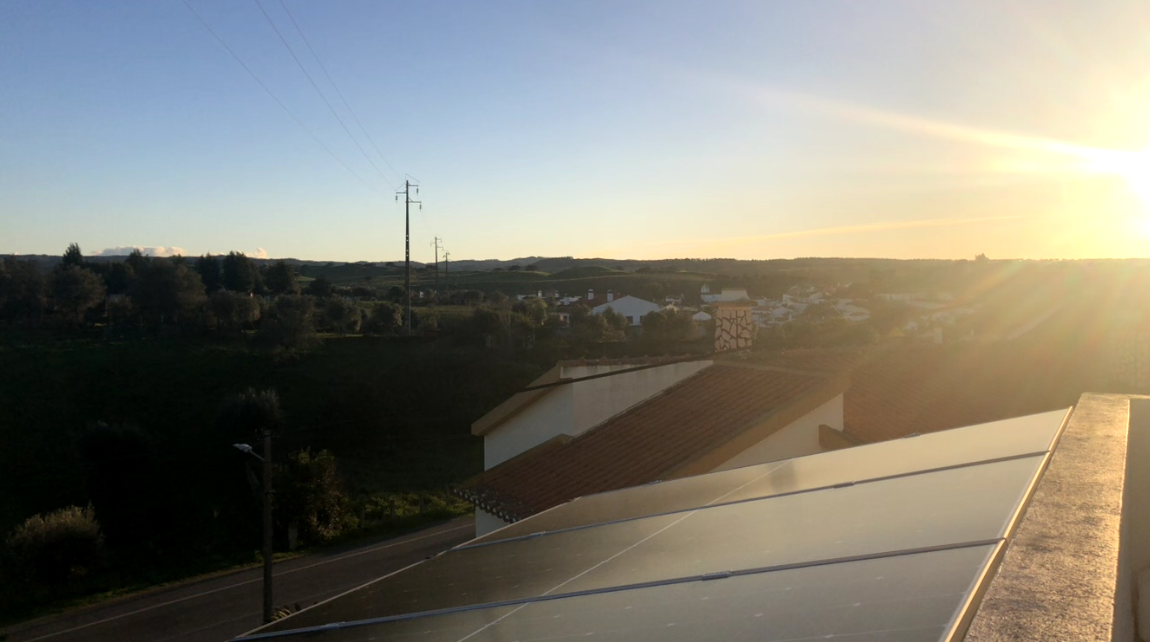
We get asked about solar power in New Zealand more than almost anything else in the renewables space, and it is a fair question with a genuinely nuanced answer. We have never bolted panels to a house roof ourselves. What we have done is live off-grid, full-time, in a motorhome, running our entire life off a solar array and a battery bank with nothing else to fall back on. That taught us more about power budgets, winter sun angles and battery anxiety than any amount of reading ever could, and it is a decent grounding for looking properly at what solar on a house actually costs, earns and saves in 2026.
So we have done both: drawn on that lived off-grid experience and gone through the current research properly, retailer by retailer, bank by bank. Here is the honest 2026 picture.
In this article
- Solar power in New Zealand: what a system actually costs in 2026
- Buy-back rates: what retailers pay you for exporting
- Do you need consent to put panels on your roof?
- Batteries: the real cost of independence
- Green loans: 0-1% finance from the banks
- The grid you would be plugging into
- What living off-grid in our motorhome taught us
- So, is it worth it?
- Your questions answered
A note on money before the figures: everything below is in New Zealand dollars first. As of mid-July 2026, GBP 1 buys around NZD 2.33 and USD 1 buys around NZD 1.71 (Wise, OFX, Trading Economics). Rates move daily, so check a live converter before using any of this for a real budget.
Solar power in New Zealand: what a system actually costs in 2026
The most commonly installed size in New Zealand is a 6.6kW rooftop system, usually 16 panels, and it typically costs $12,500 to $16,500 installed, GST included. Smaller 3 to 5kW systems start from around $7,500, and larger 8 to 10kW systems run anywhere from $15,500 up to $24,000 depending on roof complexity, panel brand and inverter choice (Solar Scout, Weka Electrical, 2026 pricing guides).
Panels themselves are only about a third of that bill. The rest is inverter, mounting, labour, scaffolding and the electrical certification that has to happen whether or not you need a building consent. Roughly speaking, expect to pay $1,700 to $2,000 per installed kilowatt, and treat any quote well outside that band, in either direction, with a bit of scepticism.
Sizing matters more than most first-time buyers realise. The average New Zealand household uses around 7,000 to 7,100kWh of electricity a year, and a well-positioned 1kW of panels generates roughly 1,400kWh annually once you average out cloud, season and roof angle. Put those two numbers together and most homes need something in the 5 to 9kW range, 12 to 20 panels, to genuinely offset the bulk of their usage rather than just nibbling at the edges of the bill.
Buy-back rates: what retailers pay you for exporting
This is where solar economics in New Zealand get genuinely confusing, because retailers change their export rates and promotional plans often, and the headline number is rarely the number everyone actually gets. Treat the figures below as a snapshot rather than gospel, and check a retailer’s current published rate before you sign anything.
| Retailer | Typical export rate | The catch |
|---|---|---|
| Contact Energy | Up to 25c/kWh (Good Charge plan) | Peak rate only applies to solar-plus-battery customers; standard export is around 8c/kWh, the lowest of the main players |
| Mercury | Around 18c/kWh ex GST (roughly 20.7c inc. GST) on its Harrisons promo | Capped at 500kWh per billing cycle; standard rate is around 11.1c/kWh |
| Meridian | 15c/kWh year-round, rising to 24c/kWh in winter peak windows (7-10am, 5-9pm, Jul-Sep), plus a $120 credit | Also offers a separate 3-year fixed solar plan at 17c/kWh flat with a $300 signup credit |
| Genesis | Flat 12c/kWh | Simple, but no time-of-use uplift for winter peaks |
Rates as advertised by each retailer, accessed July 2026 (Solar Scout, Selectra NZ). Export tariffs and promotions change frequently and vary by plan, region and network company, so always confirm the current rate directly with the retailer before relying on it in a payback calculation.
The practical lesson from these numbers is that the plan matters as much as the panels. A household that exports a lot of surplus during the day, nobody home, heat pump off, will do far better on a time-of-use plan with a strong peak rate than on a flat-rate plan, and vice versa for a household that mostly self-consumes. Retailers know this, which is why the “up to” headline rate is doing a lot of marketing work.
Do you need consent to put panels on your roof?
Until October 2025, most rooftop solar in New Zealand needed a building consent, an extra cost and a delay that put a lot of homeowners off. That changed on 23 October 2025, when the government introduced a building consent exemption for most rooftop solar installations (MBIE, Beehive.govt.nz).
The exemption covers the vast majority of household setups: arrays up to 40 square metres, which covers most standard residential systems, in areas with wind speeds under 44 metres per second (158km/h). If your install is bigger than that, or you are in one of New Zealand’s higher wind zones, a chartered professional engineer needs to design or review the installation for you to qualify for the exemption. Even without a consent, you still need to comply with the Building Code and your local District Plan, and your installer still has to be a registered electrical worker who certifies the electrical work. In practice this has shaved real time and cost off a typical residential install, and it is one of the more genuinely useful regulatory changes we have seen in this space.
Batteries: the real cost of independence
Batteries are where the maths gets harder, and where our own off-grid experience makes us more cautious than most sales pitches. Across brands, NZ battery pricing averages around $1,219 per kWh installed, higher than you will see quoted in Australia or the US, largely down to freight, smaller order volumes and installer margins here.
A Tesla Powerwall 3, 13.5kWh, is the benchmark most people ask about: around $15,600 supply-only, $19,000 to $24,000 fully installed. BYD units start from around $8,000 for a smaller 5kWh battery, scaling up from there, and Enphase’s modular IQ Battery units (3.84kWh each) let you build up to around 15kWh in stages, useful if you want to spread the cost over a couple of years rather than committing to one large unit upfront.
The honest case for a battery is resilience and time-shifting rather than pure payback. Grid-tied solar without a battery automatically shuts itself off in a power cut, an anti-islanding safety feature that protects the linesworkers fixing the fault, which surprises a lot of new solar owners who assumed their panels would keep the lights on during an outage. A battery, or a hybrid system with a backup circuit, is what actually buys you power through a cut. It also lets you store cheap daytime solar and use it during the expensive evening peak instead of exporting it for 12 to 25c and buying it back later at 35 to 49c. Payback on a battery-inclusive system typically runs 7 to 10 years, against 6 to 8 years for panels alone, so go in wanting the resilience and treat any extra financial return as a bonus.
Green loans: 0-1% finance from the banks
Several major New Zealand banks now offer discounted “green” finance for solar, and this is genuinely one of the more useful tools if the upfront cost is the blocker rather than the economics.
Westpac currently has the sharpest headline offer: 0% interest for 5 years on green home loans up to $50,000, though anything left unpaid after year five rolls onto a 5% p.a. default rate, so it is really a “clear it in five years” product rather than free money indefinitely. ANZ, ASB and BNZ each offer 1% p.a. for the first three years on larger amounts (typically $50,000 to $80,000), after which the balance moves to the bank’s standard fixed rate, roughly 7 to 8% in 2026. Kiwibank does not discount its rate at all, you pay the standard floating home loan rate, but it offers a cash contribution of up to $2,000 over four years on loans over $5,000, which can partly offset that.
The catch with nearly all of these products is that they are mortgage top-ups, which generally require at least 20% equity in your home. If you are close to the wire on equity, or renting, a green loan is not going to be your route in, and you are back to comparing straight finance or savings against the payback numbers above. Confirm current rates and terms directly with your bank, because these offers do move.
The grid you would be plugging into
Here is where we want to be straight with you rather than sell you a story: New Zealand’s electricity grid is already unusually clean. Across 2024, 85.5% of generation came from renewable sources, mostly hydro, backed up by geothermal and a fast-growing amount of wind and utility-scale solar (MBIE). That is not a typo and it is not new; New Zealand has run a hydro and geothermal-heavy grid for decades. Recent quarters have been even stronger on the back of good hydro lake levels: 89.4% renewable in the September 2025 quarter, a record 96.4% in the October to December 2025 quarter, and 94.5% in the January to March 2026 quarter.
That matters for how you frame the decision. In a country still burning a lot of coal or gas for electricity, rooftop solar is a straightforward carbon story. Here, the honest case for home solar is mostly about your power bill and your household’s resilience, not the carbon footprint of the national grid, which is already doing most of that work for you through hydro. That is not a reason to skip solar. It just means the pitch should be about money and backup power, not about greening an already largely renewable grid.
What living off-grid in our motorhome taught us
This is the part we can actually speak to first-hand. We lived in our motorhome full-time for a stretch, including proper off-grid stints, freedom camping around both islands with nothing but our own panels, batteries and whatever sun turned up that day. It reframed how we think about power completely.
The single biggest lesson was that off-grid living is a budget, not a switch. Every appliance became a conscious trade-off: run the kettle now, or keep enough charge for the laptop later. We learned to read weather forecasts the way other people read stock prices, because three overcast days in a row meant real rationing, not a minor inconvenience. On a house with a grid connection as backup, that anxiety mostly disappears, because the grid soaks up the bad days and the export credit soaks up the good ones. Off-grid, there is no backstop.
We also learned firsthand what the seasons do to solar generation, and it maps directly onto the regional differences that matter for anyone in New Zealand weighing this up. Northland’s winter sun is genuinely better than most of the country’s, mild, low ground frost, plenty of daylight hours even in July, and our panels kept ticking over reasonably well through winter there. Further south, especially around Otago and Southland, winter days are shorter and the sun sits lower in the sky for longer stretches, which knocks a real dent in winter generation even on a clear day. If you are in the South Island and building a payback calculation, do not assume your summer generation figures apply evenly across the year; halve them for a realistic winter estimate and build from there.
None of that off-grid experience is the same as fitting panels to a house roof tied into the grid, and we want to be upfront about that rather than blur the two. But the underlying physics, the seasonal swings, the gap between what a panel can theoretically produce and what you actually get on a grey Tuesday, is exactly the same. It is the reason we take solar seriously as a household economics question rather than a green badge to stick on the roof.
So, is it worth it?
For most New Zealand households, yes, with real caveats. A well-sized system without a battery typically pays for itself in 6 to 8 years against retail power prices averaging around 39 to 42c/kWh nationally, and keeps generating for a couple of decades after that. Add a battery and you are looking at 7 to 10 years, but you are buying genuine resilience during outages and a lot more flexibility with when you use your own power, not just a faster return.
It suits homeowners who use a good chunk of their power during the day, who plan to stay put for at least seven to ten years, and who have the roof orientation and equity to make a green loan work. It suits it less if you are in a shaded, poorly oriented or heavily shared roof situation, if you are renting, or if you are planning to move within a few years, since the resale premium (around 1.3% on average, roughly $9,000 on a typical home, per EECA-cited research) does not fully return the outlay on its own.
If you are weighing up solar as part of a bigger move to a lifestyle block or a smaller footprint generally, it is worth reading alongside our tiny house living in New Zealand guide and our buying a lifestyle block in New Zealand piece, since off-grid or hybrid setups come up constantly on rural properties without an easy mains connection. And if you are still at the budgeting stage more broadly, our cost of living in New Zealand breakdown shows where power sits against everything else you will be paying for. For an official, retailer-neutral rundown of system sizing and savings estimates, EECA’s solar for homes guidance is a solid starting point too.
Your questions answered
Do I need a smart meter to get paid for solar export in New Zealand? Yes, in practice. Your retailer needs a meter that can measure electricity flowing both ways, into and out of your home, to calculate your export credit accurately. Most NZ homes already have one fitted by their retailer at no charge, but if you are on an older meter, your installer or retailer will usually arrange the upgrade as part of the solar connection process.
Can I add a battery to my solar system later instead of buying both at once? Generally yes, most modern grid-tied inverters are sold as “battery-ready,” meaning you can add storage down the line without replacing the panels or inverter. It is worth confirming this specifically with your installer before you sign, since not every older inverter supports a later retrofit cleanly, and retrofitting can cost more than including it upfront.
Will solar panels work on a tile roof or only on metal roofing? Both. New Zealand installers regularly fit solar on concrete tile, metal (including the classic corrugated iron roof) and increasingly on membrane roofs, using different mounting hardware for each. Metal roofs are usually the quickest and cheapest to fit because there is less risk of cracking tiles during installation, but a tile roof is not a barrier.
Does the local lines company get a say in my solar connection? Yes. Alongside your retailer, your local network (lines) company has to approve the connection and may set technical requirements under Electricity Authority rules (AS/NZS 4777), particularly for export limits on some rural or older networks. Your installer normally handles this application for you, but it can add a few weeks to the timeline, so ask early what your specific network company requires.
Is solar worth it if I already have a heat pump and an EV? Often more so than for an average household, because both push your daytime and evening consumption up. A heat pump running through winter and an EV charging overnight or during a sunny afternoon both increase self-consumption, which is the single biggest lever on solar payback. Get an installer to model your actual usage pattern with both appliances included rather than relying on a generic average household estimate.
What happens to my export credit if I switch power companies? Nothing carries over automatically. Export rates and any solar-specific plan terms are tied to your current retailer and plan, not to the panels themselves, so switching retailers means comparing the new provider’s buy-back rate and plan structure from scratch, the same way you would compare their standard pricing.
Do solar panels need much maintenance in New Zealand conditions? Less than most people expect. An occasional rinse to clear dust, pollen or salt spray near the coast, and a visual check after a big storm, covers most households. Northland’s clay dust and coastal salt air are harder on panels than a South Island system further from the sea, so a slightly more frequent rinse is sensible if you are near the coast anywhere in the country.
That is the honest 2026 picture on solar power in New Zealand, built from current retailer and bank data plus what years of running our own power budget off-grid actually taught us about sun, batteries and rationing. We go deeper on system sizing worksheets and specific retailer contract terms in our full paid guide. If you are planning a wider move and want the practical groundwork sorted first, our step by step guide to moving to New Zealand is a good place to start. Got a specific solar or off-grid question? [Get in touch with us here](/contact-
You might also like

Best Places to Live in New Zealand in 2026: Our Honest, City-by-City Guide
Auckland, Wellington, Christchurch and six more places compared on rent, jobs and climate for 2026, from a couple who actually lived in three of them.

The Best Banks in New Zealand for Migrants
Which New Zealand bank is best for migrants in 2026: ANZ, ASB, BNZ, Westpac, Kiwibank and the challengers compared, fees, apps and deposit protection.

Buying a Car in New Zealand: A 2026 Guide to Costs, WoF and Rego
Buying a car in New Zealand: 2026 prices for WoF, rego, insurance and RUC, plus where to buy, imports and EVs, from a couple who actually did it.