
Tiny House Living in New Zealand: An Honest Guide
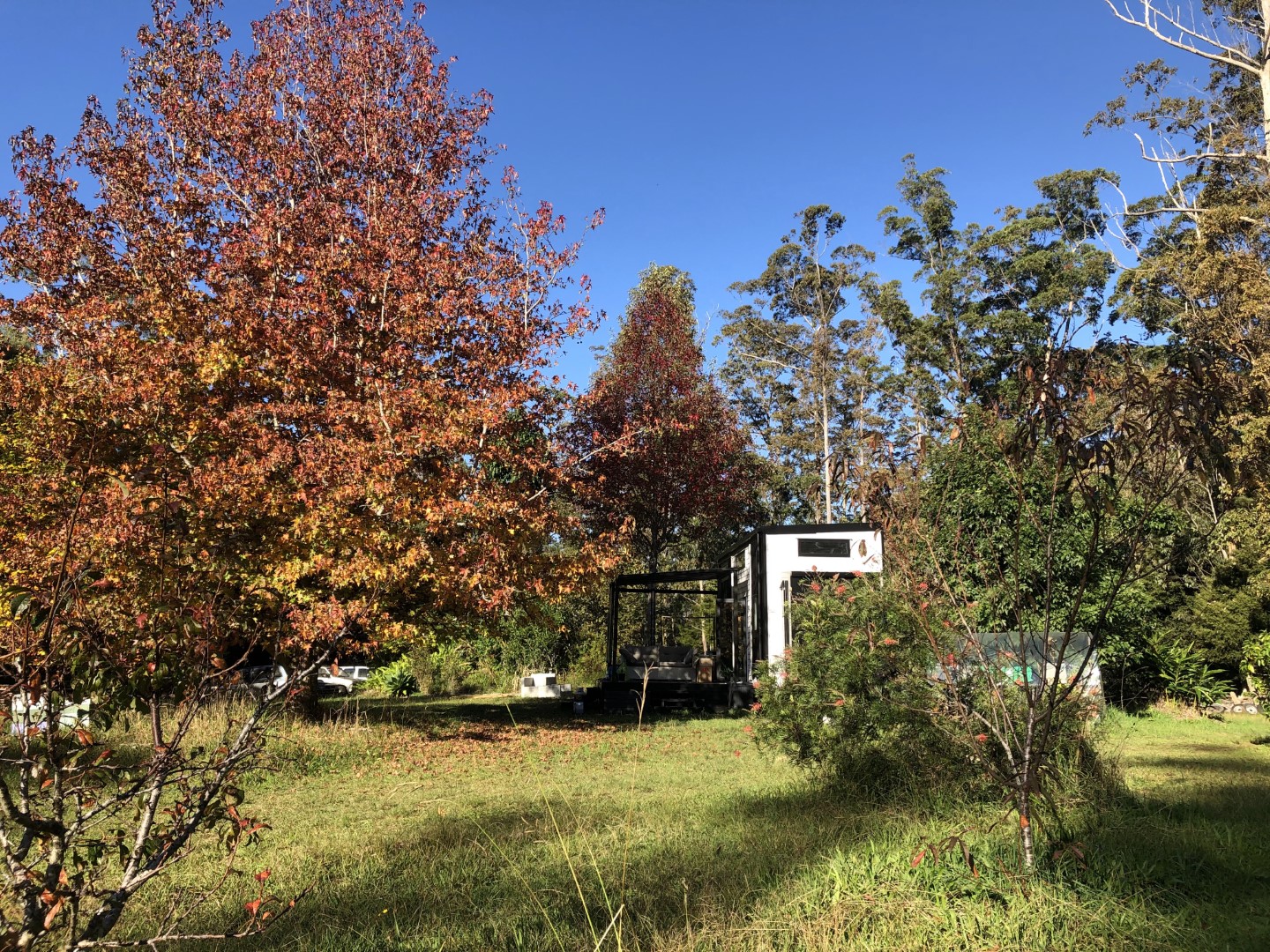
We came off the road from full-time motorhome life and went straight into a tiny house in Northland, before we ever bought a proper block of land. It was a strange, sensible, oddly liberating middle step, smaller than most houses, but after years living in a motorhome it felt genuinely spacious. If you’re weighing up tiny house living in New Zealand, whether as a stepping stone like it was for us or a longer-term plan, this guide covers what we actually learned about that way of life, alongside the legal grey zone, the real 2026 costs, and the practical rules that any generic tiny house listicle tends to skip.
New Zealand doesn’t have one clean, simple legal category for a tiny house, and that catches a lot of newcomers out. Whether yours needs a building consent, where you’re allowed to put it, and how you’ll finance and insure it all depend on details most people don’t think to check until they’ve already bought one. We’ll walk through what’s actually true in 2026, verified against MBIE and council guidance, and then get into what living small genuinely teaches you, because that part surprised us more than the paperwork did.
In this article
- Why we chose a tiny house between bus life and buying
- The legal grey zone: is a tiny house a vehicle or a building?
- Where you can actually put one
- Services: solar, water tanks and composting toilets
- What a tiny house costs to buy or build in 2026
- Finance and insurance: the parts nobody warns you about
- The tiny house community in New Zealand
- What tiny living actually teaches you
- Your questions answered
A note on money before we get into figures: everything below is in New Zealand dollars first. As of mid-July 2026, NZ$1 buys roughly £0.43 or US$0.58 (exchangerates.org.uk and xe.com), so multiply any NZD figure by those for a rough pounds or dollars equivalent. Rates move daily, so check a live converter before relying on this for your own budget.
Why we chose a tiny house between bus life and buying
We’d just come off a long stretch living full-time in our motorhome, including proper off-grid stints, freedom camping our way around both islands. Going straight from that into a full-sized rental or a mortgage felt like too big a jump, both financially and mentally. A tiny house in Northland was the sensible middle ground: somewhere with a genuine address and a bit more permanence than the bus, without committing to everything a full house purchase brings with it. It gave us a season to work out what we actually wanted from a home before we bought our lifestyle block and spent two years renovating an old house on it.
Looking back, that in-between step mattered more than we expected at the time. It wasn’t a compromise so much as a genuinely good fit for that particular season of our lives: enough space to feel settled, little enough to keep us honest about what we actually needed.
The legal grey zone: is a tiny house a vehicle or a building?
This is the question every tiny house guide should lead with, because it changes almost everything else, and New Zealand’s answer is genuinely more complicated than “get a permit.”
The term “tiny house” doesn’t appear anywhere in the Building Act 2004 or the Building Regulations. What matters legally is whether your particular structure counts as a building under the Act. A tiny house on wheels will often be treated as a vehicle, similar to a motorhome or caravan, if it’s genuinely mobile and not lived in on a permanent or long-term basis in one spot. The same structure can tip into being classed as a building if it’s effectively immovable and occupied permanently or long-term, even if it still technically has wheels underneath it. MBIE updated its official tiny house guidance again in January 2026 (the fifth edition) specifically to help clarify which category applies to which situation, because councils and owners had been disagreeing about it for years.
If your council decides your tiny house is a building and you disagree, there’s a formal route: you can apply to MBIE for a determination, essentially an independent ruling on whether your structure is legally a vehicle or a building. Councils can still issue a Notice to Fix in the meantime, but they can’t take further enforcement action until MBIE’s determination comes through. If yours is classed as a building, normal building consent rules apply in full, structure, services, weathertightness, the lot. If it’s genuinely a vehicle, building consent doesn’t apply, though you’ll still need to satisfy your council on where you’re allowed to park or site it long-term, which is a separate question entirely (see the next section).
Worth knowing too: a new, separate exemption under Schedule 1A of the Building Act 2004 came into force on 15 January 2026 for small stand-alone dwellings up to 70 square metres, single storey and fully self-contained, on a permanent foundation, without needing a building consent at all (though the Building Code still applies in full). It’s not aimed at tiny houses on wheels, but if permanence rather than mobility is actually what you want, it’s worth reading about before you assume a THOW is your only “simple” option. We’ve set the two options side by side further down.
Where you can actually put one
This is the part that varies most by council, and it’s genuinely worth checking before you buy rather than after. Every council runs its own district plan, the document that governs land use and zoning in its area, and tiny house rules sit inside that, not in one national rulebook.
Broadly, a resource consent (a separate process from building consent, dealing with land use effects rather than construction standards) is usually needed if there’s already a dwelling on the property, or if your tiny house doesn’t meet standard district plan rules for dwellings, boundary setbacks being a common trip point. Some residential zones allow a secondary, independent dwelling on the same title as a permitted activity, provided it meets size and location conditions relative to the main house. Rural zones tend to have their own permitted activity rules again, often more generous on size but with their own conditions around effects on neighbours, services and the wider site.
None of this is consistent nationwide. What’s a permitted activity in one district can require a full resource consent in the next one over. Before you buy or commission a tiny house, get your specific plan in writing from that council’s planning team, not from a builder’s marketing page or a forum post about what worked for someone else.
Services: solar, water tanks and composting toilets
Most tiny houses in New Zealand run off-grid or semi off-grid by necessity, since connecting a mobile or semi-permanent structure to reticulated services isn’t always practical or possible.
Power is usually solar, sometimes paired with a small generator for backup, sized to actual usage rather than a full house’s worth of appliances. Water typically comes from a tank, filled by rainwater collection or delivery, with usage habits that shift fast once you’re watching a gauge instead of just turning on a tap. Toilets are more technical than people expect: many tiny house owners use a composting toilet, and while the Building Code allows non-water-borne disposal as part of a properly managed system, one built or installed as part of a permanent structure will usually still need council sign-off, and needs to meet the AS/NZS 1546.2:2008 standard for waterless composting units where that applies. Some councils treat a compliant composting toilet as a permitted activity; others want a resource consent or wastewater management plan alongside it. Check with both your district council (building and land use) and your regional council (wastewater), since the two can differ.
What a tiny house costs to buy or build in 2026
Prices vary hugely depending on size, finish and whether you buy pre-built or commission something custom, so treat these as a rough steer rather than a quote.
At the affordable end, small towable units and portable cabins, the kind most likely to be treated as a vehicle rather than a building, start from roughly NZ$25,000 to $60,000. A locally built tiny home from an established builder more typically runs NZ$45,000 to $90,000 for a studio or one-bedroom layout, with fully custom or larger two-bedroom builds pushing towards NZ$100,000 to $150,000 or beyond for a high-spec fit-out. Per square metre, a portable tiny house typically works out cheaper than a conventional build, roughly $900 to $1,100 per square metre against $3,500 to $4,000 per square metre for a standard new house, though that only holds if you’re comparing like-for-like fit-out quality. Building it yourself can cut costs meaningfully, some estimates suggest by close to half, but it eats time and requires real competence across several trades.
On top of the base price, budget separately for site preparation, power connection or solar system, water tank and plumbing, council fees if consent or resource consent applies, and transport if you’re buying a completed unit and moving it to site.
Finance and insurance: the parts nobody warns you about
This is where tiny house living genuinely differs from buying a normal home, and it caught more than a few people we knew by surprise.
Because a tiny house on wheels is generally classed as a vehicle rather than real property, it can’t usually be used as security for a standard mortgage. Banks will lend against it if you’re using equity in an existing home you already own, but a tiny house alone typically won’t qualify for ordinary home loan rates. Instead, most buyers use a personal loan or a lender that specialises in tiny home finance, with loans commonly available up to $100,000 to $150,000 and interest rates typically running from around 9% to 16%, depending on the lender, your credit history and what security you can offer. That’s meaningfully higher than a standard mortgage rate, and it compounds over the life of the loan, so run the real numbers before assuming a tiny house is automatically the cheaper path to ownership.
Insurance splits the same way the legal classification does. A tiny house fixed to a permanent foundation may be insurable under a standard house policy from a mainstream insurer, similar to any small dwelling. A genuine tiny house on wheels usually needs specialist cover instead, closer to caravan or motorhome insurance than home insurance, and not every insurer offers it, so shop around or use a broker who deals with tiny homes specifically. Confirm exactly which category your build falls into with your insurer directly, in writing, before you rely on any policy covering it.
The tiny house community in New Zealand
Tiny house living here comes with a genuine, organised community behind it, which is worth knowing about if you’re considering it seriously. The NZ Tiny House Association (NZTHA), established in 2019, is a member-based group representing both manufacturers and owners of tiny houses on wheels, and it does real, practical work helping people navigate council consent questions and advocating on the legal grey areas covered above. Regional groups exist too. The Canterbury Tiny House Society has been working towards an intentional tiny house village in the Christchurch area, one example of the wider push to get proper, legally recognised tiny house communities established rather than everyone negotiating with their own council individually. If you’re planning a move into a tiny house, these groups are a genuinely useful first stop, often well ahead of generic online advice on what’s currently working with which councils.
What tiny living actually teaches you
The legal and financial side is what people ask about first, but it isn’t what stayed with us. Living small teaches you things a normal-sized house never forces you to learn.
You learn what you actually own, because everything has to earn its place. Every one of our bus life reflexes came straight back the moment we swapped for a tiny house: rules like one thing in means one thing out, if it doesn’t have a specific spot it doesn’t come inside, and unread books get passed on rather than shelved and forgotten. It’s a discipline more than a sacrifice, and most people who try it end up keeping some version of it for life, we certainly did.
You also learn what you actually need, which is a smaller list than most people assume walking in. A lot of what fills a normal house is redundancy and habit rather than genuine use, spare everythings, decorative surfaces, rooms that exist for occasions rather than daily life. Tiny living strips that back fast, and the honest answer for most people is that they miss surprisingly little of it.
Condensation is the part nobody warns you about enough. A small, well-insulated space with people, cooking and showering all happening in close proximity generates a lot of moisture relative to its volume, and ventilation habits that would be an afterthought in a big house become a daily routine in a small one: windows cracked deliberately, extraction used properly, washing dried outside rather than on an airer indoors whenever you possibly can. Get that wrong and it shows up fast, on windows, in corners, eventually in soft furnishings. Get it right and it’s a minor daily habit rather than a problem.
And storage honesty is its own lesson. A tiny house has no spare cupboard to hide the thing you’re not dealing with. Everything is visible, which sounds stressful and mostly isn’t, it’s clarifying. It suited that particular season of our lives precisely because it forced decisions we’d been putting off in a full-sized house, decisions that made buying and running our own lifestyle block afterwards feel far more deliberate than it might otherwise have been.
Tiny house on wheels vs a small stand-alone dwelling: 2026 comparison
| Feature | Tiny house on wheels (THOW) | Small stand-alone dwelling (from 15 January 2026) |
|---|---|---|
| Legal status | Grey zone: vehicle if genuinely mobile and not permanently occupied; building if fixed and lived in long-term | Defined as a building; explicitly exempt from consent up to 70m² |
| Building consent | Sometimes none, sometimes required, depends on classification | Not required, but the Building Code still applies in full |
| Foundation | Wheels or chassis, genuinely moveable | Permanent foundation, single storey, fully self-contained |
| Disputed classification | Apply to MBIE for a formal determination | Not applicable, the category is defined in law |
| Typical finance | Personal loan or specialist tiny home lender; rarely a standard mortgage | Can potentially form part of a normal mortgage as real property, subject to your bank and valuer |
| Best suited to | Flexibility, the ability to relocate, lower upfront cost | Permanence on your own or family land, wider finance options |
General guide only, based on MBIE’s January 2026 (fifth edition) tiny house guidance and Schedule 1A of the Building Act 2004 as at 15 January 2026. District plan rules on where you can site either option still vary by council.
What we’d tell you before you buy one
If tiny house living suits your season of life the way it suited ours, do the legal homework before you fall in love with a particular build. Confirm with the specific council, in writing, whether your structure will be treated as a vehicle or a building, and where you’re actually allowed to put it, before you commit money. Budget realistically for finance costs if you can’t use existing home equity, since the interest rate gap between a personal loan and a mortgage is real and it adds up. And go in expecting the lifestyle lessons as much as the legal ones: what you learn about what you actually need tends to outlast whichever tiny house you end up in.
If a tiny house might be your step towards eventually buying land, our guide to buying a lifestyle block in New Zealand picks up where this one leaves off. If you’re weighing up tiny living against simply renting while you find your feet, our guide to renting a home in New Zealand is worth reading alongside this one. We’ve also written about freedom camping in New Zealand, the natural next step down in size from a tiny house, and about solar power in New Zealand, genuinely useful background if you’re planning to run a tiny house off-grid. And if you’re earlier in the process altogether, our full guide to moving to New Zealand is the place to start.
Your questions answered
Is it legal to live in a tiny house full-time in New Zealand? Yes, but the rules depend on whether your structure counts as a vehicle or a building under the Building Act, and on your specific council’s district plan for where you’re allowed to site it long-term. There’s no single national “tiny house licence”; check both angles with your council directly before committing.
Can I put a tiny house on a friend or family member’s land? Sometimes, but it usually needs their consent as landowner plus your council’s sign-off, and district plan rules around a second dwelling on one title, or a tiny house being sited without an existing dwelling on the land, vary significantly by area. Confirm with the council covering that specific property.
Do I need a toilet connected to mains sewerage in a tiny house? Not necessarily. New Zealand’s Building Code allows properly managed non-water-borne disposal, including composting toilets, but installation usually still needs council sign-off and compliance with the AS/NZS 1546.2:2008 standard where it applies. Check both your district and regional council, since requirements can differ between the two.
Is a tiny house cheaper than buying a normal house in New Zealand? Usually cheaper upfront, but not always cheaper overall once you account for financing. Because most tiny houses on wheels can’t be mortgaged in the normal way, buyers often pay considerably higher interest rates through a personal loan or specialist lender, which can close the cost gap over time.
What happens if my council says my tiny house is a building and I disagree? You can apply to the Ministry of Business, Innovation and Employment (MBIE) for a formal determination on whether your structure is legally a vehicle or a building. Your council can still issue a Notice to Fix in the meantime but cannot take further enforcement action until that determination is made.
Can I get a normal home insurance policy for a tiny house? It depends on whether it’s fixed to a permanent foundation or genuinely mobile. Fixed tiny houses may qualify for a standard house policy from a mainstream insurer. Tiny houses on wheels usually need specialist cover closer to caravan or motorhome insurance, and not every insurer offers it, so check directly and consider a broker who works with tiny homes.
Is there a community of tiny house owners in New Zealand I can connect with before buying? Yes. The NZ Tiny House Association represents owners and manufacturers nationally and is a genuinely useful resource on current council positions, and regional groups such as the Canterbury Tiny House Society run local projects and knowledge-sharing for anyone considering the same move.
Tiny house living was never meant to be our forever plan, and it wasn’t, but it taught us more about what we actually needed from a home than any full-sized house we’ve lived in before or since. Our full paid relocation guide goes further into the practical side of finding your feet once you’re here, tiny house or otherwise. Got a question about tiny living, or thinking it through for your own move? Get in touch with us here; we lived it for a season and we’re happy to help you work out if it’s right for yours too.
None of this is legal or financial advice. Building classification, district plan rules, consent exemptions and finance terms all change and vary by council and lender, so confirm your specific situation directly with your local council and MBIE before committing to a purchase or a build.
You might also like
Best Places to Live in New Zealand in 2026: Our Honest, City-by-City Guide
Auckland, Wellington, Christchurch and six more places compared on rent, jobs and climate for 2026, from a couple who actually lived in three of them.

The Best Banks in New Zealand for Migrants
Which New Zealand bank is best for migrants in 2026: ANZ, ASB, BNZ, Westpac, Kiwibank and the challengers compared, fees, apps and deposit protection.
Buying a Car in New Zealand: A 2026 Guide to Costs, WoF and Rego
Buying a car in New Zealand: 2026 prices for WoF, rego, insurance and RUC, plus where to buy, imports and EVs, from a couple who actually did it.