
Aoraki / Mount Cook Travel Guide
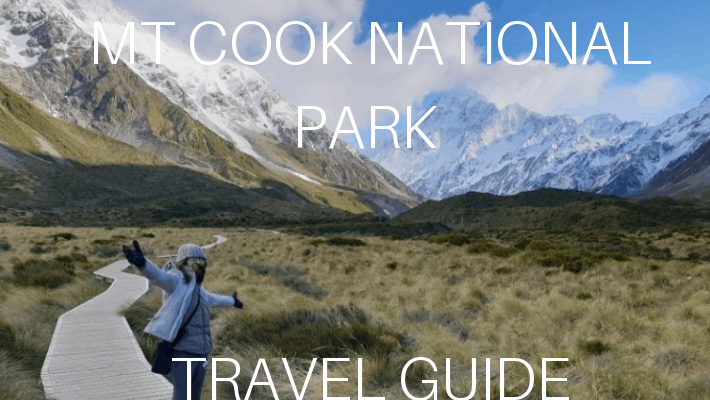
Aoraki / Mount Cook National Park sits pretty much in the centre of New Zealand’s South Island, and we felt lucky every time we made the trip up there. This guide covers what a day or two around the village actually looks like: the state of the road in, where to stay, what to bring, which walks are worth doing, and crucially, the current state of the Hooker Valley Track, because that’s changed since we first wrote about this place.
In this article we discuss:
- The road in and what to expect
- Where to stay in the village
- What to bring (it’s colder than you think)
- The Hooker Valley Track and its current bridge situation
- Other walks, the Tasman Glacier, and stargazing under the Dark Sky Reserve
Getting to Aoraki / Mount Cook
Aoraki / Mount Cook Village is about an hour from Tekapo (Takapo) and just 20 minutes from Twizel, so you’ll want a hire car with Queenstown or Christchurch as your realistic starting point. There’s one road in and one road out, which can make it feel like a big commitment for what’s essentially one headline view, the peak of Aoraki. We thought the same before we went, and were pleasantly surprised by how much there was to do once we got there.
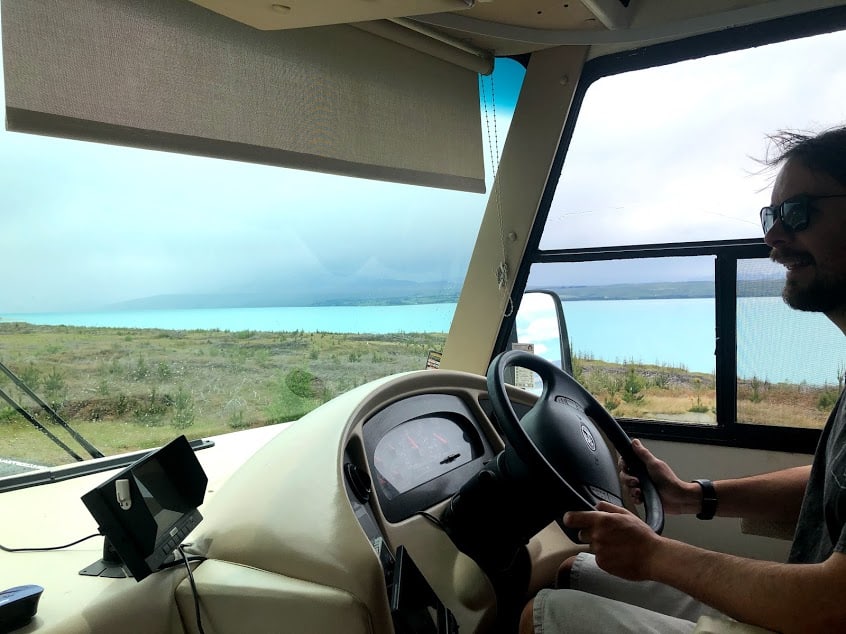
We’d built the drive up in our heads as hilly and daunting, and it just wasn’t. The road is smooth, gently winding, and hugs the shoreline of Lake Pukaki, which is an almost unreal turquoise blue, without a proper steep hill anywhere on it. Our motorhome was grateful. It’s genuinely one of the most scenic drives in New Zealand, and the only real pinch points are a handful of one-lane bridges, which are easy enough if you’re paying attention to the give-way signs.
Where to Stay in Aoraki / Mount Cook Village
Your options here come down to budget, and there are really three tiers.
White Horse Hill Campground is the DOC site, and it’s what we chose, mainly because we were travelling in our motorhome. It’s currently NZ$15 per person per night, booked in advance online through the DOC Campsite Pass system (booking on-site with staff, if available, attracts an extra service charge). There’s no power and no showers on site, though coin-operated hot showers are available at the public shelter in the village, about 2.5km away. The site does put you right at the start of the Hooker Valley Track and several other walks, and there’s a toilet block and a shelter that doubles as public shade in bad weather. Note that DOC piloted paid parking at the adjacent White Horse Hill car park from December 2025 through to the end of June 2026, so check current signage or the DOC website when you arrive, since we can’t confirm whether that charge is still running.
The approach to the campground crosses a small, fairly steep ford; if you’re in a low-clearance vehicle or a motorhome, take it slowly, we scraped our tow bar on the way in.
If camping isn’t your thing, we’d suggest:
Mt Cook Lodge: a solid, more budget-conscious option with a mix of motel rooms, shared rooms and lodge rooms.
The Hermitage Hotel: the village’s landmark hotel, and worth the splurge if you’re going to treat yourself, ideally in a Mount Cook view room.
Book direct or compare on your usual site for the current rate either way; prices at both ends of the village shift with the season, and this is a genuinely remote, high-demand location. If you’re keeping costs down across your whole trip, our guide to travelling New Zealand on a budget has more general tips that apply here too.
What to Bring
We visited in November, technically summer for us, and still ended up in winter coats and thermals. The wind up here is relentless and the temperature swings fast, so pack for alpine weather regardless of the season on the calendar. Stock up before you arrive too. There’s very little in the village itself: a small in-hotel convenience store covers snacks and basics, but there’s no proper supermarket. Twizel, about 65km back down the road, has the nearest full supermarket, and it’s your last realistic fuel stop as well, since the village pump is self-service and card-only, and priced for its remote location.
The Hooker Valley Track: Current Status (2026)
This is the walk everyone comes for, and it’s genuinely the best in the park, but the situation on the ground has changed, so read this bit properly before you plan your day around it.
The second swing bridge on the track has been closed since April 2025, after heavy rainfall caused riverbank erosion that made it unsafe, according to DOC’s own media release at the time. DOC has been building a replacement, a substantial 189-metre suspension bridge, and its April 2026 media release put the opening at late July or early August 2026. Until that bridge opens, the track is walkable only as far as the first swing bridge and a viewing platform over Mueller Lake, roughly an hour return from the White Horse Hill car park. That’s still a lovely, easy walk with genuine alpine views, but it is not the full three-hour return walk to the head of the valley that most people picture when they think of Hooker Valley.
Check the DOC Hooker Valley Track page immediately before you travel, since the bridge could plausibly be open by the time you read this, or the timeline could have slipped again; alpine construction is at the mercy of the weather up there.
If the full track is open when you visit, our original advice still holds: go early. We left just before 6.30am and reached the final viewpoint by 8am, having passed only a handful of other walkers the whole way. By the time we turned back, we were meeting coach loads of 40 to 50 people heading out, and by 9am at the car park it was genuinely busy. If you can only manage part of the walk, the peak of Aoraki comes into view after the second swing bridge (assuming it’s open), at a lookout with a bench, about a quarter of the way in. It’s worth the effort even if you turn back there.
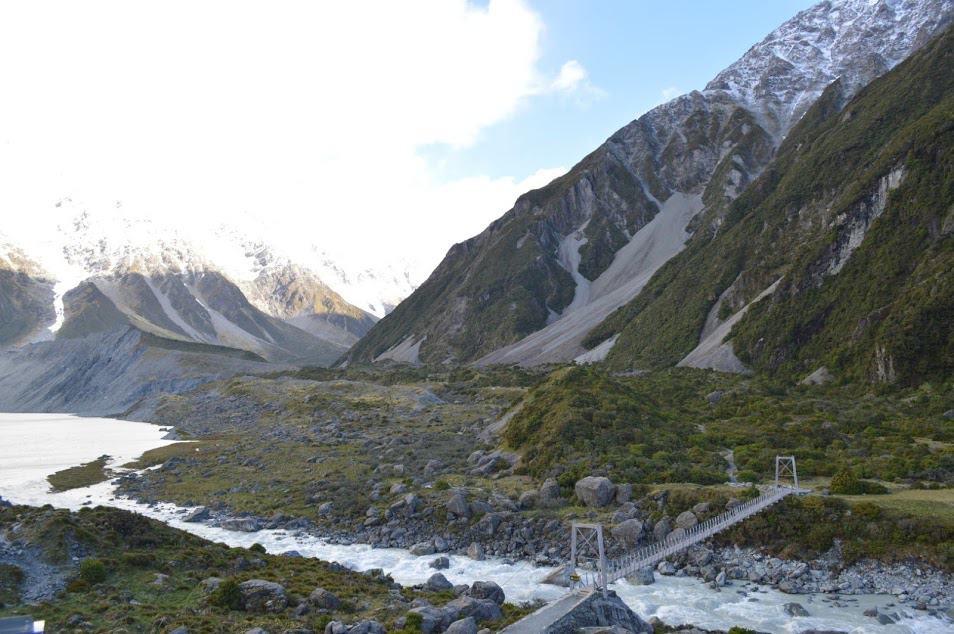
The terrain itself isn’t difficult or steep. The swing bridges are sturdy underfoot, even if they sway a bit. There’s a long-drop toilet roughly halfway. Our only real complaint, back when we walked the full track, was other walkers on the return leg stopping for photos in the middle of the path without much awareness of anyone behind them, which is a very Hooker Valley problem to have.
Other Walks and the Tasman Glacier
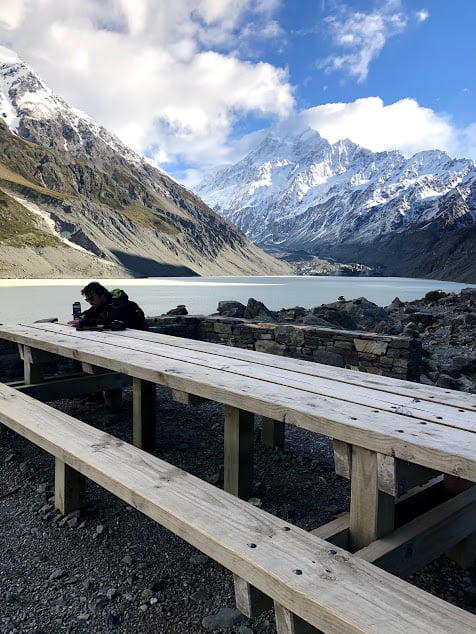
Two other walks are worth building into your visit. The Tasman Glacier View Track is popular, so go early or late in the day, and leads to views over Tasman Lake, the glacial lake formed as the Tasman Glacier retreats. We should be honest about what you’re looking at here: this lake didn’t exist in any meaningful size a few decades ago; glaciological surveys put it at around 1.7 square kilometres in 1990, growing to roughly 7 square kilometres by 2020, and it keeps growing as the glacier calves icebergs into it and retreats further up the valley. It’s a genuinely striking sight, and also a visible, ongoing example of glacial retreat in the Southern Alps.
The Kea Point Track is an easier two-hour return walk with good views of Mount Sefton and the Mueller Glacier lake, and both of these are very doable alongside a shorter Hooker Valley walk in a single day.
Sir Edmund Hillary Alpine Centre and Other Attractions
The Sir Edmund Hillary Alpine Centre, inside the Hermitage complex, is open and worth the visit, it’s part museum, part planetarium, and a genuinely good tribute to Hillary and the mountaineering history of the region. Check current opening hours before you go, since they shift seasonally.
A scenic helicopter flight is the other big-ticket option most people ask us about, and it really does show you more of the park than any walk can. It’s weather-dependent though, so if you’re booking one, go for the earliest slot you can get; winds tend to be calmer and the weather more settled first thing.
Stargazing in the Dark Sky Reserve
Aoraki / Mount Cook sits within the Aoraki Mackenzie International Dark Sky Reserve, one of the largest in the world, and on a clear night the sky here is something else. The main organised way to experience it properly is a guided tour with Dark Sky Project up at Mt John Observatory near Tekapo (Takapo), about an hour’s drive away; they run the summit experience in partnership with the University of Canterbury, combining naked-eye stargazing with observatory telescopes. Book ahead, these tours sell out, especially around new moon, and pricing varies by season and experience level, so check their site for the current rate.
Weather and Safety, Honestly
Alpine weather here changes fast and without much warning, and the same wind that makes helicopter flights unpredictable can turn a pleasant valley walk unpleasant in the space of an hour. Check the forecast on the morning you’re walking, not the night before, and be honest with yourself about turning back if conditions close in. This is genuinely committing terrain in bad weather, even on the easier tracks, and DOC’s alerts page is worth a look before you set out.
If you’re building Aoraki / Mount Cook into a wider trip, it sits naturally alongside a 10-day South Island self-drive itinerary, and pairs well with a detour down to somewhere as different as the Catlins later in the same trip. For more full South Island route ideas, our New Zealand travel itineraries hub has the rest.
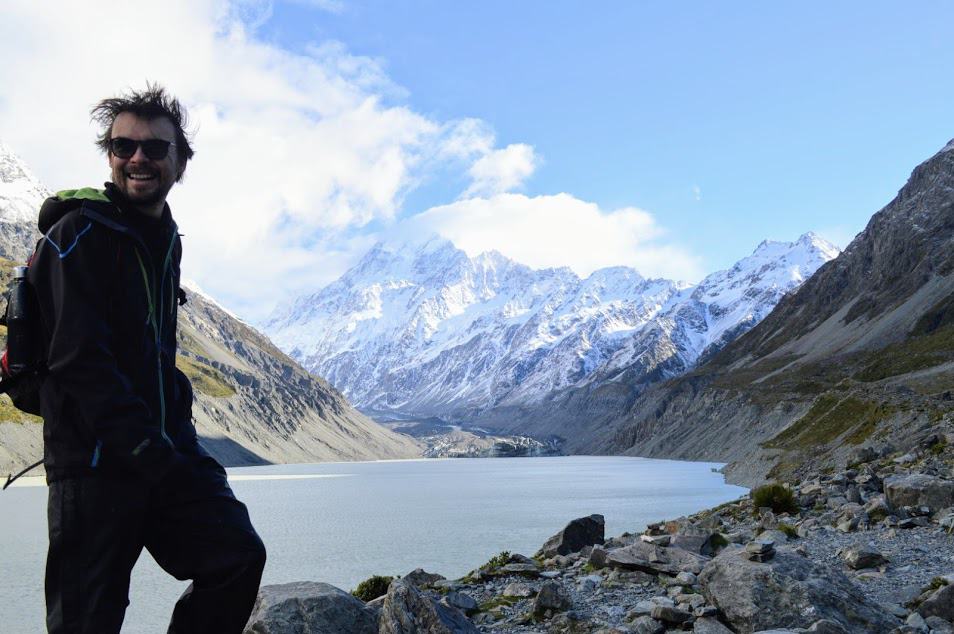
One last thing: our smile in the photo below suggests we’d just climbed Everest. We hadn’t. We’d walked to a bench. Don’t let anyone tell you differently.
Your questions answered
Can you still walk the full Hooker Valley Track in 2026? Only as far as the first swing bridge and the Mueller Lake lookout, about an hour return, until the new second bridge opens. DOC reported the replacement bridge on track to open late July or early August 2026, but check the DOC Hooker Valley Track page immediately before you travel, since alpine construction timelines can slip.
Do you need a 4WD to get to Aoraki / Mount Cook? No. The road from State Highway 8 is sealed and gently graded the whole way, with a few one-lane bridges to give way at. A standard rental car or campervan manages it easily.
Is Aoraki / Mount Cook worth visiting if you only have half a day? Yes, even a shortened Hooker Valley walk to the first bridge, combined with the Kea Point Track and a stop at the Sir Edmund Hillary Alpine Centre, gives you a genuinely full half day. It’s the kind of place that rewards a longer stay, but it doesn’t punish a short one.
How cold does it get at Aoraki / Mount Cook, even in summer? Cold enough to catch you out. We were there in November, New Zealand’s late spring heading into summer, and needed winter coats and thermals because of the wind chill. Pack proper layers whatever month you’re visiting.
Do you need to book the Dark Sky Project stargazing tour in advance? Yes, and well in advance if you can, particularly around new moon when the skies are darkest and demand is highest. Tours can also be weather-dependent, so build a spare night into your itinerary near Tekapo if stargazing is a priority.
Is there fuel in Aoraki / Mount Cook village? There’s a self-service, card-only pump in the village, but it’s priced for the remote location and shouldn’t be relied on as your only option. Fill up properly in Twizel, about 20 minutes away, before you head up.
What’s the best short walk if Hooker Valley is closed or crowded? The Kea Point Track is an easy two-hour return with strong views of Mount Sefton and the Mueller Glacier lake, and the Tasman Glacier View Track gets you to Tasman Lake without much elevation gain
You might also like
A Weekend on the Coromandel Peninsula
Our updated 2026 guide to a weekend on the Coromandel Peninsula: Cathedral Cove's current access, Hot Water Beach timing, road status and where to stay.
The New Zealand bucket list: experiences that are actually worth it
Our honest New Zealand bucket list: 11 experiences from ten years living there, with genuine opinions on what's worth it and what to skip. Updated 2026.
Planning a New Zealand road trip: routes, driving times and honest advice
Planning a New Zealand road trip? Real driving times, ferry booking advice, motorhome vs car and seasonal driving realities from ten years living there.