
Waiheke Island: The Complete Guide
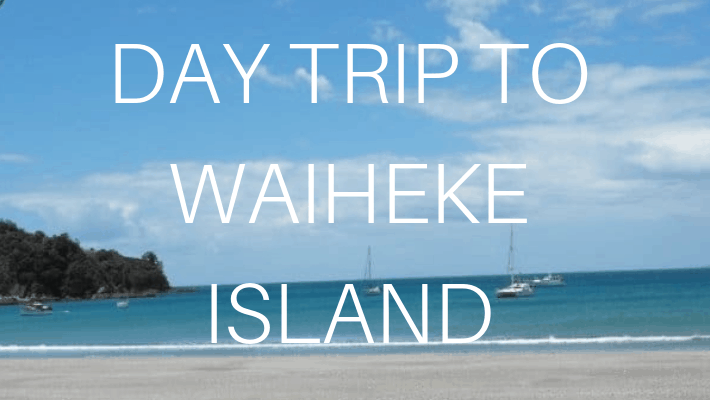
Waiheke Island sits less than an hour from downtown Auckland by ferry, and it still manages to feel like a different country. Vineyards roll down to the sea, the beaches are proper white sand, and the pace drops the moment you step off the boat. When we lived in Auckland, Waiheke was our go-to escape: close enough for a day trip, good enough that we kept going back for more.
This is our complete, honest guide to Waiheke Island: how to get there and back without overpaying, how to get around an island that is a lot bigger and hillier than it looks from the ferry, which wineries and beaches are worth your time, and when to visit if you want to dodge the worst of the summer crowds.
In this article
- Getting to Waiheke Island: ferries, fares and the car ferry option
- Getting around: buses, e-bikes and cars
- The beaches: Oneroa, Onetangi, Palm Beach and beyond
- The wineries: which ones are worth your time
- Where to eat
- Where to stay: day trip or overnight
- Summer crowds: the honest version
- Your questions answered
Getting to Waiheke Island: ferries, fares and the car ferry option
Fullers360 runs the main passenger ferry from downtown Auckland to Matiatia wharf on Waiheke, and the crossing takes about 40 minutes. Sailings run from roughly 6am to midnight most days, with up to 22 services on the busiest days, so you are rarely waiting long. Fares are more layered than they used to be: a walk-up adult return currently costs $62, but book an off-peak return online (departing Auckland from 1pm, or Waiheke from 7pm) and it drops to $46.50. Families get a better deal too, from $99 return off-peak for two adults and two children. If you are coming and going a few times in a fortnight, the Waiheke Weekly Pass (eight trips for $129) is worth a look (Fullers360, fares current as of June 2026, checked July 2026).
Fullers360 is no longer the only operator. Island Direct broke the old monopoly on the Matiatia route in late 2023 and now runs hourly sailings of its own, so if one company’s timetable does not suit, it is worth comparing both before you book.
If you want your own car on the island rather than hiring one there, SeaLink runs a genuine vehicle and passenger ferry from both downtown Auckland and Half Moon Bay to Kennedy Point, every day of the year. A car and driver return currently runs from about $239, plus a temporary fuel surcharge added from May 2026, so it is not cheap, but it does mean arriving with your own boot space and skipping the island’s hire car queues.
| Option | Crossing time | Typical return fare | Best for |
|---|---|---|---|
| Fullers360 walk-up | ~40 min | $62 adult | Flexibility, no booking needed |
| Fullers360 off-peak (booked ahead) | ~40 min | $46.50 adult | Budget day trips |
| Island Direct | ~40 min | Broadly comparable, check current fares | Hourly sailings, an alternative timetable |
| SeaLink car ferry | ~45 min | From $239 (car + driver) | Bringing your own vehicle, longer stays |
Fares approximate, in NZD, checked against operator websites July 2026. Fares and surcharges move, so confirm the current price before booking. As a rough guide, $62 is about £27 or US$35 at mid-July 2026 rates (GBP1 = NZD2.34, USD1 = NZD1.75).
Getting around: buses, e-bikes and cars
Here is the thing nobody warns you about: Waiheke is much bigger, and much hillier, than the postcards suggest. We learned this the hard way. On one visit we walked and caught the public bus, no trouble. On another, feeling confident, we brought our own bikes over on the ferry, ordinary ones, not electric, and set off to explore. We got as far as Ostend before the hills humbled us completely, pushing as much as we pedalled, and only saw half the island we had planned to see.
E-bikes solve this properly, and plenty of locals ride them for exactly that reason. eRide Waiheke, based right at Matiatia Ferry Terminal, hires premium e-bikes seven days a week, and its self-guided Five Bays route (roughly 25 to 30km) strings together beaches, wineries and coastal viewpoints without leaving you wrecked on a hill near Surfdale. eCycles NZ, the operator we actually used, still hires from the ferry terminal area too, so it is worth comparing both before you commit.
If two wheels are not your thing, the Waiheke Bus Company runs regular loop services (routes 50A and 50B) between Matiatia and Onetangi, roughly every 15 to 30 minutes at peak times and hourly in the evenings, taking AT HOP cards as well as cash. Hire cars are available at Matiatia too, and Waiheke Executive Transport (previously Waiheke Executive Travel, same company under a new name) runs coach tours and private transfers with a local driver guide, useful if you would rather sit back and let someone else navigate the hills.
The beaches: Oneroa, Onetangi, Palm Beach and beyond
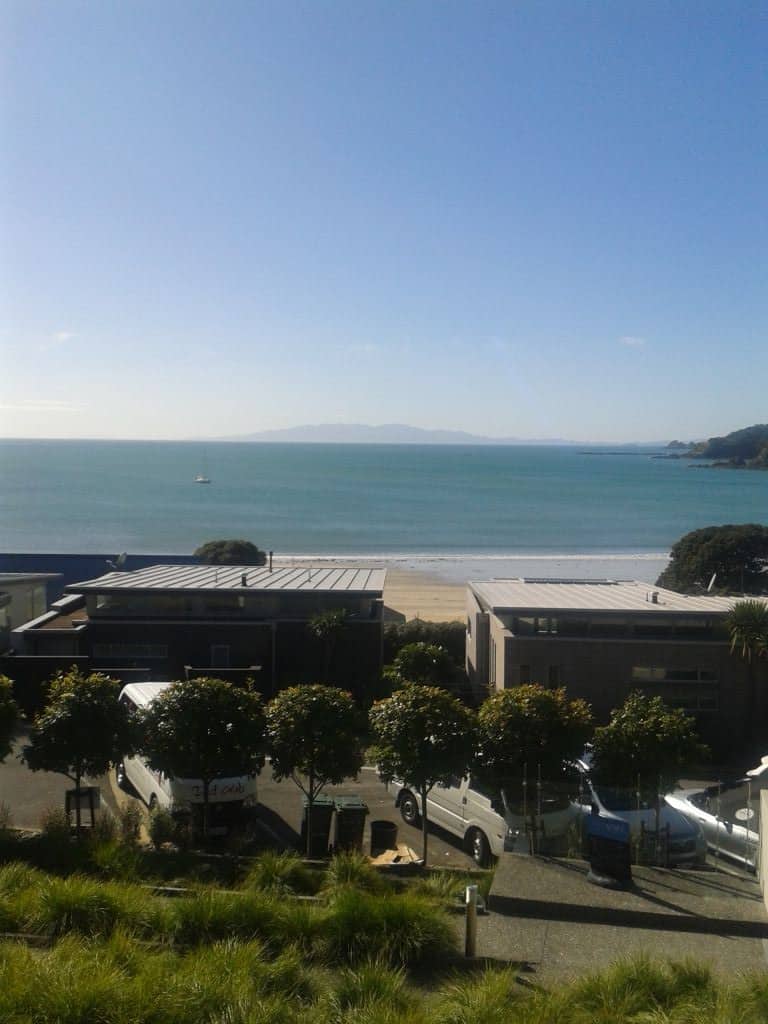
Oneroa is where most people start and end up regardless of transport choice. It has the main shops, the tourist information centre, and a genuinely lovely curve of beach right in the village, worth an hour even if wine and hills are your main plan for the day.
Onetangi has the island’s longest and most classic stretch of white sand, backed by baches and a couple of good beachfront places to eat. It sits a good 20 minutes from the ferry by road, which keeps it a notch quieter than Oneroa, and it is genuinely the last proper settlement before the wilder, less-visited eastern end of the island that most day trippers, us included on one trip, never get around to seeing.

Palm Beach, tucked below Surfdale and Ostend, is the one families rate most highly: sheltered, shallow and a short walk from a café strip. Little Oneroa, right next to the main town, is a good option if you want beach and shops within stumbling distance of each other. If you find a quiet inlet like Okahuiti Creek on your own explorations, the way we stumbled on it while trying to find a flat cycling route between Ostend and Surfdale, treat it as a bonus. Waiheke rewards a bit of wandering.
The wineries: which ones are worth your time
Waiheke has been calling itself the island of wine for good reason: around 30 cellar doors are scattered across it, more than most people can realistically fit into one visit.
We spent a day touring two of the bigger names, and both are still very much open in 2026. Cable Bay, a short drive or e-bike ride from Matiatia, sits high on a hill with sweeping views over the vines, the water and Auckland city beyond, plus a wine cellar built into the hillside beneath the restaurant. It remains one of the easiest wineries to combine with a short visit, open daily from 11am to 5pm.

Batch Winery, at Thomas’s Bach, sits at one of the highest points on the island and delivers exactly the 360 degree views that description promises: Waiheke’s rolling hills in every direction, the Coromandel visible on a clear day, the Sky Tower on the other horizon. Their restaurant leans into the New Zealand bach aesthetic, right down to the scaffolding, and their sharing-plate and high tea style menus are still running. Mudbrick and Stonyridge, two more of the island’s best-known names, are also both trading in 2026: Mudbrick with tastings from $30 for four wines, Stonyridge with an icon tasting at $35 including a glass of its flagship Larose. None of these are booze-cruise wineries; expect a slower, considered pace, and expect to pay for it.

Where to eat
The Oyster Inn in central Oneroa is still our top recommendation for good seafood, particularly if you like local mussels and oysters. It is not cheap, and it is now closed Monday and Tuesday, open Wednesday to Sunday from midday to 9pm, so check before you plan around it. Beyond that, Oneroa and Onetangi both have a good spread of small, independent places, from casual fish and chips to the winery restaurants themselves, and the standard, fair warning, tends to come with Auckland prices attached.
Where to stay: day trip or overnight
Waiheke works perfectly well as a day trip from Auckland: an early ferry, a loop by bus or e-bike, a winery lunch, and you are back in the city for dinner. But it deserves more than a day if you can manage it. Staying overnight lets you reach the quieter eastern beaches, catch sunset from somewhere other than a ferry queue, and actually relax into the island’s pace rather than racing the last sailing home.
Accommodation ranges from a campground through to genuinely stunning clifftop houses, and a lot of it is privately owned holiday homes rented out when the owners are not using them, so booking platforms with private listings tend to turn up better options here than hotel search engines alone. Book well ahead for anything between Christmas and Easter. That season is when the island fills up fastest and prices climb hardest.
Summer crowds: the honest version
Waiheke in January is a different island to Waiheke in May. Ferries run fuller and more frequently, wineries need bookings rather than walk-ins, and Oneroa’s main street can feel more like central Auckland than a quiet island town. None of that makes it not worth visiting in summer, the weather and the swimming are better for it, but go in expecting queues rather than solitude.
If solitude is what you are after, autumn (March to May) still gives you warm enough days for beaches and wineries, with noticeably fewer people and, often, better ferry availability without the peak pricing. We have always found the shoulder seasons the better trade on Waiheke: a little cooler, a lot calmer.
If you are building Waiheke into a longer trip, it slots neatly into the start of our 10-day North Island self-drive itinerary, or works as the highlight of a long weekend in Auckland. For more on the city it sits beside, our guide to living in Auckland covers what the wider region is actually like, and our budget travel guide has more on stretching your ferry and wine budget further. Our full New Zealand travel itineraries hub has more ways to fit a day like this into a bigger route.
Your questions answered
How much does the Waiheke ferry cost in 2026? A Fullers360 walk-up adult return is $62, dropping to $46.50 if you book an off-peak return online (departing Auckland from 1pm, or Waiheke from 7pm). Children, families and multi-trip passes all have their own discounted fares, so check the Fullers360 site for your exact trip before you travel.
Can you take a car to Waiheke? Yes, via SeaLink’s vehicle ferry from downtown Auckland or Half Moon Bay to Kennedy Point, running daily year round. A car and driver return currently starts from about $239 plus a fuel surcharge, so weigh that against simply hiring a car once you arrive.
Is Waiheke doable without a car or e-bike? Yes. The Waiheke Bus Company’s loop services connect Matiatia to Onetangi and most of the villages in between, running every 15 to 30 minutes at peak times. It is slower than an e-bike and will not get you to every winery, but it is a genuinely workable option on a budget.
How many wineries can you realistically visit in a day? Two, maybe three if you keep tastings short, is realistic without rushing. Waiheke’s wineries reward lingering, and the hills between them are real, so factor in transport time as well as tasting time.
Is Waiheke worth visiting outside summer? We would argue it is better outside summer. Autumn still has warm, swimmable days, wineries and restaurants are far less booked out, and ferries are easier to get a seat on without paying peak prices.
Do you need to book wineries in advance? In summer, yes, particularly for restaurants and tastings at the bigger names like Mudbrick, Cable Bay and Stonyridge. Outside peak season you can often walk in, but booking ahead still avoids disappointment.
What is the best beach on Waiheke for families? Palm Beach and Little Oneroa are the two most sheltered, shallow options close to cafés and parking. Onetangi has more space to spread out if you do not mind a slightly longer trip from the ferry.
Waiheke gave us some of our favourite days out while we lived in Auckland, sunburnt bike rides included, and it remains one of the easiest genuinely special places to reach from a New Zealand city. Got a question we have not covered, or found somewhere on the island we have missed? Get in touch through our contact page.
You might also like

Aoraki / Mount Cook Travel Guide
Our real Aoraki / Mount Cook guide: Hooker Valley Track status, Tasman Glacier, Dark Sky stargazing and where to stay. Updated August 2026.
A Weekend on the Coromandel Peninsula
Our updated 2026 guide to a weekend on the Coromandel Peninsula: Cathedral Cove's current access, Hot Water Beach timing, road status and where to stay.
The New Zealand bucket list: experiences that are actually worth it
Our honest New Zealand bucket list: 11 experiences from ten years living there, with genuine opinions on what's worth it and what to skip. Updated 2026.