
Growing Your Own Food in New Zealand: Orchard, Veges and Stock
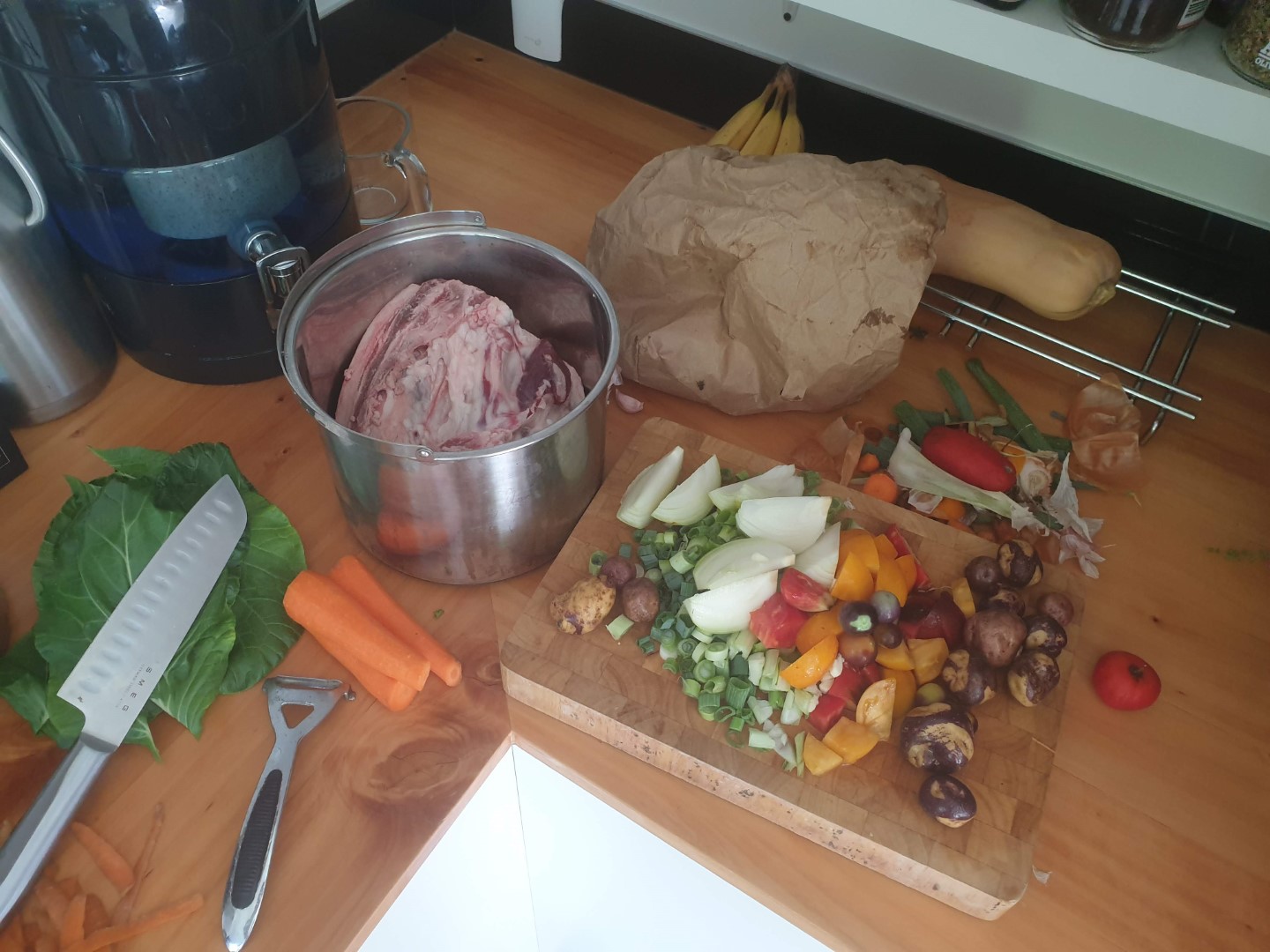
We ran a proper lifestyle block outside Kerikeri for years: an extensive orchard, vege gardens we fought the red clay for every season, chickens that outsmarted us regularly, a small herd of cows and, at our peak, more than thirty sheep. Growing your own food in New Zealand gets romanticised a lot online, all groaning baskets and self-sufficiency dreams. We loved it, genuinely, but it is not free food and it is not simple. It is cheaper therapy that occasionally produces a feijoa glut you cannot give away fast enough.
This is the honest version: what actually grows where, what a vege garden year really looks like, what nobody tells you about chickens, what a few sheep or a house cow actually demand of you, and what native planting and rewilding gave us that the food never quite could.
In this article
- What grows where: Northland vs the cooler south
- The Kiwi vege garden year
- Keeping chickens: what nobody tells you
- A few sheep or a house cow, honestly
- The orchard learning curve
- Natives and rewilding
- Growing your own food in New Zealand: what it actually saves and costs
- Your questions answered
A note on money before we get into it: figures below are in New Zealand dollars first. As of mid-July 2026, GBP 1 buys around NZD 2.33 and USD 1 buys around NZD 1.71 (Wise, OFX, Trading Economics), so divide any NZD figure accordingly for a rough conversion, and check a live rate before relying on it for real budgeting.
What grows where: Northland vs the cooler south
New Zealand’s climate range is bigger than its size suggests, and what you can grow changes dramatically between the subtropical north and the frosty south.
Northland, where we gardened, is about as close to subtropical as New Zealand gets: mild winters, ground frost that is rare rather than routine, and enough warmth that citrus barely needs coaxing. Lemons, limes, oranges and mandarins all did well for us, and Meyer lemons in particular seemed to fruit almost in spite of our neglect some years. Avocado is a real option too, Hass, Reed and Fuerte all suit the climate, though they want proper wind shelter and drainage that sharp; a wet-footed avocado tree sulks and eventually dies, and our clay taught us that lesson at least once. Feijoa is the forgiving one. It is the hardiest of the so-called subtropicals, tolerates light to moderate frost, and if you plant it on a raised mound rather than flat into heavy clay, it copes with soil that would sulk most other fruit trees into the ground.
Further south, that whole subtropical list drops away and stone fruit takes over. Central Otago is the standout, a properly continental climate with cold, frosty winters and hot, dry summers, which sounds harsh and is exactly what cherries, apricots, nectarines, peaches and apples actually want. That same harshness is what gives Central Otago stone fruit its reputation for intense flavour, but it comes with real work: irrigation is not optional in a dry Otago summer, and growers manage genuine climatic extremes that we, gardening in mild, wet Northland, never had to think about. If you are choosing a region partly on what you want to grow, it is worth treating this as a genuine trade-off rather than a minor detail: subtropical ease and humidity in the north, or stone fruit and apples with more discipline required in the south.
| Crop | Best suited to | Why |
|---|---|---|
| Citrus (lemons, mandarins, oranges) | Northland, Auckland, upper North Island | Rare ground frost lets fruit hang and ripen slowly; Meyer lemons especially reliable |
| Avocado | Northland, Bay of Plenty | Needs frost-free warmth, wind shelter and sharp drainage; sulks badly on wet clay |
| Feijoa | Most of the North Island, sheltered South Island spots | Hardiest “subtropical”, tolerates light-to-moderate frost and clay if mounded |
| Cherries and apricots | Central Otago, inland Hawke’s Bay | Wants real winter chill to set fruit, then a hot, dry summer to ripen it |
| Apples | Most of the country, best in Central Otago, Hawke’s Bay, Nelson | Wide tolerance, but the cool-winter regions produce the classic crisp, high-colour fruit |
| Kūmara and pumpkin | Northland, Waikato, warmer regions generally | Long, warm growing season needed; struggles in short-summer southern regions |
Broad regional guidance based on Te Ara Encyclopedia of New Zealand, PLAN.T Northland growing guides and Central Otago growing region sources, accessed July 2026. Microclimates, frost pockets and soil vary a lot within any region, so treat this as a starting point rather than a guarantee.
The Kiwi vege garden year
New Zealand’s vege garden calendar runs on a rhythm most newcomers do not expect, built around Labour Weekend in late October, the traditional nationwide cue to get frost-tender summer crops like tomatoes into the ground. In Northland and Auckland you can usually go earlier, since the frost risk is genuinely low. Further south, in Canterbury, Otago and Southland, plenty of gardeners still reach for cloches even at Labour Weekend, because a late frost can undo a season’s head start in one cold night.
We learned the rhythm the hard way in our first year or two: too eager with tomatoes in a wet Northland spring, and you get lush green plants that rot before they fruit properly, because it is warmth and light that ripens tomatoes, not just frost-free air. Once we settled into the actual local pattern, tomatoes, courgettes, beans and sweetcorn went in from around September onwards, kūmara slips a little later once the soil had properly warmed, and most of it came off between December and March, all at once, which is its own problem. Nobody warns you clearly enough that a productive vege garden does not trickle out a gentle, even supply. It dumps. One week you are short of courgettes, the next you are leaving them on neighbours’ doorsteps and pretending it is generosity rather than desperation.
Winter growing exists too, and Northland’s mild winters meant we could keep brassicas, silverbeet and leeks going through the cooler months without much protection, something a Canterbury or Otago gardener would need proper cold frames or a greenhouse for. That regional gap matters more than most general “how to grow vegetables in NZ” guides let on.
Keeping chickens: what nobody tells you
Chickens are the gateway animal for most people getting into growing their own food, and they are genuinely easier than livestock. They are also not the low-maintenance eggs-for-free proposition the picture in your head suggests.
The rules depend on your council, so check locally rather than assuming, but as a working example, Auckland Council allows hens without permission (a rooster generally needs one, which your neighbours will thank you for checking on), with numbers capped by section size: six birds under 2,000 square metres, twelve up to 4,000 square metres, no cap above that. What nobody puts on the fun list is predator-proofing. Hawks take chickens from above in broad daylight, and we lost more than one to a hawk before we properly wired over the run. Stoats, rats and neighbourhood cats will dig, so mesh needs to be buried into the ground, not just pegged to it, and the coop itself needs to be genuinely secure overnight, not just a box with a door that looks shut.
The other thing nobody tells you: chickens have personalities, and not always good ones. We had a hierarchy that would put a Regency drawing room to shame, favourites that got broody and sat on nothing for weeks, and one particular hen who treated the vege garden as her personal buffet the second a gate was left ajar for thirty seconds. Eggs slow down or stop entirely over winter and during a moult, which surprises people expecting a steady daily supply year-round. And a flock outlives its egg-laying years by a long way, which is a genuinely awkward conversation to have with yourself a few years in.
A few sheep or a house cow, honestly
This is where growing your own food tips from garden into proper farming, even at a small scale, and it is worth being straight about what it demands.
If you keep cattle, even one house cow, you must register with NAIT (National Animal Identification and Tracing) as a Person in Charge of Animals within 48 hours of taking charge, register your property as a NAIT location, and get the animal tagged and recorded, generally within 180 days of birth or before its first move off the property, whichever comes first (OSPRI). There is no small-herd exemption. One pet cow is treated exactly the same as a commercial herd for tracing purposes, because the whole point of the system is biosecurity, not scale, and failing to register can bring an $800 fine. Deer fall under the same requirement.
Sheep do not need NAIT, which is one reason they are the more common lifestyle-block starting point, and we built up to more than thirty at our peak. What sheep do demand is fencing that actually works. Electric fencing needs at least 5kV to reliably contain sheep, because their wool insulates them against a shock that would easily turn back a horse or a cow on 2.5kV, and we found this out by chasing escaped sheep down a public road more than once, in pyjamas, before we upgraded the fence line properly. Regular drenching for internal parasites is non-negotiable, and drench resistance is a real, growing problem in New Zealand, so we moved to a triple-combination drench on our vet’s advice rather than whatever was cheapest at the rural supplies store. Shearing is another job to plan for unless you go for a self-shedding breed like a Dorper, which skips shearing but still needs the same drenching and general care.
The workload is real and constant. Water needs checking daily, especially in a dry Northland summer. Fences need walking regularly, not just after something has already got out. And sick or injured stock do not wait for a convenient weekend. If you are weighing this up as part of buying rural land generally, our buying a lifestyle block in New Zealand guide goes into the property side of this in more depth; here, the honest summary is that a few sheep or a house cow are a genuine daily commitment, not a weekend hobby that occasionally needs attention.
The orchard learning curve
An orchard looks like the easiest part of growing your own food, plant a tree, wait, harvest, and it is the part that taught us the most patience. Most fruit trees take a genuine three to five years to produce anything worth eating, and the red clay around Kerikeri did not make that easier. It compacts hard in a dry summer and turns to something closer to soup after a wet week, and more than one of our early trees sulked or died from wet feet before we learned to plant on raised mounds and improve the drainage properly first, the same trick that saves feijoas and avocados on clay.
Once established, the orchard problem flips entirely: from not enough to far too much, all at once. Citrus trees in Northland do not stagger their harvest politely. A good year means more lemons than any household can use, more feijoas than the local honesty box economy can absorb, more plums dropping and rotting under the tree than we ever managed to pick in time. We got seriously into preserving as a direct result, chutneys, jams, frozen citrus zest, feijoa everything, not because we were auditioning for a cookery show but because the alternative was watching a season’s work compost itself. If you are planning an orchard, plan the preserving and giving-away infrastructure at the same time as the trees, because the glut always arrives faster than you expect and lasts longer than your fridge can handle.
Natives and rewilding
This is the part of the block that gave us the most, honestly, more than the food most seasons. We planted out a significant chunk of our land in natives over the years we were there, and got properly, quietly obsessed with rewilding rather than treating it as a tidy-up job around the productive garden.
New Zealand’s introduced predators, rats, stoats, ferrets, weasels and possums, are estimated to kill around 25 million native birds a year, which is the sobering context behind the national Predator Free 2050 goal. Planting with birds in mind makes a genuine difference at a backyard scale. Finely branched natives like kānuka, mānuka, māpou and kōhūhū gave shelter and nesting material, and we watched tūī, riroriro and pīwakawaka move into parts of the property that had been bare paddock a few years earlier. Kōwhai, pūriri and kohekohe matter even more than the showier plants, because they flower and fruit through the leaner winter months when food is genuinely scarce for native birds, not just in the easy abundance of summer. We planted most of it in the recommended windows, autumn (April-May) or late winter into spring (August-September), when the ground is damp enough for new plants to establish without constant watering.
For anyone with a genuinely significant area of native bush or wetland on their land, a QEII National Trust covenant is worth understanding even if you never sign one. It is a voluntary, permanent protection agreement registered on your land title through LINZ; you keep full ownership of the land and anything it produces, QEII does not buy or take the land, it simply acts as the trustee ensuring the protection holds for future owners too. QEII pays for the boundary survey, helps with the fencing needed to keep stock out of the protected area, and a field rep visits roughly every two years with practical pest-control advice. We looked closely at covenanting a section of bush and the small river that ran through our block, and while our own situation moved on before we finalised it, it is a genuinely well-run scheme, not a box-ticking gesture, and it is worth investigating if part of your land deserves permanent protection rather than just informal good intentions.
Growing your own food in New Zealand: what it actually saves and costs
Here is the number nobody wants to hear: growing your own food in New Zealand is not a cost-saving exercise once you count your own time honestly. Seedlings, feed, fencing, drenching, vet call-outs, netting against birds and possums, water in a dry summer, all of it adds up, and a proper accounting rarely comes out cheaper than the equivalent groceries, especially once you value your own weekends at anything above zero.
What it does deliver is quality and resilience that supermarket shopping cannot match at any price: eggs from hens you know, meat you watched grow up and understood the whole life of, fruit picked ripe rather than picked green for a supply chain, and a genuinely satisfying answer to a bad week that involves mud, secateurs and something to show for the effort by the end of it. We would not swap those years for the money we might have saved buying everything from the supermarket instead, because that was never really the trade we were making. If the sums matter to your household budget more broadly, our cost of living in New Zealand guide covers where groceries actually sit against everything else, and our cheapest supermarkets in New Zealand guide is worth reading alongside it, because for most households, shopping smarter at the supermarket will save more than a vege patch ever does. Read both honestly before assuming a garden and a few chickens will meaningfully dent your food bill. It will not, not in dollar terms. It will change how you feel about food, which turned out to matter more to us.
If you are weighing land big enough for an orchard and a few animals specifically, our buying a lifestyle block in New Zealand guide and our living in Northland piece, where we cover the region’s growing conditions in more depth, are the natural next reads. A lot of this life also runs on power you generate and manage yourself when you are any distance from town, and we go into that honestly, off-grid experience included, in our solar power in New Zealand guide.
Your questions answered
Do I need a resource consent to keep livestock on a lifestyle block? Usually not for a small number of animals kept for personal use, but check your district plan and any rural zoning conditions before you buy, since some titles carry stock limits or covenants, and councils vary. NAIT registration for cattle or deer is a separate, national requirement regardless of consent status.
How many sheep do you actually need to be self-sufficient in meat? Fewer than most people assume for a household’s own use, two or three well-managed sheep can supply a family with meat for a year, but most people who end up with thirty or more, as we did, are also managing pasture, not just meat, since sheep are an efficient way to keep grass down on land you are not actively cropping.
What is the biggest beginner mistake with a new orchard in New Zealand? Planting straight into unimproved clay or poorly drained ground without addressing drainage first. Raised mounds or beds for citrus, feijoa and avocado solve most of the “wet feet” problems that kill young trees in their first two winters, and it is far easier to fix before planting than after.
Can I sell surplus eggs, honey or fruit from a lifestyle block legally? Small-scale, occasional sales (a stall at the gate, a local market) are common and generally fine, but regular or larger-volume sales can trigger food safety registration requirements under the Food Act, and honey specifically has its own biosecurity and labelling rules. If you are planning to sell regularly rather than occasionally, check current MPI requirements before you start.
Is a QEII covenant only for large blocks of native bush? No, covenants can cover anything from a small stand of bush or a wetland corner to a large area, the trust assesses ecological or heritage value rather than applying a minimum size. It is worth an initial conversation with a local QEII rep even if you think your area of native vegetation is modest.
What predators are the biggest threat to a home orchard and vege garden, not just to chickens? Possums are the main culprit on
You might also like

Best Places to Live in New Zealand in 2026: Our Honest, City-by-City Guide
Auckland, Wellington, Christchurch and six more places compared on rent, jobs and climate for 2026, from a couple who actually lived in three of them.

The Best Banks in New Zealand for Migrants
Which New Zealand bank is best for migrants in 2026: ANZ, ASB, BNZ, Westpac, Kiwibank and the challengers compared, fees, apps and deposit protection.

Buying a Car in New Zealand: A 2026 Guide to Costs, WoF and Rego
Buying a car in New Zealand: 2026 prices for WoF, rego, insurance and RUC, plus where to buy, imports and EVs, from a couple who actually did it.