
An Introduction to Māori Culture and Te Reo for Newcomers
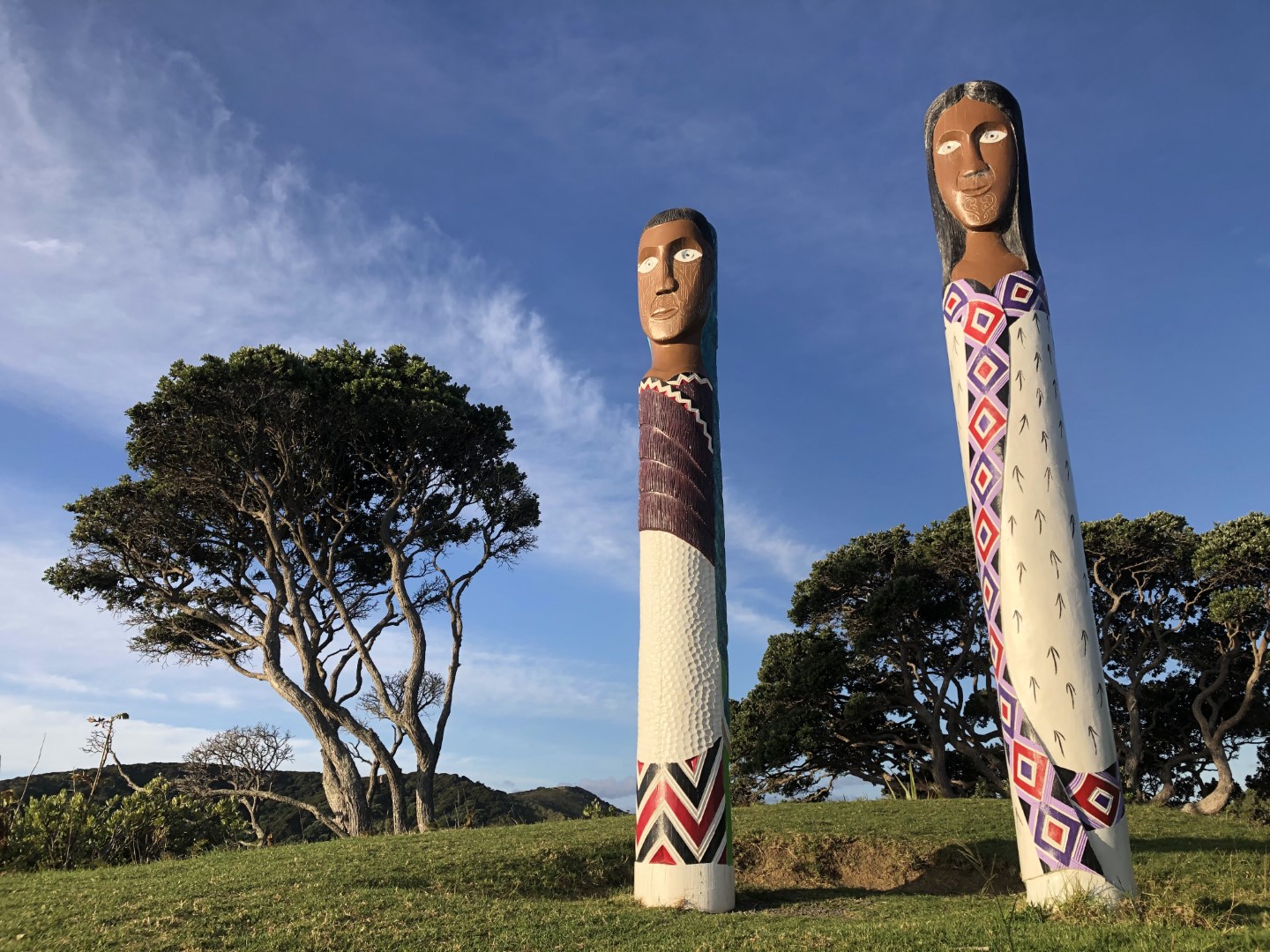
If you’re moving to New Zealand, you’ll meet Māori culture and te reo Māori within your first week, on a road sign, in a work email sign-off, or in the karakia that opens a council meeting. This is a plain, honest introduction to the basics: Te Tiriti o Waitangi, the words you’ll hear constantly, how to say them, what a few key customs mean, and how to learn more properly once you’re here.
We want to be upfront about where we’re writing from. Isaac is Māori on his mother’s side, and his family comes from Whangaroa Harbour in Northland. Our first trip to New Zealand together, in 2009, was partly about him connecting with that heritage. That connection is real and it matters to us, but it doesn’t make either of us an authority on tikanga or te reo. Isaac grew up in Britain, and a good deal of what’s in this article he only learned properly as an adult, coming back to a heritage he’d grown up somewhat distant from. That’s exactly why we’ve written this as a newcomer’s guide rather than an insider’s account. If you’re arriving with no context at all, we’ve stood somewhere close to that spot ourselves.
In this article
- Te Tiriti o Waitangi: the basics every newcomer should know
- Te reo Māori: official, alive and growing
- Everyday te reo you’ll hear within days
- How to say it: a short pronunciation guide
- Place names and what they mean
- Tikanga a newcomer should know
- Where to actually learn te reo
- Matariki: the Māori New Year
- How newcomers should engage, respectfully
- Your questions answered
Te Tiriti o Waitangi: the basics every newcomer should know
Te Tiriti o Waitangi, the Treaty of Waitangi, was signed on 6 February 1840 at Waitangi in the Bay of Islands, and it’s the founding document of modern New Zealand. Representatives of the British Crown and more than 500 rangatira (Māori chiefs) put their names to it, first at Waitangi and then as copies travelled the country over the following months.
The idea behind it was partnership: Māori sharing power and authority with the Crown, in exchange for protection of their rangatiratanga, their authority over their iwi, hapū, lands and taonga. It’s more complicated in practice, because the Māori text (te Tiriti) and the English text (the Treaty) don’t say quite the same thing. The English version has the chiefs ceding “sovereignty” to the Crown. The Māori version uses “kāwanatanga”, closer to “governorship”, while rangatiratanga was the word used for what Māori kept. That gap in meaning has shaped a huge amount of New Zealand’s history since, including land confiscation, protest and, since 1975, the Waitangi Tribunal process working through Treaty grievances.
You don’t need a law degree to get by, but Te Tiriti isn’t a historical footnote. It comes up in council decisions, health and education policy, place names, and everyday conversation about how the country is run. Waitangi Day, 6 February, is a public holiday marking the signing, treated differently around the country: commemorations at the Waitangi Treaty Grounds in Northland, civic events elsewhere, and sometimes protest, because the Treaty relationship is still actively worked out rather than settled and filed away.
Te reo Māori: official, alive and growing
Te reo Māori became an official language under the Māori Language Act 1987, which also gave people the right to use it in court and set up Te Taura Whiri i te Reo Māori, the Māori Language Commission. New Zealand Sign Language followed in 2006. Oddly, English has never been formally declared an official language by any Act of Parliament, it’s simply the language of daily life and government by long-standing use.
Te reo went through a genuinely difficult period in the 20th century, with children punished for speaking it in schools for decades, and by the 1970s fluent speaker numbers had dropped sharply. The revitalisation movement that followed, kōhanga reo (language nest early childhood centres), kura kaupapa Māori (Māori-medium schools) and the 1987 Act, has turned that around, though te reo is still classed as vulnerable and the work isn’t finished. You’ll now see and hear it constantly: on the news, in government branding, at the start of formal meetings, and increasingly in everyday New Zealand English, where words like “kia ora” have simply become part of how people talk.
Te Wiki o te Reo Māori, Māori Language Week, runs each September, anchored around 14 September, the anniversary of the 1972 petition that helped kick-start the revitalisation movement. Exact dates shift slightly year to year, so check Te Taura Whiri’s website (tetaurawhiri.govt.nz) closer to the time. It’s a good week to join in: workplaces run activities, radio stations switch some content to te reo, and it’s an easy, low-pressure moment to try new words.
Everyday te reo you’ll hear within days
You don’t need to speak te reo Māori to get by, but you’ll meet a working vocabulary of it almost immediately, in workplaces, on the news and in casual conversation. Here’s a starter phrasebook, with macrons exactly as they should be written and a rough guide to saying them.
| Word | Rough pronunciation | Meaning |
|---|---|---|
| Kia ora | kee-ah aw-rah | Hello, thank you, cheers; literally “be well” or “be healthy”. The most-used greeting in the country |
| Whānau | fah-noh | Family, in the broad, extended sense: not just parents and children |
| Iwi | ee-wee | A tribe or nation; a large group of related hapū sharing common descent |
| Hapū | hah-poo | A sub-tribe or clan, the more immediate kin group within an iwi (the same word also means “pregnant”) |
| Marae | mah-rah-eh | A tribe’s communal meeting complex: the courtyard, meeting house and dining hall together, and the customs that govern them |
| Kai | rhymes with “eye” | Food |
| Koha | koh-hah | A gift or contribution, freely given rather than a fixed charge, often offered at a marae or community event |
| Mana | mah-nah | Prestige, authority, standing; a person’s, family’s or place’s spiritual and social power |
| Taonga | tah-ong-ah | A treasure, anything highly prized, whether physical (land, a carving) or intangible (a language, a story) |
| Haere mai | hah-eh-reh my | Welcome, come here; a standard greeting on signs and at the start of an event |
| Rāhui | rah-hoo-ee | A temporary ban placed over an area or resource, covered in more detail below |
For the English-language side of settling in, our separate Kiwi slang guide covers the “jandals and dairy” end of the vocabulary you’ll need.
How to say it: a short pronunciation guide
Te reo Māori is phonetic: once you know the rules, words are pronounced consistently, unlike English. There are five vowel sounds, and they don’t wander the way English vowels do:
- a as in “car” or “father”
- e as in “egg” or “bet”
- i as in “see” or “me”
- o as in “or”, without the “r”
- u as in “moon” or “boot”
A macron, the small bar over a vowel (ā, ē, ī, ō, ū), simply lengthens the sound. It isn’t decorative and it isn’t optional: “keke” means cake, “kēkē” means armpit, and the only difference on the page is that bar. Getting macrons right in writing, and holding the vowel a beat longer when you say the word, genuinely changes the meaning.
Two combinations trip most newcomers up. “Wh” is pronounced like an English “f” in most dialects (so Whangārei sounds roughly like “Fahng-ah-ray”), though a handful of regions, notably around Whanganui, use a softer, breathier sound closer to the original “wh” in “whisper”. “Ng” is pronounced like the “ng” in “singer”, but unlike English it can start a word, as in “Ngāi Tahu” or “ngā” (the plural “the”), which takes some practice to say cleanly.
Place names and what they mean
New Zealand’s place names are full of te reo, and knowing roughly what they mean makes the map make a lot more sense.
Aotearoa, the Māori name most commonly used for New Zealand, comes from ao (cloud), tea (white) and roa (long): “the land of the long white cloud”. Tradition credits the explorer Kupe, whose wife Kūramārotini is said to have spotted a long white cloud on the horizon as they approached, prompting the name. As with much oral history recorded well after European contact, historians treat the finer details as tradition rather than settled fact, but the name has been in continuous use for generations.
Taupō is short for Taupō-nui-a-Tia, “the great cloak of Tia”, named for the explorer Tia, said to have looked down on the lake from the cliffs at Pākā Bay and thought it looked like a vast cloak spread across the land.
Whangārei has several traditional explanations rather than one settled meaning, which is common with older place names. “Whanga” generally means harbour or bay. One well-known Ngātiwai tradition calls it Whangārei-terenga-parāoa, “the gathering place of whales”, after whales that fed in the harbour over summer; other traditions link it to chiefs gathering there, or warriors lying in wait. We spent four years living around Whangārei and the wider Bay of Islands, covered in more depth in our guide to living in Northland.
Tikanga a newcomer should know
Tikanga is the broad term for correct Māori practice and custom, the “right way of doing things”. You don’t need to become an expert, but a few concepts come up often enough that it’s worth having a basic feel for them.
Marae etiquette, at invitation level. Most newcomers only visit a marae if invited: through work, a school trip, a friend’s whānau event, or a formal pōwhiri (welcome ceremony). Dress modestly and tidily, take your shoes off before entering the wharenui (meeting house), don’t eat or drink inside it, and switch your phone off during formal proceedings. Follow your host’s lead rather than assuming you know the etiquette, since every marae layers its own customs on top of the general rules. If a hongi (the traditional greeting, a gentle pressing of noses) is offered, it’s polite to accept, but nobody will force it on you.
Tapu and noa, lightly. Tapu means sacred, restricted or set apart; noa means free of restriction, ordinary. Much of tikanga is about keeping the two properly separated, which is why food (noa) is never placed on a surface associated with people’s heads (tapu) in a wharenui, and why hands are often washed and karakia (a blessing) said before and after significant events. You’ll mostly feel this as “there’s a right way to do this and I don’t fully know it yet”, a normal place for a newcomer to be. Ask, rather than guess.
Rāhui. A rāhui is a temporary prohibition placed over an area, a stretch of water, a forest, sometimes a beach, usually by the local iwi or hapū with authority over it, for conservation or, often, after a drowning or death, to let the area’s mauri (life force) settle. You’ll see it signposted, or hear about it locally. If a spot you were planning to swim or fish at has a rāhui on it, stay out, and don’t treat it as a suggestion.
Our broader guide to New Zealand culture and etiquette covers the everyday social customs, shoes off at the door, BYO at a dinner invite, that sit alongside tikanga rather than inside it.
Where to actually learn te reo
If this article gives you the basics, the honest next step is proper lessons, and New Zealand makes that genuinely accessible.
Te Wānanga o Aotearoa runs fees-free te reo Māori certificate courses (Te Pōkaitahi Reo, sometimes branded Te Ara Reo Māori), with new intakes each February and July, online nationwide and in person at campuses and some marae and community venues. It’s the most substantial free option going, and the best starting point (check wananga.com for current intakes, since regional availability shifts).
Beyond that: local councils and libraries often run free community te reo classes, worth checking with your nearest branch. Apps such as Drops have offered te reo Māori modules, though app catalogues change, so treat that as a starting point rather than a guarantee. In places with a strong local te reo presence, Rotorua among them, museums and cultural centres sometimes run public taster sessions; check what’s currently on rather than assuming.
Matariki: the Māori New Year
Matariki is the Māori name for the star cluster also known as the Pleiades, and its reappearance low in the dawn sky in midwinter marks the Māori New Year, traditionally a time to remember those who have died over the past year, celebrate the present, and plan ahead.
Matariki became an official public holiday in 2022 under the Te Kāhui o Matariki Public Holiday Act, the first New Zealand public holiday grounded in te ao Māori (the Māori worldview) rather than a Western or Christian calendar. The date moves each year, always landing in June or July depending on the maramataka (lunar calendar); in 2026 it falls on Friday 10 July. We cover Matariki’s place in the wider New Zealand year, alongside Waitangi Day, Anzac Day and the rest of the calendar, in our companion piece on your first Kiwi Christmas and the upside-down year.
How newcomers should engage, respectfully
A few honest principles, more than rules, that we’d pass on to anyone arriving now.
Listen before you perform. You don’t need to use te reo constantly to show respect. Using it a little, correctly, and listening the rest of the time goes further than trying too hard.
Get names right. Practise the pronunciation of place names, people’s names and iwi names properly. It’s one of the simplest, most concrete signs of respect available to a newcomer.
Don’t treat culture as a tourist attraction. A pōwhiri, a marae, a tangihanga (funeral) are not performances laid on for visitors. If you’re invited to something, you’re a guest, not an audience. Ask before photographing people, and follow the lead of whoever invited you.
Expect to keep learning. Nobody, including plenty of Māori raised outside their whānau or marae, walks in already knowing all of this. Treating it as ongoing rather than a box to tick is, in our experience, exactly the right posture to arrive with.
For the practical side of settling in more broadly, our guide to what it’s actually like to live in New Zealand, built from honest interviews with other migrants, is a good next stop.
Your questions answered
Is it rude to mispronounce Māori words as a newcomer? No. Genuinely trying and getting it slightly wrong is not rude; it’s expected, and most people will happily correct you if you ask. What lands badly is refusing to try, or correcting someone else’s pronunciation of their own name or place with confidence you haven’t earned.
Do I need permission to visit a marae? Generally yes, or at least an invitation. Most marae are not open for casual drop-in visits the way a church or public building might be. Some marae do host public tours or events, particularly in tourism-focused areas, but as a rule, wait to be invited through work, school, a friend, or a specific public event rather than turning up unannounced.
What should I wear or bring if invited to a pōwhiri? Smart, modest clothing that covers shoulders and avoids shorts is a safe default. You don’t need to bring a gift, though a koha (a small, freely-given contribution, cash is common) is often appropriate and welcomed if others are giving one; watch what regular attendees do and follow suit.
Is te reo Māori compulsory in New Zealand schools? Not as a stand-alone compulsory subject nationwide, though it’s built into the New Zealand curriculum in various ways and many schools teach basic te reo as a matter of course. Full-immersion options exist through kura kaupapa Māori and bilingual units for families who want them. If schooling is on your mind as part of a move, our guide to schools in New Zealand for migrant families covers enrolment and how the system works more broadly.
Can I start learning te reo Māori for free before I even arrive? To some extent, yes. Te Wānanga o Aotearoa’s online courses are aimed at people in New Zealand, but resources like reomaori.co.nz and Te Aka Māori Dictionary (maoridictionary.co.nz) are freely accessible from anywhere and are a solid way to build vocabulary and pronunciation before you land.
What’s the difference between Māori Language Week and Matariki? Te Wiki o te Reo Māori, in September, is specifically about celebrating and promoting the language itself. Matariki, in June or July, is the wider Māori New Year, a cultural and seasonal marker involving remembrance, whānau time and looking ahead, not focused on language specifically. Both are worth marking on your calendar as a newcomer.
Is it okay for non-Māori to use words like “kia ora” and “whānau” in everyday speech? Yes, and it’s genuinely encouraged. Words like “kia ora” have become part of everyday New Zealand English, used by Māori and non-Māori alike. The line to be mindful of is using deeper cultural or ceremonial terms casually or incorrectly, or claiming knowledge (of a specific iwi’s customs, for example) that you haven’t actually got. Everyday vocabulary, said properly, is simply part of speaking New Zealand English.
This is deliberately an introduction, not the full picture, and we’ve written it as newcomers who’ve done some of this learning ourselves rather than as any kind of cultural authority. If you want to go further, Te Wānanga o Aotearoa’s courses and reomaori.co.nz are genuinely good next steps, not just this article. Got a question, or something we should correct? Get in touch with us here rather than guessing; we’d rather fix an error than leave it standing.
You might also like
Best Places to Live in New Zealand in 2026: Our Honest, City-by-City Guide
Auckland, Wellington, Christchurch and six more places compared on rent, jobs and climate for 2026, from a couple who actually lived in three of them.

The Best Banks in New Zealand for Migrants
Which New Zealand bank is best for migrants in 2026: ANZ, ASB, BNZ, Westpac, Kiwibank and the challengers compared, fees, apps and deposit protection.

Buying a Car in New Zealand: A 2026 Guide to Costs, WoF and Rego
Buying a car in New Zealand: 2026 prices for WoF, rego, insurance and RUC, plus where to buy, imports and EVs, from a couple who actually did it.